
How to Protect Marble Counters Without Overthinking It
A polished marble island can look perfect at installation, then show a faint dull ring after its first lemon wedge or splash of wine. That change is not necessarily poor-quality stone or an installation problem. Marble is a calcium-based natural stone, and its beauty comes with a surface that reacts to acids. Knowing how to protect marble counters starts with accepting that distinction: sealing helps manage absorption, but it does not stop etching.
For homeowners who like marble’s movement, depth, and softer look, the goal is not to treat the kitchen like a museum. It is to make thoughtful material, fabrication, and daily-use decisions so the countertop ages in a way you are comfortable with.
Quick Answer: How Do You Protect Marble Countertops?
Protect marble counters by cleaning spills promptly, using a marble-safe pH-neutral cleaner, placing cutting boards and trivets under everyday kitchen items, and applying a suitable penetrating sealer when the stone requires it. Sealing helps reduce staining but does not prevent acid etching. Choosing the right finish, edge profile, and properly supported installation also helps prevent avoidable damage.
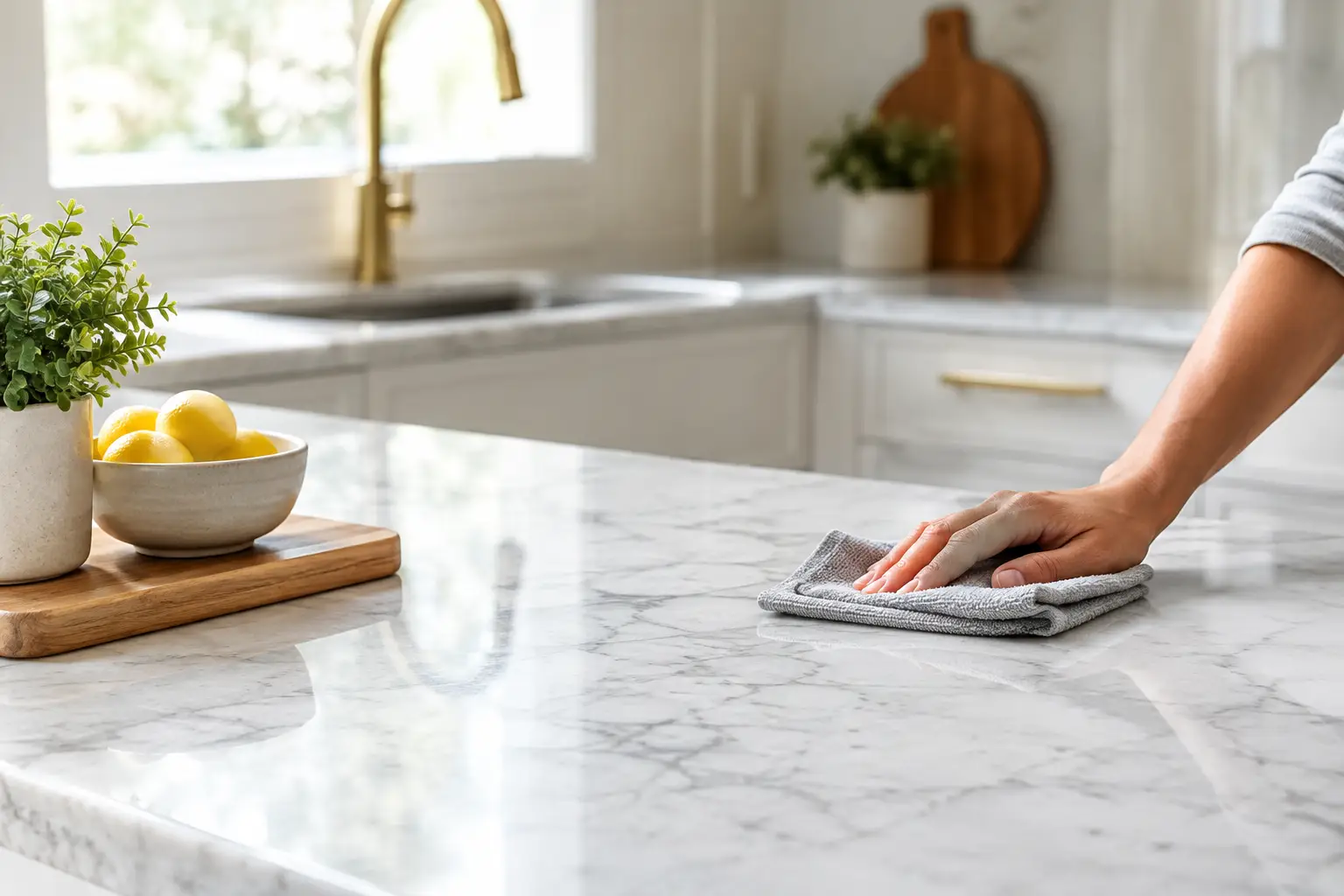
Understand What Marble Needs Protection From
Marble has two separate vulnerabilities that are often confused. Staining happens when a substance absorbs into the stone, leaving a darker or discoloured area. Oil, cooking grease, red wine, coffee, and deeply pigmented foods can all be concerns, depending on the specific marble and finish.
Etching is different. Acidic products react with the calcium carbonate in marble and alter the surface itself. Lemon juice, vinegar, many fruit juices, tomato-based foods, wine, and some household cleaners can leave a light, dull, or slightly rough mark on polished marble. An etch may be most visible when light reflects across the surface, even if there is no obvious colour change.
A penetrating sealer can reduce the chance of staining by slowing absorption. It cannot make marble acid-proof. This is the most important expectation to set before selecting the material for a busy kitchen, bar, or bathroom vanity.
For a closer look at why acidic foods and cleaners leave marks, read our guide on whether marble can etch and what causes it.
Choose the Right Marble and Finish Before Fabrication
Protection begins before a slab is templated. Marble varies considerably. Some slabs are denser, some have more open structure, and some have natural fissures, veins, or filled areas that are part of the stone’s character. A small sample is helpful for narrowing down colour and general appearance, but it cannot show the full movement, variation, or vulnerability of the actual slabs selected for your project.
Viewing the full slab allows you to consider where prominent veins, mineral deposits, and natural features will land on an island, around a sink cutout, or at a seam. It also gives the fabricator a better opportunity to discuss slab layout, vein direction, and which areas may need careful handling during fabrication.
Our guide to matching countertop veining explains why planning the layout before cutting can make a significant difference to the finished appearance.
Polished vs. Honed Marble
A polished finish reflects light and brings out colour and veining, but etches can be more noticeable because they interrupt the glossy surface. Honed marble has a softer, matte appearance. It can still etch and stain, but the finish often makes etching less visually obvious.
Honed marble is frequently a practical choice for homeowners who expect a lived-in kitchen and prefer a quieter surface. That does not mean it requires no care. Oils and dark spills can sometimes stand out more on a honed finish, especially on lighter stones.
The right choice depends on the slab, the room’s lighting, and whether your concern is more about etched shine marks or potential discolouration. Neither finish eliminates the need for sensible cleaning and maintenance.
Consider Where Marble Will Be Used
Marble is not automatically the right surface for every application. A bathroom vanity generally sees less exposure to citrus, wine, and cooking oils than a kitchen island, although acidic toiletries and cleaning products can still cause etching. A baking area may be a natural fit because marble stays relatively cool, while a heavily used family kitchen may call for realistic expectations or a different material in the highest-use zones.
Some homeowners use marble for a perimeter, backsplash, fireplace surround, or vanity while selecting quartzite, granite, porcelain, or another surface for the main working island.
This is not a rule. It is a way to balance the look you want with how each area will be used.
Seal Marble for Stain Resistance
Many natural marble countertops benefit from an appropriate penetrating sealer, but not every slab has the same absorption characteristics or sealing requirements. The stone supplier’s guidance, the existing finish, and the sealer manufacturer’s instructions should determine whether treatment is appropriate.
The purpose of a penetrating sealer is to help resist absorption, not to create a visible coating or change the stone into a completely nonporous surface.
Whether marble needs resealing, and how often, depends on the particular stone, the sealer used, cleaning habits, and how the counter is used. Rather than relying only on a fixed calendar schedule, watch how the surface behaves.
A small water-drop test on a clean, inconspicuous area can provide an initial indication of absorption. If water darkens the stone quickly, the surface may need further assessment. However, water beading alone does not confirm that a sealer is performing properly, and the test should not replace the product manufacturer’s recommendations.
Avoid treating a countertop with an unknown product simply because it is labelled for stone. Some topical products can leave streaks, alter the sheen, or create a finish that is difficult to remove. For a specific slab or existing counter, product compatibility matters.
What Marble Sealer Cannot Do
Even a properly sealed marble countertop can develop etch marks from acidic substances. Sealing also does not prevent scratches, chips, heat damage, or structural problems caused by inadequate support.
Think of sealing as one part of marble maintenance rather than a complete protective barrier. Good cleaning habits and careful use remain important after sealing.
Use Gentle Daily Cleaning Habits
The best day-to-day routine is simple. Wipe spills promptly with a soft cloth, warm water, and a cleaner made for natural stone or a mild pH-neutral option suitable for marble. Drying the area afterward helps prevent water spots, especially around faucets and sinks.
Do not use vinegar, lemon-based cleaners, abrasive powders, scouring pads, or common bathroom and kitchen cleaners unless they specifically state they are safe for marble. Even a product marketed as natural can be acidic.
Repeated use of the wrong cleaner can dull a polished finish across a broad area, making professional refinishing more involved than addressing one isolated etch.
Simple Habits That Help Prevent Damage
- Use cutting boards: Avoid cutting directly on marble, particularly when preparing citrus fruit or acidic foods.
- Keep trivets nearby: Place hot cookware and heat-producing appliances on suitable protective surfaces.
- Use trays: Keep cooking oils, vinegar bottles, coffee supplies, and frequently used products on a tray.
- Wipe spills promptly: Blot liquids rather than spreading them across a wider area.
- Choose cleaners carefully: Use products specifically identified as safe for marble.
- Check high-use areas: Pay attention to the stone around sinks, coffee stations, and food preparation areas.
These habits are generally more useful than buying multiple specialty products or constantly worrying about every mark.
Plan for Heat, Chips, and High-Stress Areas
Marble handles everyday kitchen use well when it is treated with care, but it is not a surface for placing very hot cookware directly from the stove or oven. Thermal shock, a sudden temperature change, and concentrated heat can create risks, particularly near veins, seams, or thinner areas.
Use trivets for hot pans and heat-producing appliances.
Chipping is most likely along exposed edges, around sink cutouts, and at outside corners. A sharp square edge creates a clean modern look, but it has less forgiveness than a small eased edge or a more rounded profile.
An eased countertop edge is still relatively crisp in appearance while removing the fragile knife-like corner that can catch a heavy pot.
Protect Sink Cutouts and Corners
Sink selection and installation also matter. Undermount sink cutouts require proper support, and the stone around the opening is naturally more vulnerable than an uninterrupted section of countertop.
Avoid striking the inside edge with cookware, and do not rely on the stone alone to carry loads that should be supported by cabinetry or sink hardware.
Cutout dimensions, corner radii, reinforcement, and support should be considered during fabrication. The correct approach depends on the marble slab, sink design, and installation requirements.
Make Sure Overhangs Have Proper Support
Overhangs deserve the same attention. Marble is heavy, and unsupported seating overhangs can put stress on the slab over time.
The required support depends on the overhang depth, stone thickness, cabinet construction, and layout. This should be resolved during design and templating rather than after installation.
For deeper seating areas or unusual island designs, the fabricator should confirm the support requirements for the specific slab and installation. Do not assume that a thicker slab automatically makes every overhang safe without reinforcement.
Expect Seams and Natural Movement
Large marble islands, L-shaped kitchens, and full-height backsplashes may require seams based on slab size, access into the home, layout, and the stone’s vein direction.
An experienced fabricator positions seams thoughtfully, but they do not disappear completely. A seam is also not the place to use as a support point for climbing, sitting, or placing excessive weight.
If vein matching is a priority, discuss it while slabs are being selected and before cutting begins. Continuous or book-matched veining can be striking, but it may require more material and may limit how pieces can be laid out.
The available slab dimensions, natural pattern, and project geometry all affect the result.
Natural fissures and veining are not automatically defects. They are part of what makes marble distinct from manufactured surfaces. However, a fabricator should identify practical limitations where a prominent vein, weak area, cutout, or edge detail affects the fabrication plan.
Understanding the stone fabrication process can help homeowners see how templating, cutting, edge finishing, and installation decisions influence the final countertop.
Know When a Mark Needs Professional Attention
A fresh stain is often easier to address than an older one. If a dark mark remains after normal cleaning, avoid aggressive scrubbing or experimenting with harsh chemicals.
The correct treatment depends on whether the mark is absorbed staining, etching, residue, or surface damage.
Light etching may be tolerable to some homeowners as part of marble’s patina. Others prefer to have noticeable areas professionally refinished.
Deep chips, cracks, loose seams, or damage near a sink cutout should be assessed rather than covered up with a household repair product. A repair approach has to match the stone, finish, location, and structural condition.
Small cosmetic marks and structural concerns are not the same problem. If damage appears to affect the strength or support of the countertop, avoid loading that area until it has been evaluated.
Frequently Asked Questions About Protecting Marble Counters
Does sealing marble prevent etching?
No. Penetrating sealers help slow the absorption of liquids that may cause staining, but they do not prevent acidic substances from reacting with marble. Lemon juice, vinegar, wine, and acidic cleaners can still leave etch marks on sealed marble.
How often should marble countertops be sealed?
There is no universal resealing schedule for every marble countertop. Frequency depends on the stone’s absorbency, the sealer used, cleaning products, and everyday use. Follow the stone and sealer manufacturers’ guidance, and have the surface assessed if its absorption behaviour changes.
What is the safest way to clean marble countertops?
Use a soft microfibre cloth, warm water, and a pH-neutral cleaner specifically suitable for marble. Wipe spills promptly and dry the surface afterward. Avoid acidic cleaners, abrasive pads, and harsh chemicals that can damage the finish.
Is honed marble easier to maintain than polished marble?
Honed marble often makes minor etching less noticeable because its surface is already matte. However, stains and oils may be more visible on certain honed stones. Both finishes require appropriate cleaning, spill management, and sealing when recommended.
Can damaged or etched marble countertops be repaired?
Many cosmetic etch marks, scratches, and minor chips can be improved through professional stone restoration. The appropriate repair depends on the depth of the damage, the marble type, and the finish. Cracks or damage near sink cutouts and seams may require a more detailed structural assessment.
Protect Your Marble by Planning Ahead
Marble rewards thoughtful use rather than perfect behaviour. If you choose a finish and slab you genuinely like, plan edges, seams, supports, and cutouts carefully, and build a few simple cleaning habits into the day, the surface can develop character without becoming a source of constant worry.
For Ontario homeowners considering marble countertops, it is worth discussing how the stone will be used before finalizing the material and fabrication details. A busy kitchen island, a bathroom vanity, and a decorative backsplash may benefit from different finishes, edge profiles, and installation decisions.
At Stone Valley Countertops, we help homeowners review marble countertop options, understand natural stone characteristics, and plan fabrication and installation details for their projects. We serve homeowners across the GTA, Durham Region, Niagara Region, and surrounding Ontario communities.
If you are comparing marble slabs or planning a new countertop, contact Stone Valley Countertops to discuss your measurements, material preferences, and installation requirements.