
A lot of Toronto homeowners start out saying they want something durable, easy to live with, and good-looking without feeling overdone. That is exactly why granite countertops Toronto homeowners keep considering, even with so many newer surface options on the market. Granite has been around a long time for a reason. It brings real stone character, strong day-to-day performance, and a look that does not feel manufactured.
Still, granite is not automatically the right answer for every kitchen or bathroom. The best choice depends on how you cook, how much maintenance you are comfortable with, the style of your home, and where you want to spend your budget.
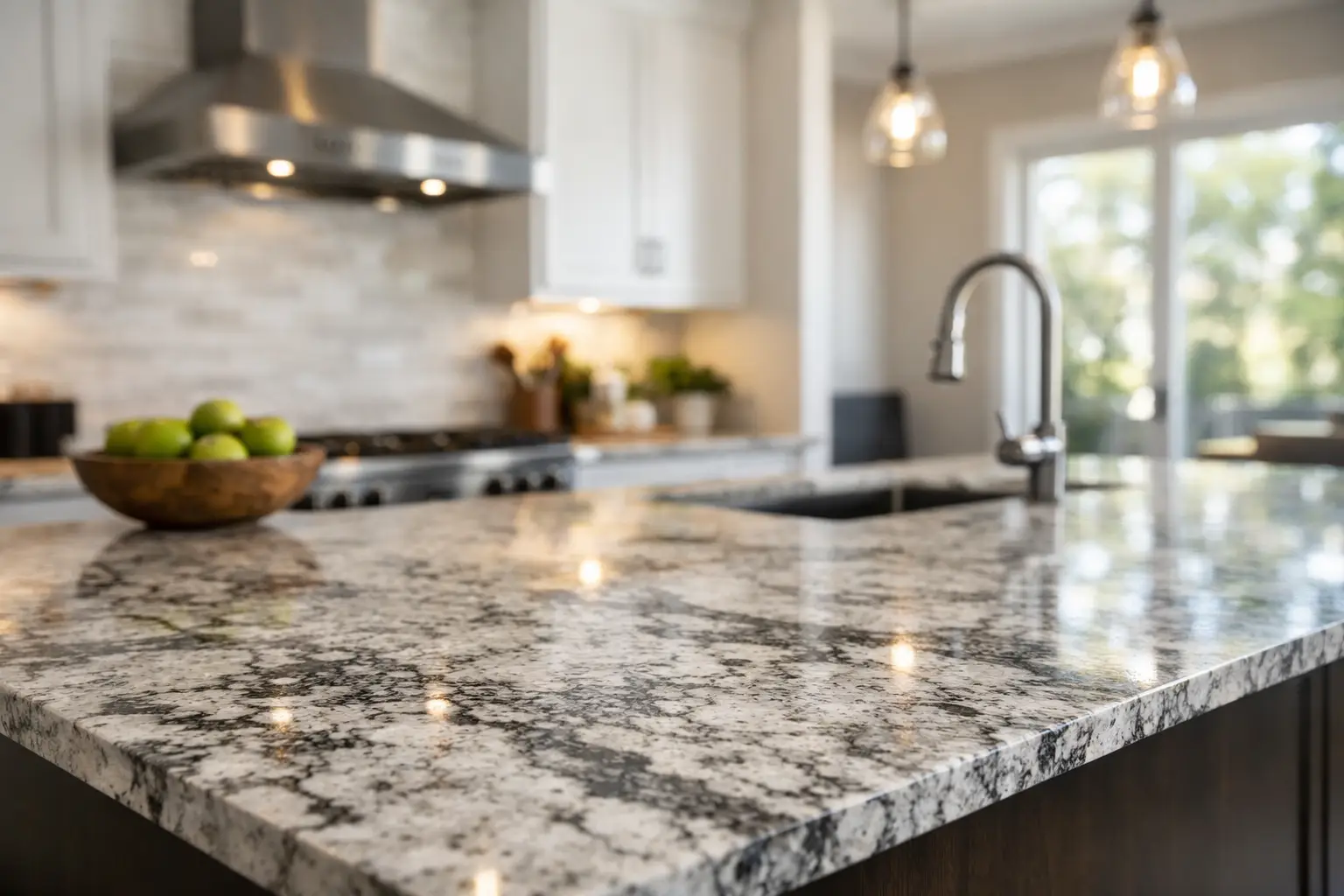
Granite remains popular because it solves a few practical problems at once. It is a natural stone, so every slab has its own movement, pattern, and variation. If you want a countertop that feels one of a kind, granite gives you that in a way man-made surfaces cannot fully copy.
It is also a strong working surface. In busy kitchens, granite holds up well to regular use, and it handles heat better than many other materials. For homeowners who cook often, set down hot pans from time to time, or simply want a surface that feels solid and substantial, that matters.
Another reason granite stays relevant in Toronto homes is design flexibility. It can work in traditional kitchens, modern spaces, and transitional layouts. Some slabs are busy and dramatic, while others are quiet and consistent. That range makes it easier to match granite to painted cabinets, wood tones, waterfall islands, and simple backsplashes without forcing the room in one direction.
Granite is durable, but durable does not mean maintenance-free. That distinction matters.
On the positive side, granite resists heat well, stands up to normal kitchen traffic, and brings natural depth that many homeowners love. It can be a strong fit for kitchen countertops, bathroom vanities, laundry rooms, bars, and even outdoor BBQ areas depending on the slab selection and project details.
Where it depends is porosity and pattern. Some granite slabs are denser than others, and some need more attention to sealing. Lighter colours can sometimes show etching-like marks from residue or spills more easily, while very dark polished granite may show fingerprints or water spots under certain lighting. None of that makes granite a bad material. It just means slab selection matters as much as the material category itself.
This is where professional guidance helps. Looking at a small sample rarely tells the whole story. The full slab shows movement, mineral deposits, veining, and colour shifts that will affect how seams, sink cutouts, and island layouts look once fabricated.
Many homeowners comparing granite are also comparing quartz. That is a fair comparison because both are popular for kitchen countertops, but they perform differently.
Granite gives you natural variation and a more organic appearance. If you like movement, depth, and the look of real stone, granite usually has the edge. Quartz is more controlled and consistent, which some homeowners prefer in modern kitchens or when they want a cleaner, more uniform pattern.
In maintenance, quartz is generally simpler because it does not need sealing. Granite does need periodic sealing depending on the slab and usage. For some homeowners, that is no big deal. For others, especially if they want the lowest-maintenance option possible, quartz may feel easier.
Heat is another difference. Granite generally performs better around hot cookware. Quartz is durable, but sudden or excessive heat can be more of a concern. If your kitchen gets heavy daily use, granite may offer peace of mind in that area.
The right choice comes down to your priorities. If you want natural stone character and strong heat resistance, granite is often worth the maintenance trade-off. If you want lower upkeep and a more uniform look, quartz may make more sense.
Price is one of the biggest questions, and the honest answer is that granite pricing varies more than people expect.
The slab itself is a major factor. Entry-level granite colours are usually more affordable than slabs with rare movement, unusual background tones, or high-demand patterns. Size also matters. A small straight vanity is very different from a large kitchen with an island, full-height backsplash, or waterfall ends.
Fabrication details affect price too. Sink cutouts, cooktop cutouts, edge profiles, seam placement, corner shapes, overhang support, and thickness all influence labour and production time. A simple eased edge is not priced the same way as a more decorative profile, and a clean rectangular kitchen is easier to fabricate than a layout with multiple angles.
Installation logistics can also play a role in Toronto-area projects. Condo access, tight stairways, elevator bookings, parking limitations, and older homes with uneven walls all add complexity. None of that should be a surprise late in the process. Good planning and accurate templating make a big difference.
When homeowners picture granite, they often think only about colour. In reality, fabrication details have just as much impact on the finished result.
Most homeowners choose between standard thickness options based on style, budget, and the visual weight they want. A thicker-looking edge can make an island feel more substantial, but it may not be necessary in every kitchen. Cleaner spaces often suit simple profiles, while more traditional homes may benefit from a slightly more shaped edge.
Overhangs matter too. Seating areas need proper support depending on the depth and layout. That decision should be addressed early, not after fabrication starts.
Seams are part of many countertop projects, especially in larger kitchens. The goal is not pretending seams do not exist. The goal is planning them carefully so they are structurally sound and visually minimized.
With granite, seam visibility depends on pattern, colour, slab movement, and where the seam lands. Busy granite can sometimes help disguise a seam, while linear patterns may require more attention to direction and flow. A good slab layout also helps key features land in the right places, especially on islands and waterfall panels.
Sink style changes the look and use of the counter. An undermount sink keeps the stone surface clean and uninterrupted, while the cutout finish around the sink opening adds another level of detail. Backsplash choices matter as well. Some kitchens look best with a short matching stone backsplash, while others benefit from running a different wall finish above the counter line.
Granite care is straightforward when homeowners know what actually matters.
For daily cleaning, a soft cloth, warm water, and a stone-safe cleaner are usually enough. You do not need harsh products, and you definitely do not want anything too abrasive or acidic sitting on the surface. Wiping up spills reasonably quickly is a good habit, especially with oils, wine, coffee, or anything strongly pigmented.
Sealing is the part homeowners ask about most. Granite is not one uniform material, so sealing schedules vary. Some slabs need more regular attention than others. A simple water test can help show whether a surface is ready to be resealed. The point is not constant maintenance. It is basic care that protects the stone and helps it age well.
One of the biggest concerns in any countertop project is timing. Homeowners want to know when they can use the kitchen again and whether delays are likely.
The usual process starts with material selection, then templating once cabinets are installed and level. After that comes fabrication, followed by installation. If everything is organized properly, the process is efficient, but accurate measurements are critical. Small errors at the templating stage can create bigger problems later around walls, sinks, appliance clearances, and overhangs.
An in-house process helps keep communication tighter from selection through fabrication and installation. That matters when a project includes detailed edge work, waterfall panels, full-height pieces, or tighter timelines. Stone Valley Countertops handles those steps in-house, which gives homeowners more consistency from one stage to the next.
Granite makes sense when you want a natural surface with real variation, strong everyday durability, and a look that does not feel flat or repetitive. It is especially appealing for homeowners who cook often, appreciate natural materials, and do not mind occasional sealing.
It may be less ideal if your priority is the lowest-maintenance surface possible or if you want a very uniform pattern with almost no variation. In that case, another material may fit better.
The best countertop choice is usually not the one with the most hype. It is the one that matches how you use your home, what details you notice, and how much maintenance feels reasonable to you. If granite checks those boxes, it remains one of the most practical and visually grounded options available.
Yes. Granite countertops work well in many Toronto homes because they are durable, heat resistant, and naturally unique. They are a strong option for kitchens, vanities, bars, laundry rooms, and some outdoor applications when the right slab is selected.
Many granite countertops benefit from periodic sealing, but not every slab needs the same schedule. Denser granite may need less maintenance, while more porous granite may need resealing more often. A simple water test can help show when sealing is needed.
Granite is better if you want natural stone character, stronger heat resistance, and one-of-a-kind slab movement. Quartz is usually better if you want lower maintenance and a more consistent pattern. The right choice depends on how you use your kitchen and what look you prefer.
Granite countertops can last for decades with proper care, good fabrication, and proper installation. Regular cleaning, quick spill cleanup, and occasional sealing can help protect the surface over time.
Yes. Granite works very well for kitchen islands, including larger island layouts. Seam placement, slab movement, overhang support, and edge profile should be planned carefully before fabrication.
If you are planning a granite countertop project in Toronto or the GTA, contact Stone Valley Countertops to compare materials, review slab options, and get guidance before fabrication begins.