
A vanity top has a harder job than it gets credit for. It has to handle wet toothbrushes, cosmetics, soap residue, hot styling tools, and daily cleaning while still looking good in a small, highly visible room.
The best bathroom vanity top materials are not identical for every home. The right choice depends on how the bathroom is used, how much maintenance you want, the look of the cabinetry and tile, and the fabrication details behind the finished surface.
For many Ontario homeowners, quartz is the practical starting point. However, granite, marble, quartzite, porcelain, and sintered stone can be better choices when their specific strengths match the project. The key is to compare materials based on real bathroom use, not just a small sample viewed under showroom lighting.
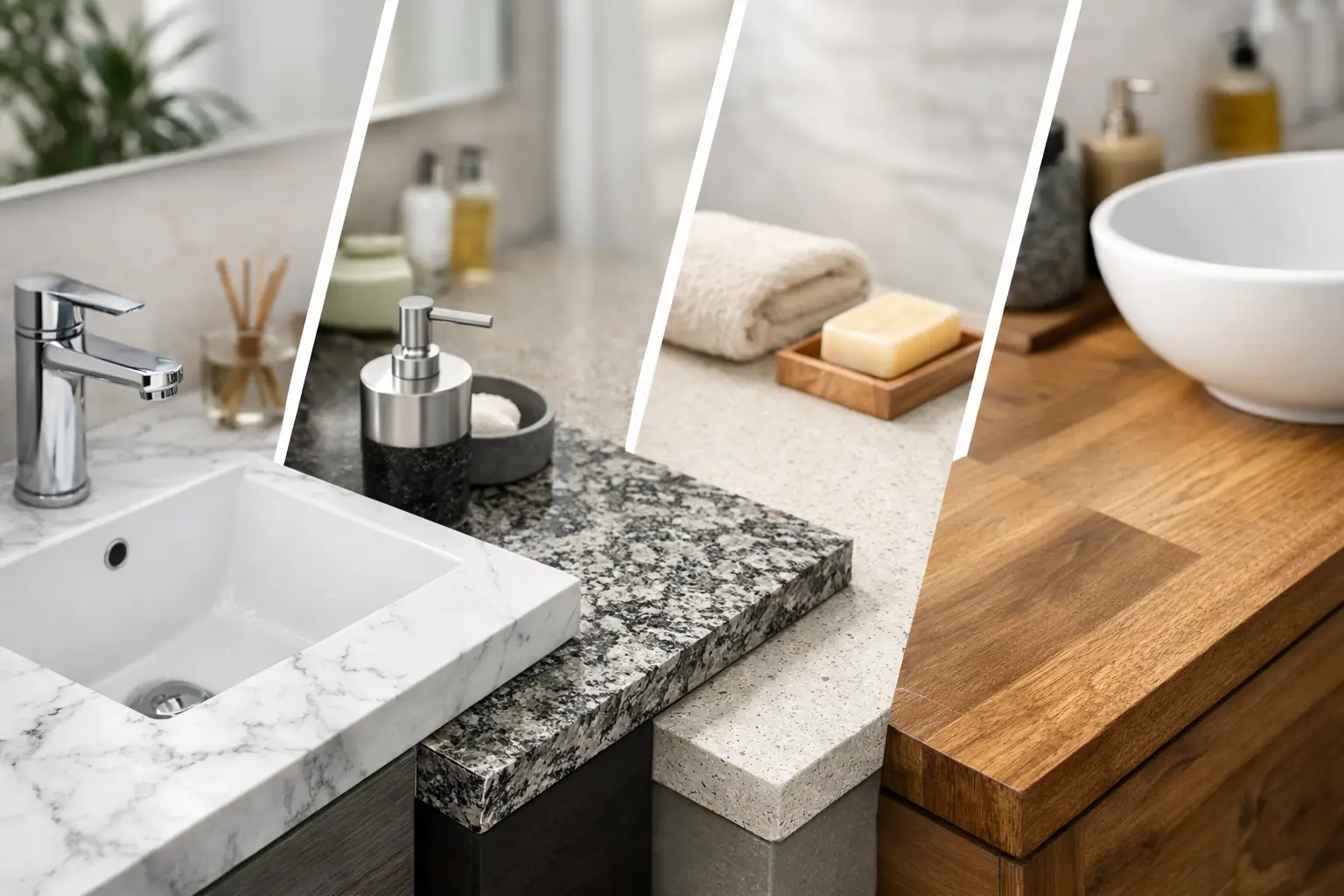
Quick answer: Quartz is usually the best all-around vanity top material for busy bathrooms because it is nonporous, easy to clean, and does not require sealing. Granite and quartzite are strong choices for homeowners who prefer natural stone. Marble suits lower-use bathrooms where natural patina is acceptable, while porcelain and sintered stone work well for thin, modern designs and matching wall applications.
Bathrooms are generally gentler on countertops than kitchens, but they create their own problems. Water can sit around faucet bases and undermount sinks. Liquid makeup, nail products, hair dye, toothpaste, and cleaning products can leave marks when they are not wiped up promptly.
A busy family bathroom also experiences more clutter, impact, and rushed cleaning than a powder room. When comparing vanity materials, consider stain resistance, scratch resistance, water absorption, heat sensitivity, and day-to-day maintenance.
It is also important to look beyond the slab. Sink cutouts, faucet holes, edge profiles, backsplash height, seams, cabinet support, and wall conditions all affect how polished and durable the finished installation feels.
A large primary bathroom vanity may benefit from a low-maintenance surface with simple eased edges and undermount sinks. A powder room that receives less daily use can be a suitable place for marble or another dramatic natural stone that requires more careful maintenance.
| Material | Best for | Maintenance | Main consideration |
|---|---|---|---|
| Quartz | Busy bathrooms, family homes, rentals, and easy cleaning | Low | Strong heat can damage the resin |
| Granite | Natural movement and durable daily use | Low to moderate | May require periodic sealing |
| Marble | Statement vanities and lower-use bathrooms | Moderate to high | Can etch, scratch, and stain |
| Quartzite | Natural stone appearance with strong durability | Moderate | Stone type must be properly verified and sealed |
| Porcelain or sintered stone | Thin modern designs, floating vanities, and wall cladding | Low | Requires experienced fabrication around cutouts and edges |
Quartz is an engineered surface made from natural quartz minerals combined with resins and pigments. It is nonporous, which means it does not need sealing and is highly resistant to common bathroom stains.
For a family bathroom, rental property, or ensuite where easy upkeep matters, quartz is often the most straightforward choice. It is particularly practical around undermount sinks and faucet holes, where standing water and soap residue are common.
Quartz also offers consistency. When you choose a clean white surface with soft grey veining, a concrete-inspired finish, or a solid colour, the sample is generally a reliable representation of the finished slab. That predictability helps when coordinating the vanity top with cabinetry, paint, flooring, and tile.
Cleaning quartz countertops properly is simple. Use a soft cloth, mild soap, and water. Avoid abrasive scrubbers, harsh chemicals, and leaving strong cleaning products on the surface for extended periods.
Although hot curling irons are less severe than hot cookware, quartz is still not heatproof. Styling tools should be placed on a heat-resistant mat rather than directly on the countertop.
Quartz works well with undermount sinks, standard 2 cm or 3 cm thicknesses, and most common edge styles. A simple eased edge is durable and easy to clean. A mitered countertop edge can create the appearance of a thicker, more substantial vanity without using a full-thickness slab throughout.
Granite is a natural stone with mineral variation, depth, and movement that cannot be duplicated exactly. It is a strong option for homeowners who want a natural surface but prefer less sensitivity than marble.
Many granite colours perform very well in bathrooms once properly sealed. Granite generally handles cosmetics, water, and routine cleaning effectively when spills are cleaned promptly and the appropriate cleaner is used.
The main trade-off is variation. A granite sample shows the general colour family, but it cannot show every vein, mineral deposit, or shift in tone that may appear in the full slab. Viewing the selected slab is especially helpful for long double vanities, waterfall sides, or layouts with a large uninterrupted surface.
Granite may need periodic sealing depending on the specific stone, finish, and level of use. A good sealer helps reduce moisture absorption and staining, but it does not make the surface maintenance-free.
Homeowners considering natural stone can learn more in our guide explaining whether granite countertops need sealing.
Marble has soft, distinctive movement that works especially well in traditional, European-inspired, and high-design bathrooms. It can make a powder room vanity feel considered and personal, particularly when paired with an integrated stone backsplash or decorative edge.
Marble is also more reactive than quartz or granite. Acidic products can etch the surface, leaving dull areas that are different from stains. Some perfumes, skincare products, toothpaste, hair products, and bathroom cleaners can cause visible changes.
Sealing helps reduce absorption, but it does not prevent etching. Marble is therefore best suited to homeowners who appreciate natural patina and understand that the surface may develop signs of use over time.
It is often more suitable for a powder room or carefully used primary ensuite than for a heavily used children’s bathroom. Choosing a honed finish can make minor etching less noticeable than it would be on a highly polished surface.
Quartzite is often selected for its dramatic veining and natural character. When properly identified and fabricated, it can provide strong scratch and heat resistance while offering the natural appearance many homeowners associate with marble.
The important phrase is properly identified. Some stones are sold under broad or inconsistent trade names, and their performance can vary considerably. A fabricator should assess the actual slab, finish, and stone structure before recommending it for a bathroom vanity.
Quartzite usually requires sealing. Natural fissures, mineral deposits, and colour variation should also be understood as characteristics of the slab rather than automatically treated as defects.
Because quartzite can be dense and challenging to fabricate, precision around sink cutouts and faucet holes matters. Clean polishing and proper cabinet support are particularly important on long spans, narrow sections behind sinks, and vanity tops with overhangs.
Homeowners comparing engineered and natural surfaces may also find our quartz versus quartzite comparison helpful.
Porcelain and sintered stone are increasingly popular for contemporary bathrooms. They are nonporous, stain resistant, and available in realistic stone patterns, concrete-inspired finishes, solid colours, and textured designs.
Their thin profiles work particularly well with floating vanities, full-height backsplashes, shower walls, waterfall sides, and coordinated wall applications.
These materials are durable during normal use, but fabrication is specialized. Thin slabs require careful handling around sink openings, inside corners, faucet holes, and narrow strips of material.
The surface may resist scratches and staining well, but an unsupported cutout or poorly finished edge can still create problems. Accurate templating, suitable tooling, and experienced fabrication make a visible difference.
For a clean-lined bathroom, a porcelain vanity top paired with a matching backsplash can reduce visual breaks and make a compact room feel more intentional.
Quartz, porcelain, and sintered stone generally require the least routine maintenance because they are nonporous and do not need sealing. For most households, regular cleaning with mild soap and water is sufficient.
Granite and quartzite can also be straightforward to maintain, but their sealing requirements depend on the individual slab. Marble requires the most acceptance of natural wear because etching can occur even when the surface has been sealed.
Regardless of the material, wipe away hair dye, nail products, cosmetics, and aggressive cleaners promptly. Avoid abrasive scrubbers and confirm that cleaning products are safe for the specific surface.
A well-chosen slab can still look unfinished when fabrication and installation details are rushed. Before templating, decide whether the vanity will use an undermount, drop-in, integrated, or vessel sink.
Undermount sinks create a clean transition and make wiping water into the basin easier. However, the exposed stone edge around the opening must be polished evenly and the sink must be properly supported.
Vessel sinks require careful planning for faucet reach, drain placement, finished counter height, and comfortable handwashing. A vessel sink placed on a standard-height cabinet can leave the finished basin too high for some users.
Drop-in sinks are generally straightforward to install, but their raised rims can collect water and residue. The correct choice depends on the desired appearance, budget, cabinet construction, and cleaning preferences.
A short stone backsplash can protect the wall behind the faucet from splashes. A taller or full-height stone backsplash creates a more continuous look and may reduce the amount of exposed painted wall or tile grout near the sink.
If the bathroom walls are not perfectly straight, accurate templating allows the fabricator to account for those conditions and keep visible gaps controlled.
A standard vanity top can often be fabricated from one piece. However, long double vanities, unusual layouts, access limitations, or bookmatched designs may require a seam.
Seam placement should be planned around sink cutouts, veining, cabinet divisions, and the least noticeable areas whenever possible.
Thickness and edge style also change the visual weight of the vanity. A 2 cm countertop profile can look light and contemporary. A 3 cm top has more visual presence and provides a thicker finished edge without a buildup.
A mitered buildup can create an even thicker appearance, but it requires precise fabrication to produce crisp corners and a consistent seam line. Waterfall sides can be effective on freestanding or floating vanities when the stone pattern can continue naturally down the side.
Start with the bathroom’s actual level of use rather than choosing solely by appearance.
Bring cabinet drawings, sink specifications, faucet information, tile samples, flooring samples, and room photos to the material selection appointment. These details help determine how much usable space will remain around the sink, whether the faucet holes will fit comfortably, and how the stone will relate to the rest of the bathroom.
It is also worth viewing complete slabs whenever natural stone is being considered. A small sample cannot show the full direction of the veining, colour variation, fissures, or mineral characteristics that may appear in the finished vanity.
Quartz is usually the best all-around option for a busy bathroom because it is nonporous, stain resistant, easy to clean, and does not require sealing. The best choice can still vary depending on the desired appearance, maintenance expectations, and sink design.
Quartz is easier to maintain and offers more consistent patterns. Granite provides natural variation and strong durability but may require periodic sealing. Quartz is often preferred for low-maintenance family bathrooms, while granite suits homeowners who want genuine natural stone.
Quartz, porcelain, and most sintered stone surfaces do not require sealing. Granite, marble, and quartzite may need sealing depending on the stone’s porosity, finish, and manufacturer or fabricator recommendations.
A hot curling iron or straightener should not be placed directly on quartz. Prolonged or concentrated heat can affect the resin in the surface. Use a heat-resistant mat or tool holder to protect the countertop.
Marble can work well in a powder room or carefully used ensuite, but it can etch and stain more easily than quartz or granite. It is best for homeowners who understand that the stone may develop a natural patina over time.
Both 2 cm and 3 cm materials can work well. A 2 cm top creates a slimmer, contemporary appearance, while 3 cm provides a heavier visual profile. A mitered edge can also create the appearance of a thicker top.
Many standard vanity tops can be fabricated from a single piece. Long double vanities, unusual room access, slab size limitations, or certain vein layouts may require a seam. Seam location should be planned before fabrication.
Stone Valley Countertops supplies, fabricates, and installs quartz, granite, marble, quartzite, porcelain, and sintered stone vanity tops throughout Toronto, the GTA, Durham Region, Niagara Region, Hamilton, and surrounding Ontario communities.
Bring your vanity dimensions, cabinet plan, sink model, faucet specifications, and material ideas. Our team can help confirm the suitable slab thickness, cutout layout, backsplash design, edge profile, and installation requirements before fabrication begins.
Contact Stone Valley Countertops to discuss your bathroom vanity project.