
A waterfall island is more than a countertop with stone on the sides. The material continues vertically from the island surface to the floor. As a result, every vein, edge, seam, and corner becomes more visible. Choosing the best stones for waterfall islands therefore starts with more than colour. You need a surface that suits how your kitchen works and allows for clean, well-planned transitions.
A waterfall design can make a simple island feel intentional and architectural. Poor material choices or rushed fabrication, however, become easier to notice on this type of installation. The right stone depends on the look you want, the island size, your maintenance preferences, and the importance of pattern continuity.
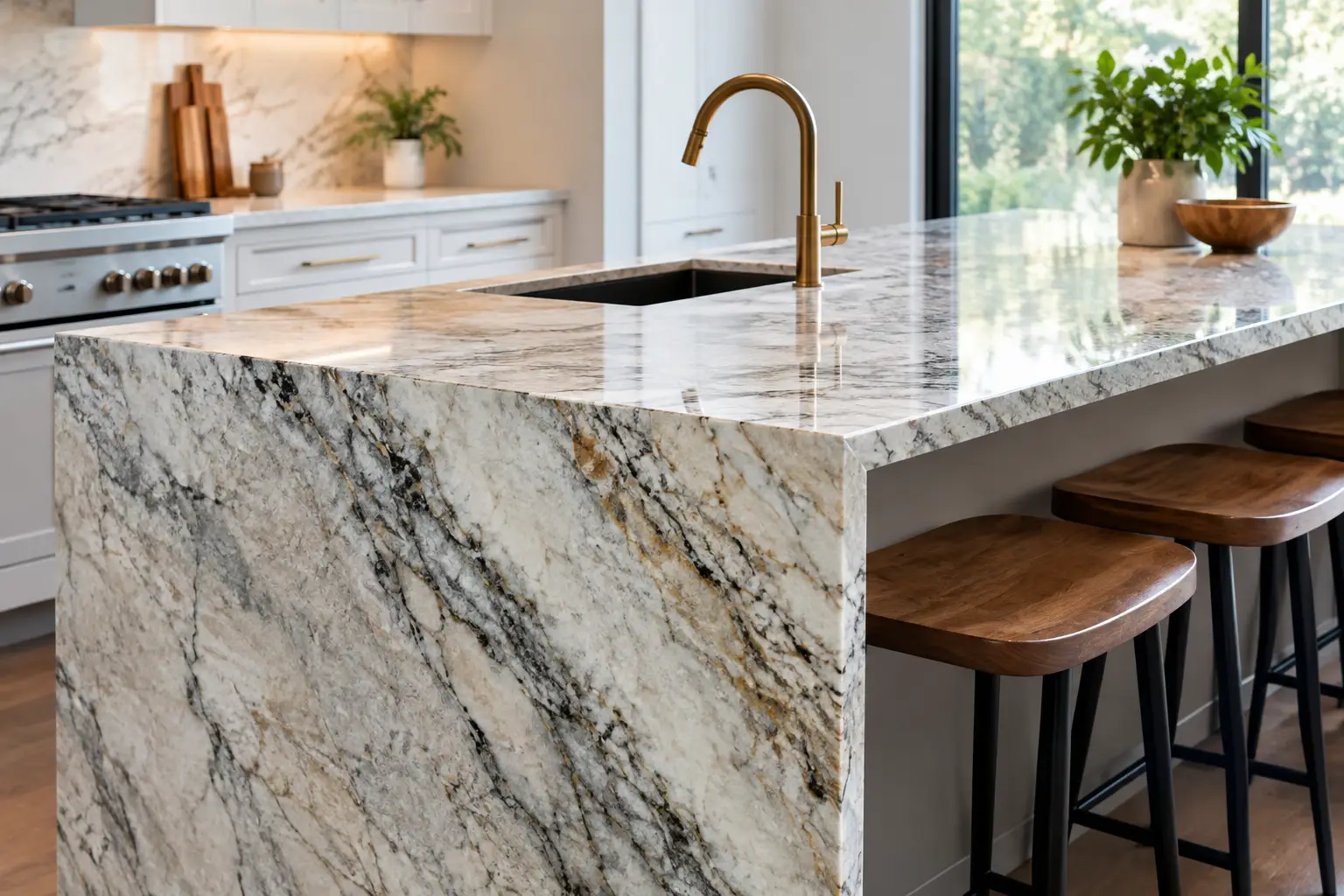
Quartz, quartzite, granite, marble, porcelain, and sintered stone can all work well for waterfall islands. Quartz offers practical, low-maintenance performance. Quartzite combines natural movement with durability, while granite performs well in busy kitchens. Marble provides distinctive natural veining. Porcelain and sintered stone can create a thin, contemporary profile. Your best option depends on maintenance, slab size, pattern, edge construction, and the desired transition across the waterfall corners.
Fabricators commonly join the horizontal countertop to the vertical side panels with a mitered edge. A well-executed miter makes the stone pattern and thickness appear continuous around the corner. Creating that effect requires accurate cutting, polishing, alignment, and support. Even a narrow mismatch can stand out at eye level.
Materials with a consistent background or controlled pattern are generally easier to plan. Dramatic natural veining can look exceptional, but it requires more attention. Before cutting, the fabricator must determine slab orientation and vein direction. The layout should also account for how the pattern will move from the top down each end.
Appearance is only part of the decision. Waterfall ends sit close to foot traffic, stools, pets, and vacuum cleaners. For busy households, resistance to stains, chips, and daily wear can matter as much as the pattern.
Quartz countertops are often one of the best choices for waterfall islands. Quartz combines a predictable appearance with straightforward maintenance. Its nonporous surface does not require sealing. Everyday spills such as coffee, cooking oil, or juice are also unlikely to leave a mark when you clean them promptly.
For a clean, modern island, consider solid white, warm beige, soft grey, or subtle concrete-look quartz. These designs create crisp waterfall panels without forcing the eye to follow a complicated pattern. Fine-veined quartz also suits homeowners who want a marble-inspired appearance with less maintenance.
Heat is the main trade-off. You should not treat quartz as a landing zone for hot cookware. Manufacturers also produce quartz in slabs with repeating or controlled patterns. These designs can appear less organic than natural stone.
That consistency can work in your favour on a waterfall island. It often simplifies the visual transition on long islands or designs with two exposed ends.
Quartzite countertops suit homeowners who want genuine natural stone with movement and crystalline detail. The material can provide more natural variation than engineered quartz while still offering strong everyday performance.
A quartzite waterfall island can range from quiet and sandy to bold and heavily veined. Dramatic slabs deserve careful layout planning. With the right slab, fabricators can align the movement from the countertop into the waterfall panel. This approach creates a deliberate transition instead of a random break at the corner.
Not every quartzite performs exactly the same way. Some varieties are denser and less absorbent than others, and sealing needs can vary. Your fabricator should assess the specific slab rather than relying only on the quartzite label.
Natural fissures and mineral variation are normal characteristics of many quartzites. Reviewing those features before fabrication helps set clear expectations for the finished countertop.
Granite countertops remain a sensible choice for waterfall islands. They suit households that want natural stone with strong heat resistance and reliable everyday performance. Granite also comes in a broad range of colours and patterns. Options range from relatively uniform dark surfaces to slabs with sweeping movement and visible mineral flecks.
A quieter granite can create a tailored island without competing with cabinets or a busy backsplash. More active granite can become the kitchen’s focal point. In that case, slab layout deserves extra attention.
The fabricator may need to adjust the template position to preserve an important feature in the stone. Careful planning can also help the pattern transition more naturally into the waterfall end.
Many granites benefit from periodic sealing, although requirements vary by stone and use. The maintenance is usually manageable. Homeowners who prefer a surface that does not require sealing may find quartz more suitable.
Marble countertops give a waterfall island natural depth and distinctive veining. Engineered surfaces can imitate this appearance, but natural marble has its own variation and character. It works especially well when the island serves as a visual centrepiece.
The practical trade-off is that marble can etch when it comes into contact with acidic ingredients. Lemon juice, vinegar, and wine are common examples. Etching changes the finish rather than necessarily staining the stone, and polished marble often shows it more clearly.
Marble also requires sealing and thoughtful daily care. Those requirements do not rule it out for a waterfall island. They simply make lifestyle and expectations more important.
Homeowners who appreciate a lived-in patina may enjoy marble for many years. If every mark will become frustrating, a marble-look quartz or soft-veined quartzite may be more appropriate.
Porcelain countertops and sintered stone are strong options for contemporary waterfall islands. They work particularly well when you want a thinner profile or a large-format surface with a controlled pattern. Both materials resist stains well and generally handle heat effectively.
Thin slabs can create a sharp, refined appearance, but fabrication requires specialized handling. Fabricators must cut corners, cutouts, and mitered edges precisely to reduce chipping. Accurate alignment also helps create a convincing wrapped edge.
Installation planning matters just as much. The waterfall panels need proper alignment and support throughout the installation.
Porcelain and sintered surfaces can reproduce marble, concrete, metal, and other stone looks with impressive consistency. This control can help when directional veining needs to travel across a long island and down both ends.
For a closer look at their differences, read our guide to sintered stone vs porcelain countertops.
The defining detail of a waterfall island is the point where the countertop turns downward. Veined materials make this transition particularly noticeable. A basic miter can place the side-panel pattern beside the countertop pattern. More detailed layout planning can make the movement appear to continue around the corner.
Achieving a continuous look may require a larger slab, different slab orientation, or extra material. These requirements can increase the project cost. On a feature island facing the main living area, however, careful pattern planning can make a noticeable visual difference.
Subtle quartz, quieter granite, and solid colours may not need the same level of matching. Strongly veined materials usually benefit from more detailed planning.
Ask to review the slab layout before cutting if your chosen material has prominent veins or large mineral movement. The same advice applies to surfaces with a distinct directional pattern. Our guide on how to match countertop veining explains why slab orientation and cutting decisions matter before fabrication begins.
Many waterfall islands use 2 cm or 3 cm countertop material. Fabricators can use a mitered build-up with some 2 cm materials to create a thicker-looking profile. A 3 cm slab naturally creates more visual weight. Material type, cabinet design, fabrication method, and desired proportions should guide the choice.
Most waterfall designs use a simple eased edge or clean mitered corner rather than an elaborate decorative profile. Detailed edge profiles can distract from the vertical drop. Some profiles also do not transition naturally around a waterfall miter.
A lightly softened edge is often enough to make the surface comfortable while preserving the island’s clean lines.
Seam placement also deserves early planning. A large island may require more than one slab, and some patterns hide seams more successfully than others. When possible, the layout may keep seams away from prominent areas such as the main seating zone. Sink and cooktop locations can also affect seam planning.
The final seam position depends on slab dimensions, pattern layout, fabrication requirements, and safe installation.
The waterfall panels form only one part of the island’s structural plan. Seating overhangs, sink openings, cooktops, cabinet construction, and material weight can all affect support requirements.
A thick-looking mitered edge does not automatically mean the countertop can handle a large unsupported span. Visual thickness and structural support are separate considerations. Overhang depth, cabinet construction, stone type, and cutout locations should all receive attention before fabrication.
If your design includes seating, read our countertop overhang support guide. It explains the factors that determine when additional support may be appropriate.
A small sample cannot show how a full slab will look when it wraps down one or both sides of an island. Whenever possible, view the actual slab before making the final decision. Discuss which faces of the finished island will remain exposed.
Look at the cabinets, flooring, backsplash, lighting, and stool placement as part of the same design. A bold pattern can look striking in a bright, open kitchen. It may feel busier when several surrounding finishes also demand attention.
Function matters too. If stools tuck beneath the island, waterfall panels affect where the seating overhang begins and where people can comfortably place their feet. The design needs to balance seating space with proper countertop support.
Confirm sink cutouts, cooktops, large overhangs, and waterfall dimensions during templating. Resolving these details before fabrication reduces the chance of surprises after cutting begins.
For homeowners in Ontario planning a custom island, Stone Valley Countertops can help compare the actual slab, edge approach, vein direction, and layout before fabrication. The best result is rarely about choosing the most expensive stone. It comes from selecting a material that suits daily use and planning the fabrication details carefully.
A well-chosen waterfall island should still feel right after the first busy dinner, first spill, and years of regular use. Start with a material you will be comfortable living with. Then let careful slab layout and precise fabrication create the visual impact.
There is no single best material for every waterfall island. Quartz offers easy maintenance, while quartzite provides natural movement and strong everyday performance. Granite offers durability and heat resistance. Marble provides distinctive natural character, while porcelain and sintered stone can create a slim contemporary appearance. Your kitchen, maintenance expectations, slab layout, and design preferences should guide the decision.
Yes. Quartz works particularly well for waterfall islands because its relatively consistent pattern can simplify the transition between the countertop and vertical panels. The nonporous surface also does not require sealing. Highly veined quartz still needs careful slab planning when you want the pattern to flow across the corner.
Yes, depending on the slab, pattern, dimensions, and available material. Fabricators can plan cuts so prominent veins appear to continue from the horizontal countertop into the waterfall panel. Complex matching may require extra material or a specific slab orientation.
Fabricators commonly use a mitered joint to create a clean transition between the horizontal countertop and vertical waterfall panel. The exact construction depends on the material, thickness, design, and fabrication requirements.
Waterfall islands generally require more countertop material because the design includes one or two vertical panels. Mitering, vein matching, slab layout, handling, and installation can add labour as well. The final cost depends on the material, island dimensions, number of waterfall ends, and fabrication complexity.
For natural stone and strongly veined engineered surfaces, reviewing the actual slab before finalizing the layout is useful. Slab dimensions, vein direction, natural features, and cutout locations can influence the final pattern. They can also determine whether the desired movement can continue from the top into the waterfall ends.
If you are comparing materials for a new waterfall island, bring your kitchen measurements, cabinet plans, or inspiration photos when reviewing slabs. Stone Valley Countertops can help evaluate slab dimensions, veining, seams, edge construction, and waterfall-panel placement before fabrication begins.
Visit one of our Ontario showrooms or contact Stone Valley Countertops to discuss your project.