
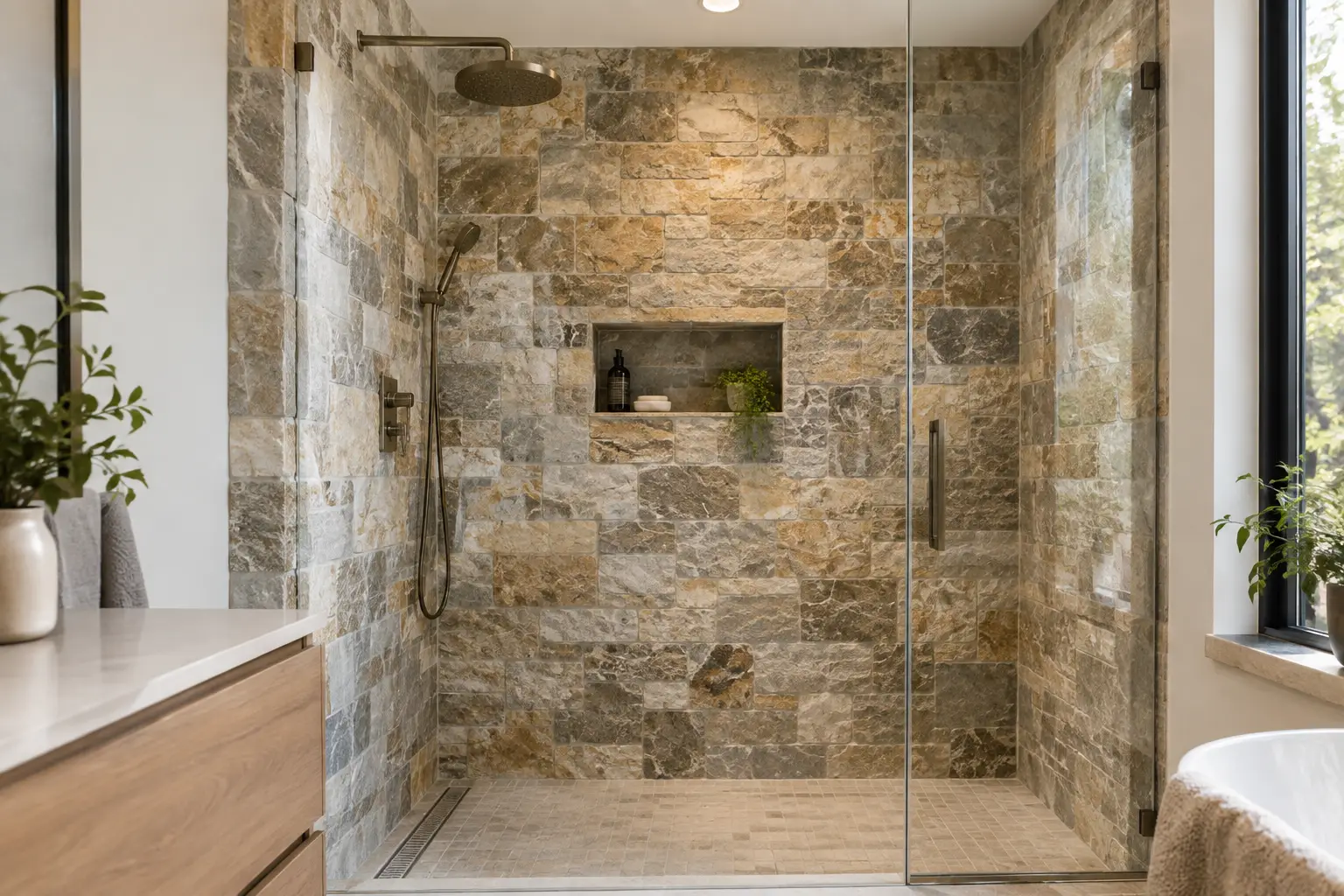
A shower wall is one of the few surfaces you see up close every day. It needs to look intentional, but it also needs to handle water, shampoo residue, cleaning products, and years of daily use. The best stone shower wall ideas balance visual impact with practical choices about material, slab layout, seams, niches, and maintenance.
Large-format stone surfaces can make a compact bathroom feel calmer and more open because there are fewer grout lines breaking up the walls. That does not mean every shower needs a dramatic, heavily veined slab. Sometimes the most successful design is a quiet porcelain panel, a warm stone-look surface, or a subtle quartzite installed with careful vein matching.
For low-maintenance shower walls, porcelain and sintered stone are practical options because they are nonporous and available in large formats with minimal grout lines. Natural stones such as quartzite, granite, and marble offer more variation and depth but require more attention to slab selection, sealing, cleaning, seam placement, and installation. The best choice depends on the look you want and the amount of maintenance you are comfortable with.
A material that looks right in a showroom may behave differently in a wet shower. Before choosing a pattern, consider how much maintenance you are comfortable with, how busy the bathroom will be, and whether you want natural stone or a more consistent manufactured surface.
Porcelain and sintered stone are practical choices for shower walls because they are dense, nonporous, and highly resistant to staining. They are also available in large formats, allowing for fewer grout joints. Many homeowners choose marble-look porcelain when they want soft veining without the maintenance requirements of natural marble.
These materials are especially useful when the shower will see frequent use or when the goal is a clean, low-maintenance finish. A honed or matte appearance can look more natural than a high polish, although the exact finish should be selected with cleaning habits and bathroom lighting in mind.
Quartzite offers the movement and depth many homeowners want from natural stone, often with better resistance to scratching and etching than marble. Granite can also work well, particularly in darker or more granular patterns.
Natural slabs are never perfectly uniform. That is part of their appeal, but it also makes slab selection important. View the actual slab whenever possible, especially if the shower walls will feature bold veining, distinct mineral deposits, or large areas of colour variation.
Marble remains popular in bathrooms because it has a softness and depth that manufactured materials can imitate but not fully duplicate. It can be used successfully on shower walls, but it requires an owner who is comfortable with routine care. Acidic products, harsh cleaners, and prolonged exposure to certain products can affect the finish over time.
Honed marble is often more forgiving visually than polished marble because changes to the finish may be less noticeable. Our guide to polished versus honed marble explains the differences in more detail. Sealing can help reduce absorption, but it does not prevent etching or make marble maintenance-free.
The shower walls should support the rest of the bathroom rather than compete with it. Consider the vanity top, shower glass, fixtures, flooring, and surrounding tile as one composition. A slab that looks dramatic on its own can feel crowded once every finish is installed.
Bookmatching places neighbouring slab sections as mirror images, allowing the veining to meet at the centre. It can create a strong feature on the back shower wall, particularly with marble, quartzite, or large-format porcelain with directional veining.
This look requires planning before fabrication. The fabricator needs to determine where the material will be cut, how the pattern will align, and whether a niche, bench, valve, or other opening will interrupt the movement.
For a lighter, more open bathroom, choose a slab with gentle movement and carry it from the shower base to the ceiling. Pale grey, warm white, sand, and muted taupe surfaces work well when the vanity and fixtures are also restrained.
Full-height panels reduce horizontal joints and can visually emphasize the height of the room. They also provide larger uninterrupted surfaces than conventional small-format tile.
Charcoal granite, deep green quartzite, or dark porcelain can give a shower depth without relying on a busy pattern. Brushed brass, bronze, and other warm metal finishes can create contrast, while black fixtures produce a more graphic appearance.
Keep water conditions in mind. Dark polished surfaces can make mineral deposits and dried water spots more noticeable, particularly in areas with harder water.
Not every shower needs matching stone on all three walls. A dramatic slab can be used on the rear wall with quieter porcelain or tile on the sides. This can reduce the amount of slab material required while still creating a clear focal point.
The key is coordination rather than exact matching. Pull a background colour from the feature slab for the surrounding walls and avoid introducing another pattern that competes with it.
When the shower sits close to the bathroom vanity, repeating the same material can make the room feel more connected. The shower wall does not have to match the vanity countertop exactly. Using the material again on a backsplash or short accent wall may be enough to establish continuity.
This approach works particularly well with controlled veining. A very dramatic natural slab may be better reserved for one area, while a quieter surface can be repeated without overwhelming the room.
A slab with directional veining can be oriented vertically to draw the eye upward. This can work especially well in showers with standard or lower ceiling heights because the pattern reinforces the height of the wall.
The orientation should be decided before cutting. Rotating a slab changes not only the direction of the veins but also which sections can be used around niches, corners, benches, and plumbing openings.
Horizontal veining can visually stretch a narrow shower from side to side. It works particularly well with long, flowing patterns rather than highly fragmented movement.
Horizontal layouts can require additional planning if more than one panel is needed across a wall. The goal is to make the pattern transition feel deliberate instead of allowing a seam to interrupt the strongest part of the design.
A niche can become part of the slab design instead of looking like a separate insert. The back, sides, sill, and top can be fabricated from the same material as the wall or from a coordinated piece.
For strongly veined material, decide whether continuing the pattern through the niche is worth the additional fabrication planning. Sometimes a quieter niche produces a cleaner result.
A shower bench introduces another horizontal surface, making material selection more important. Using the same slab on the bench and walls can create continuity, while a contrasting bench can visually define the seating area.
The bench surface must be fabricated and installed with drainage in mind. Water should not be allowed to collect against the wall or sit on the stone.
With directional natural stone or printed porcelain, planning adjoining panels from related areas of the slab can help the movement continue through inside corners.
This is one of the details that should be discussed before fabrication. Once panels are cut independently, recreating a convincing vein transition may no longer be possible.
The shower does not always need to be the main feature. If the bathroom already has a heavily veined vanity countertop or backsplash, quieter shower panels can give the room visual balance.
Look for a shower surface that picks up one of the background tones in the vanity material. This connects the two areas without making them compete.
In a compact bathroom, a heavily patterned surface can sometimes make the enclosure feel busier. Large panels with subtle movement and fewer visible joints can create a calmer backdrop.
This approach is particularly effective with clear shower glass because the uninterrupted wall surface remains visible from the rest of the bathroom.
The difference between an average shower wall and a well-executed one is often found in the details. Material selection matters, but so do cut placement, seam location, edges, and the way the slab meets glass, fixtures, niches, and the shower base.
Large slabs reduce seams, but they do not eliminate them in every shower. Slab dimensions, ceiling height, wall width, access into the home, panel weight, and the material’s handling requirements can all affect the final layout.
A seam should be considered before cutting begins. With veined material, the location can affect whether the finished pattern looks continuous or noticeably interrupted.
A recessed niche provides useful storage but also creates several visible cuts in the wall. It can be lined in the same material for continuity or finished with a complementary surface for contrast.
Niche shelves and sills should have appropriate drainage so water does not sit against the wall. Small details like these have a significant effect on daily use and long-term maintenance.
Most slab shower walls suit clean, simple edges. Exposed edges at an entry, bench, curb, or niche should be planned according to the material and installation method rather than treated as an afterthought.
Transitions where panels meet the shower base, tub deck, ceiling, adjoining walls, glass, and plumbing fixtures also need careful planning. Accurate measurements and fabrication help avoid awkward gaps and poorly positioned cutouts.
Yes. Stone, porcelain, or sintered panels are the finished surface of the shower, not a substitute for the waterproofing system behind them. The shower assembly still needs an appropriate substrate, waterproofing method, properly treated penetrations, and correctly detailed transitions.
This distinction is important with large-format panels because there may be very few grout joints visible after installation. A nearly seamless appearance does not mean water management behind the finished surface can be ignored.
Even low-maintenance shower materials benefit from regular care. Use cleaners appropriate for the specific surface and avoid abrasive or acidic products unless the material manufacturer permits them.
Natural stone may also require periodic sealing depending on the material, finish, sealer, and amount of use. Sealing can reduce absorption, but it does not make natural stone stain-proof or prevent marble from etching.
Good bathroom ventilation also matters. It helps moisture dissipate and can reduce the buildup of soap residue on both shower walls and glass. A quick squeegee after use can make maintenance easier, particularly on polished or darker surfaces.
A shower wall should not be chosen from a small sample alone when the final installation will use large panels. Ask how the material will be cut, where seams may fall, whether the pattern can continue through corners, and how niches and plumbing openings will affect the layout.
For natural stone, viewing the actual slab is particularly useful. Our guide on how to compare stone slabs explains what to look for when assessing colour, movement, variation, and usable areas before fabrication.
At Stone Valley Countertops, shower wall planning starts with the actual space and selected material. Measurements, panel sizes, access, seams, vein direction, niches, benches, and cutouts should all be considered before fabrication begins.
If you are planning a slab shower wall in Ontario, you can contact Stone Valley Countertops to discuss the material and fabrication requirements for your project.
There is no single best material for every shower. Quartzite and granite can provide natural variation and durability, while marble offers a distinctive appearance with greater maintenance requirements. Porcelain and sintered stone are useful alternatives when low absorption and easier maintenance are priorities.
Yes. Large-format natural stone, porcelain, and sintered panels can be used for shower walls when the substrate, waterproofing, fabrication, handling, and installation are appropriate for the material. Panel size also needs to account for access into the bathroom and the ability to safely position the material.
They can be. Large-format panels usually have fewer grout joints than small tile, which reduces the number of grout lines that need cleaning. The surface itself still requires cleaning appropriate to the specific material and finish.
Many natural stones benefit from an appropriate penetrating sealer, but requirements vary by stone and finish. Sealing can reduce absorption and staining risk, but it does not make the stone waterproof or eliminate the need for a proper shower waterproofing system.
Yes. Marble can be used on shower walls, but homeowners should understand that it is sensitive to acidic products and may develop changes in appearance over time. A pH-neutral cleaning routine and appropriate maintenance are important.
The number of seams depends on the dimensions of the shower, slab or panel size, material, access conditions, pattern direction, and installation requirements. Seam locations should be planned before fabrication so they work with the overall layout rather than interrupting important veining.