
Countertop Options for Dark Cabinets That Work
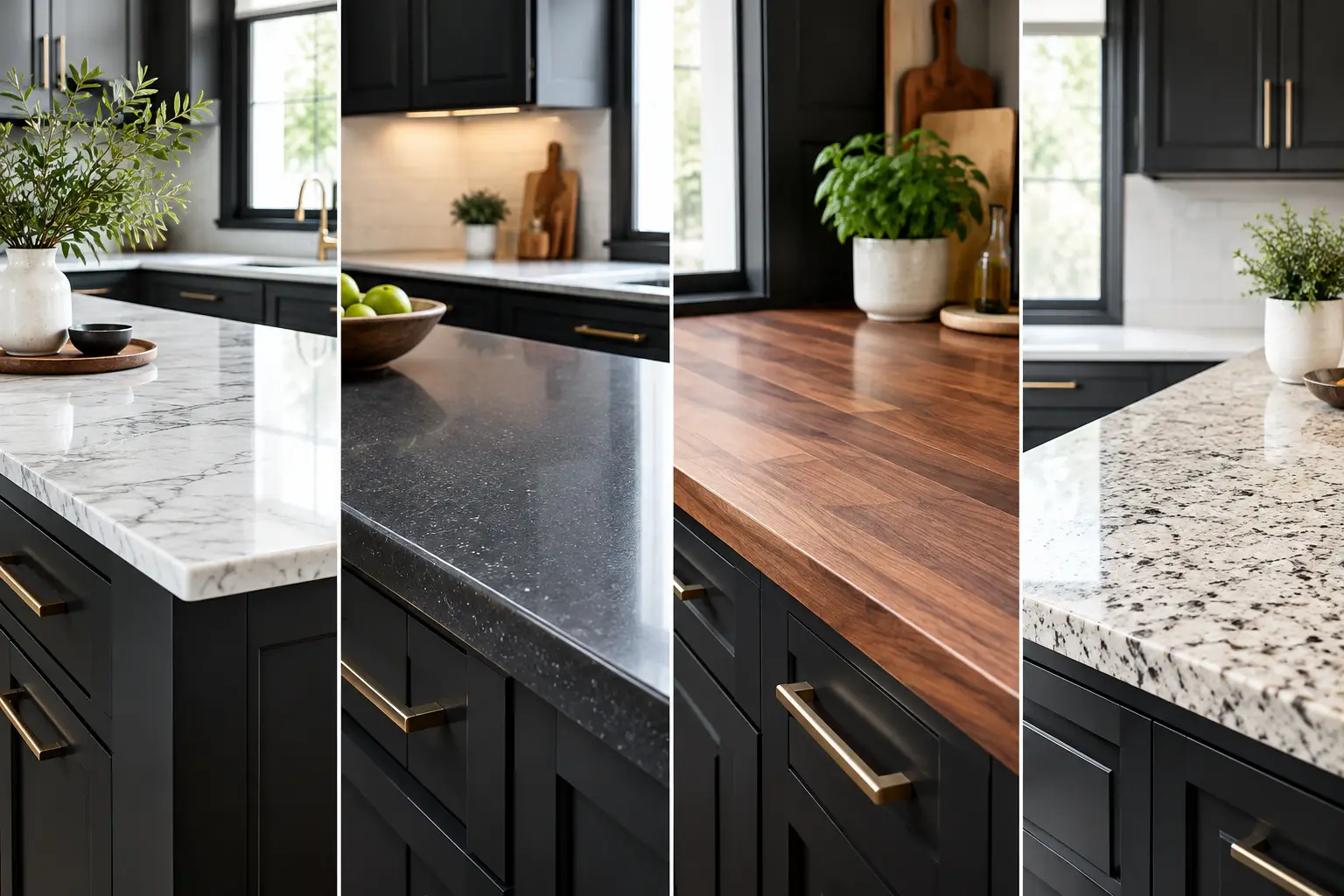
Dark cabinets can make a kitchen feel tailored and substantial, but they leave less room for a countertop that is merely “close enough.” The best countertop options for dark cabinets depend on the cabinet undertone, the amount of natural light, and how much visual movement the room can handle. A bright white surface can look crisp against black or espresso cabinetry, while a warm stone may be the better fit for deep brown, green, or charcoal finishes.
The countertop is also where the design becomes physical. Slab layout, seam placement, sink cutouts, edge profiles, and backsplash height all affect the finished result. Choosing a colour sample before seeing the full material can be useful, but it should not be the final decision for a veined natural stone or a highly patterned quartz.
Start with the undertone of the dark cabinet
“Dark” is a broad description. A cabinet that reads as black may have blue, brown, green, or grey undertones. Espresso cabinets often carry noticeable warmth, while dark blue cabinets can look nearly black under some lighting. Put the cabinet sample beside the countertop sample in the actual room if possible, then look at it in daylight and under the kitchen lighting.
A surface with the wrong undertone can make a well-built kitchen feel disconnected. Cool white quartz with a sharp grey vein may suit charcoal or blue-black cabinets, but it can appear stark beside warm walnut-toned cabinetry. Conversely, cream or beige stone can soften warm dark cabinets beautifully but may look yellow against a very cool black finish.
Lighting changes this decision more than many homeowners expect. Dark cabinetry absorbs light, so kitchens with limited windows often benefit from a lighter countertop, reflective finish, or full-height backsplash that carries the surface upward. A dark-on-dark combination can work, but it needs enough lighting and contrast in other elements, such as wall colour, hardware, or flooring, to avoid looking flat.
Light countertops for dark cabinets
Light surfaces are the most common direction because they clearly separate the work surface from the cabinetry. That contrast can make a smaller kitchen feel more open and makes dark cabinet details easier to see.
White and off-white quartz
White quartz is a practical choice for homeowners who want a clean contrast with dark cabinets and a relatively consistent appearance across the kitchen. Designs range from plain soft whites to marble-look patterns with grey, taupe, or warm brown veining. The right option depends on whether the cabinets need a crisp contrast or a warmer transition.
Quartz is nonporous, which generally makes everyday cleanup straightforward. Still, “white” does not mean identical from one design to another. Some options have a bright, cool base; others are creamy or carry noticeable speckling. If the design has directional veining, review the slab layout before fabrication, particularly for a large island, waterfall leg, or full-height backsplash.
For dark cabinets, avoid choosing a heavily veined quartz simply because it looks dramatic on a small sample. Once it covers long perimeter runs and an island, the pattern can become the dominant feature. That may be exactly the intended look, but it should be deliberate.
Soft grey, greige, and light taupe
These colours provide contrast without the sharpness of a pure white counter. A pale grey works well with charcoal, black, or navy cabinets, especially when the room has stainless steel or brushed nickel details. Greige and light taupe often suit dark brown, black, or muted green cabinets because they bridge cool and warm elements.
A subtle pattern is often easier to live with than a completely solid pale surface. It can make crumbs, water marks, and everyday use less visually obvious without competing with the cabinetry. The specific finish matters too. Polished surfaces reflect more light, while honed or matte finishes create a quieter appearance but may show marks differently depending on the material.
Marble and marble-look surfaces
White marble with grey or warm veining is a classic pairing with dark cabinets. It offers natural variation that cannot be replicated exactly, and that variation is part of the appeal. It also requires an honest discussion about use. Marble can etch when exposed to acidic foods and drinks, and it can stain if spills are left untreated. Sealing helps with stain resistance but does not prevent etching.
For kitchens that need the look with less day-to-day concern, marble-look quartz, porcelain, or sintered stone may be worth considering. Their performance characteristics vary by product and manufacturer, so the exact slab or collection should be reviewed before selecting it for a particular application.
Dark and mid-tone countertop options for dark cabinets
A light countertop is not the only answer. Tonal kitchens can look intentional and refined when the materials have enough difference in texture, veining, or finish.
Black, charcoal, and deep grey stone
Black granite, dark quartz, soapstone-look materials, and charcoal porcelain can create a low-contrast kitchen with a strong architectural feel. This direction works particularly well in rooms with generous windows, light walls, or a large island that breaks up the dark perimeter cabinetry.
The practical trade-off is visibility. Dust, fingerprints, and water spots may stand out on a very dark polished surface. A leathered or honed finish can change the look and reduce glare, but it also changes how the material feels and cleans. Not every stone or manufactured slab is available in every finish, and some finishes may require more attention around oils or spills.
Dark natural stone should always be selected from the actual slab. Two slabs with the same name can have different veining, mineral deposits, fissures, or movement. Those are normal characteristics of many natural materials, not fabrication defects, but they should be understood before the slab is cut.
Warm brown, bronze, and earthy surfaces
Dark cabinets with brown undertones often pair naturally with quartzite, granite, or quartz that includes cream, gold, rust, bronze, or soft brown movement. These combinations can add warmth without making the room feel overly traditional. A warm countertop can also connect dark cabinetry to wood floors or brass hardware.
Quartzite is often selected for its natural movement and durability, but slabs vary significantly. Some have pronounced fissures, colour variation, or areas that need careful layout. Depending on the stone, sealing and appropriate care may be recommended. Review the slab in person and ask how its features will appear around sink cutouts, seams, and backsplash pieces.
Countertop details that affect the final look
Material selection is only part of the decision. With dark cabinets, small fabrication choices tend to stand out because contrast draws the eye to every transition.
Seams and vein flow
Most large kitchens require seams because slabs have finite dimensions. A fabricator plans seams around slab size, cabinet layout, sink locations, structural considerations, and the direction of the pattern. A seam can be minimised visually, but it will not disappear completely.
For veined material, decide where the movement should run before fabrication. Veins that flow along a long island can look very different from veins that run across it. If a waterfall leg or full-height backsplash is included, ask whether vein matching is desired and what slab quantity or layout that may require. A continuous visual flow often requires additional material and more planning.
Thickness, edges, and overhangs
A standard-looking edge can be achieved in more than one way. Some projects use a thicker slab, while others use a built-up or mitered edge to create a heavier profile. A mitered edge can give an island a substantial look, but the joint line and pattern alignment need careful fabrication, especially with veined designs.
Overhangs for seating need to be discussed early. The amount of unsupported stone that is appropriate depends on the material, thickness, overhang depth, cabinet construction, and the support method. Brackets or other support may be needed, and it is better to coordinate them before installation than to add them after the countertop is in place.
Sink cutouts and backsplash choices
An undermount sink keeps the counter surface easy to wipe down and works with many stone materials. The sink type, cutout shape, and reveal should be confirmed during templating. Heavy sinks may need cabinet support, particularly with certain installations.
A short backsplash lets the countertop remain the focal point, while a full-height backsplash can make a light stone feel more continuous against dark cabinets. If the backsplash uses a strongly veined slab, plan the layout as part of the countertop package rather than treating it as an afterthought.
Visit the slab before making the final call
Samples are useful for narrowing choices, but a full slab tells the real story. This is especially true for granite, marble, quartzite, and any design with broad or directional veining. Look at the slab from several feet away, not only at the most attractive section. Consider where the most active areas may land on the island, near the sink, or at a seam.
For quartz, porcelain, and sintered stone, the available slab size and pattern repeat still matter. Some products are designed with continuous movement, while others have a more uniform or repeating print. The fabricator can explain how the selected material may lay out on your kitchen and where practical compromises may be needed.
Stone Valley Countertops can help homeowners compare slab options and discuss the fabrication details before templating, including seams, edge treatments, cutouts, and backsplash planning. A well-matched surface is not necessarily the lightest or most dramatic one. It is the material whose colour, movement, and practical requirements still make sense after the cabinet doors are open, the lights are on, and the kitchen is being used every day.
Frequently asked questions
What colour countertop looks best with dark cabinets?
White, off-white, light grey and greige countertops provide clear contrast with dark cabinetry. Warm beige or bronze-toned stone can work especially well with espresso or walnut finishes. The best choice depends on cabinet undertones and lighting.
Should countertops be lighter or darker than cabinets?
They do not have to be lighter, but a light countertop often helps a darker kitchen feel brighter. Dark-on-dark combinations work best when lighting, walls, flooring or backsplash details provide enough contrast.
Is quartz a good option for black kitchen cabinets?
Yes. Quartz offers a wide selection of white, cream, grey and marble-look designs that contrast well with black cabinets. It is nonporous and does not require routine sealing, although hot cookware should still be placed on trivets.
What countertops work with dark brown cabinets?
Warm off-white quartz, greige surfaces, and granite or quartzite with cream, gold or bronze movement usually complement brown undertones. Compare physical samples to avoid an overly yellow or grey pairing.
Are dark countertops difficult to maintain?
Maintenance depends on the material and finish. Some black polished surfaces show dust, fingerprints and dried water spots more clearly. Honed and leathered finishes can change their visibility, but may have different cleaning requirements.
Do I need to see the full slab before ordering?
For natural stone and heavily veined designs, viewing the actual slab is strongly recommended. It helps you approve colour variation, vein direction, potential seams and the placement of prominent patterns before cutting begins.
Compare countertop options at Stone Valley
Stone Valley Countertops supplies, fabricates and installs stone surfaces for kitchens across Ontario. Bring a cabinet sample, photos and approximate dimensions to discuss materials, slab layouts, edges and backsplash details. You can visit our showrooms in Mississauga, Bowmanville, Welland or Orillia, or contact us about your project.