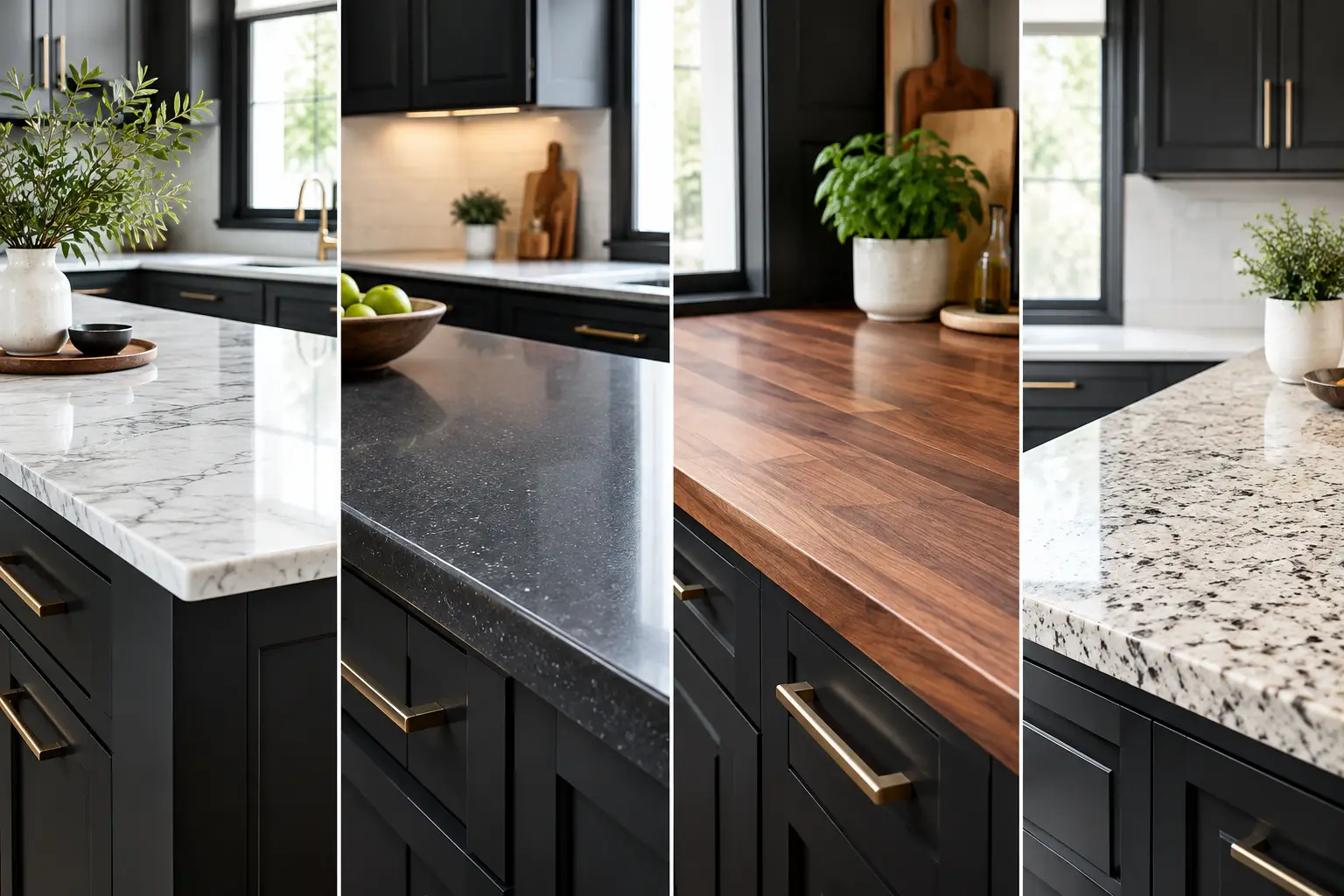
quartzite countertops

Quartz vs Quartzite Countertops Ontario: Key Differences

Quartz vs Quartzite Countertops: What Ontario Homeowners Need to Know

A practical guide to durability, maintenance, appearance, and value before you choose the right countertop for your kitchen or bathroom.

If you are comparing quartz vs quartzite countertops in Ontario, you are not alone. Many homeowners love the soft, elegant look of both materials, especially in popular colours inspired by Taj Mahal-style surfaces. But while they can look similar at first glance, quartz and quartzite are very different in how they are made, how they perform, and how much maintenance they need.

The right choice depends on your priorities. Some homeowners want a surface that is easier to maintain. Others want the natural movement and one-of-a-kind beauty that only real stone can offer. This guide breaks it down in simple terms so you can choose confidently.

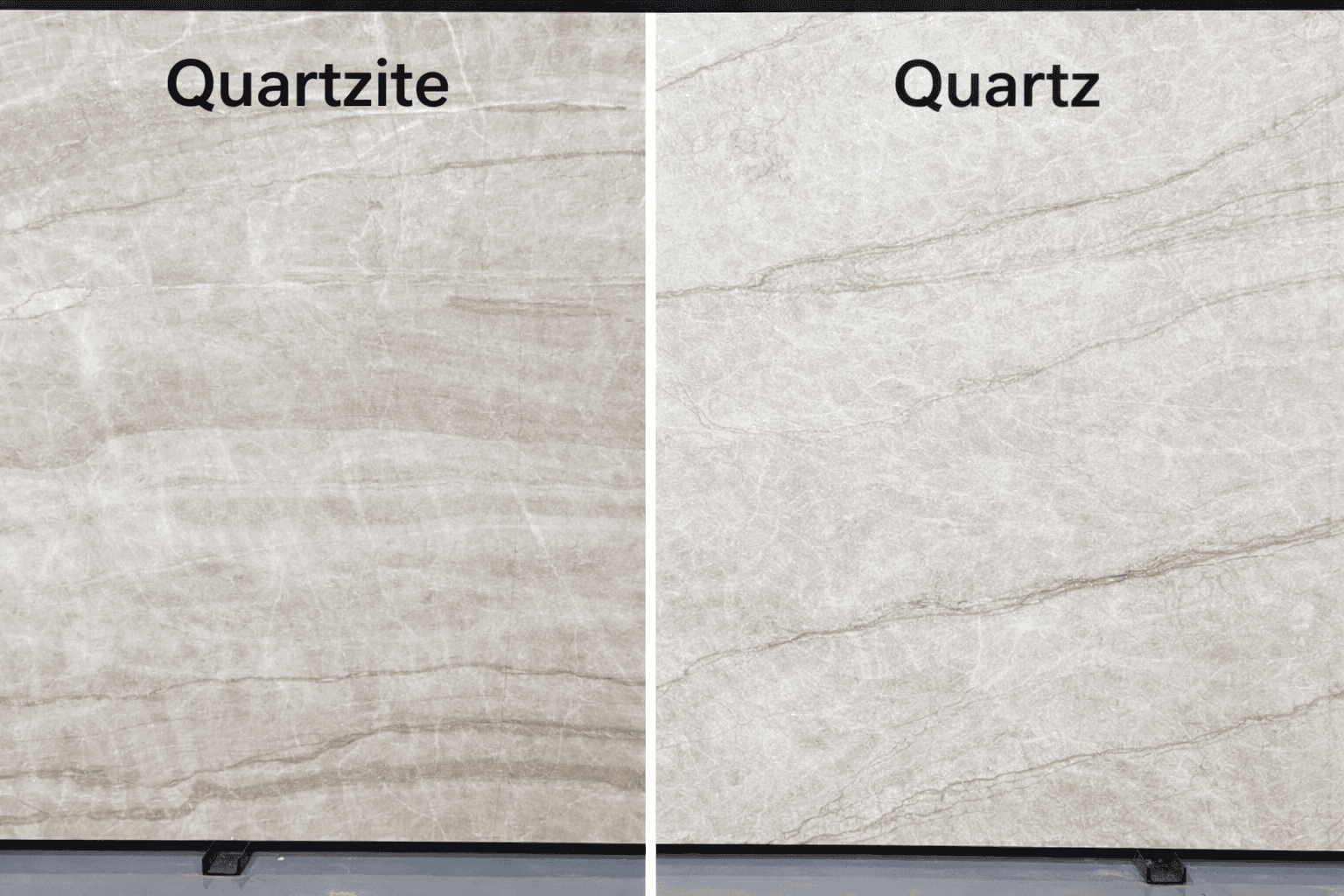
Side-by-side comparison of Taj Mahal quartzite and quartz countertops showing differences in natural veining and uniform pattern in Ontario
Side-by-side comparison showing how quartzite typically has more natural movement, while quartz usually offers a more consistent pattern.

Quick Answer

Quartzite is a natural stone formed by heat and pressure, so every slab is unique and usually has more natural veining and variation. Quartz is an engineered surface made with crushed quartz and resin, so it is more consistent, lower maintenance, and easier for many homeowners to live with day to day.

If you want a more natural and luxurious look, quartzite is often the winner. If you want easier maintenance and a more predictable pattern, quartz is often the better fit.

What Is the Difference Between Quartz and Quartzite?

The biggest difference is simple:

Quartzite is natural stone.
Quartz is engineered stone.

Quartzite

Quartzite starts as sandstone and changes under intense heat and pressure inside the earth. The result is a very hard natural stone with unique veining, colour movement, and character. No two slabs are exactly the same.

Quartz

Quartz countertops are made in a factory using crushed quartz mixed with resins and pigments. That gives manufacturers more control over colour, pattern, and consistency. It also means the finished slab usually looks more uniform from one section to another.

Quartz vs Quartzite Countertops Comparison Table

FeatureQuartzQuartzite
Material TypeEngineered stoneNatural stone
AppearanceMore consistent and controlledMore natural movement and variation
MaintenanceLow maintenanceNeeds sealing and more care
PorosityNon-porousPorous natural stone
Heat ResistanceGood, but direct heat should be avoidedGenerally better heat resistance
Pattern ConsistencyUsually more uniformUsually more unique and unpredictable
Best ForBusy households wanting easier careHomeowners wanting natural stone beauty

Appearance: Which One Looks Better?

This depends on the style you want in your home.

Why homeowners choose quartz

Quartz is popular because it gives a clean, refined, consistent look. If you want your kitchen to feel bright, polished, and controlled, quartz makes that easier. It is also a strong option when you want the island, perimeter, backsplash, or multiple vanities to match closely.

Why homeowners choose quartzite

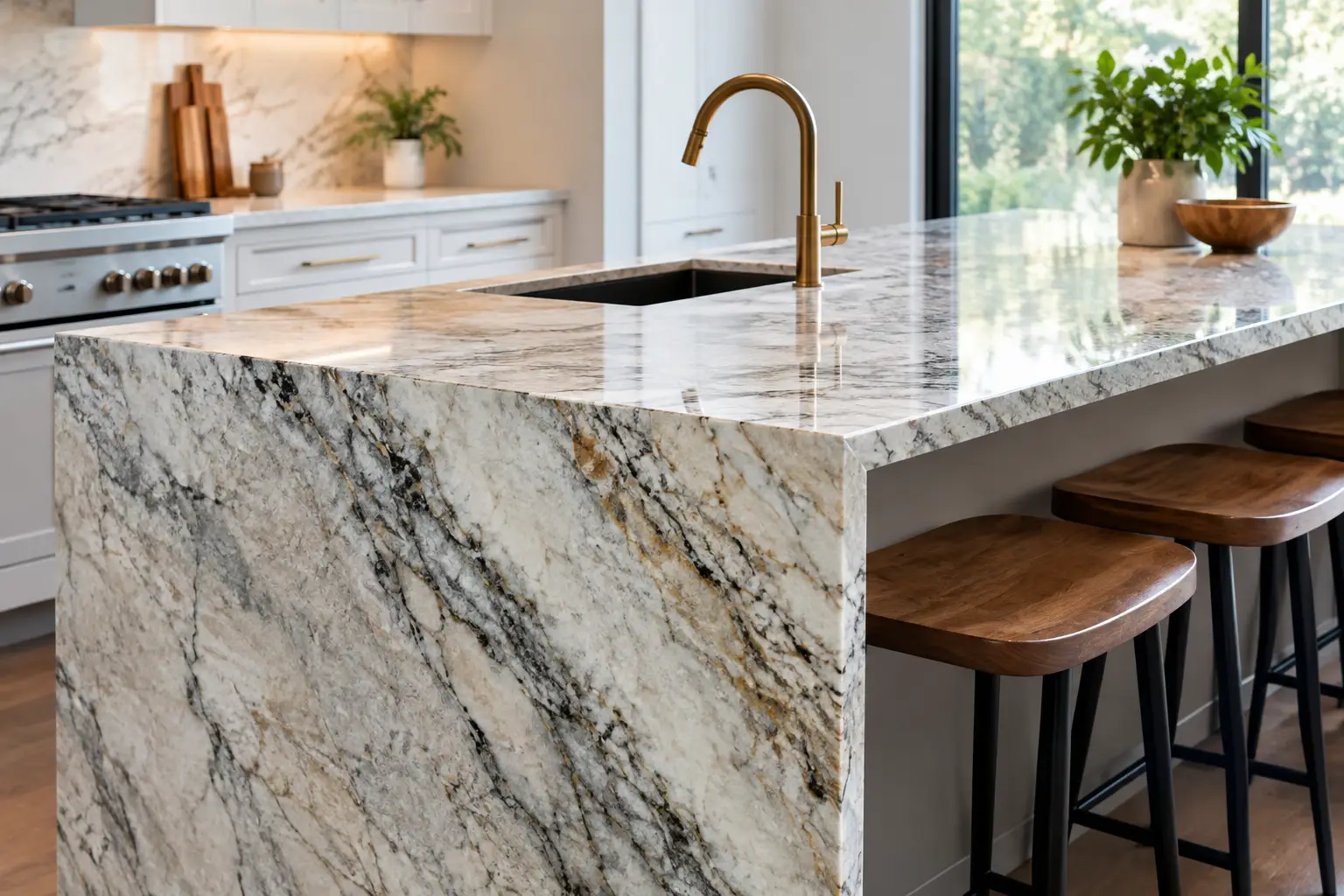
Quartzite wins when the goal is natural depth and movement. The veining usually feels softer, more organic, and less repeated. Many Ontario homeowners who want a high-end custom look are drawn to quartzite because it feels more like a statement piece than a manufactured surface.

Simple rule: choose quartz if you want consistency. Choose quartzite if you want natural character.

Durability: Which Countertop Performs Better?

Both materials can perform very well when fabricated and installed properly, but they behave differently.

Quartz Strengths

  • Non-porous surface
  • Easy to clean
  • No sealing required
  • Great for everyday family use
  • Consistent finish and colour

Quartzite Strengths

  • Natural stone beauty
  • Very hard material
  • Excellent visual depth
  • Often better resistance to direct heat
  • Unique slab-to-slab variation

That said, durability is not just about hardness. It is also about daily use, maintenance habits, and how the countertop fits your lifestyle.

Maintenance: Which One Is Easier?

If low maintenance matters most to you, quartz usually has the advantage.

Quartz maintenance

Quartz does not need sealing. Since it is non-porous, it is easier to keep clean and less demanding for busy kitchens. For many homeowners, that convenience is a major reason to choose quartz.

Quartzite maintenance

Quartzite is natural stone, so it normally needs sealing to help protect it. It can still be a fantastic countertop material, but it asks for more care. Homeowners who love quartzite usually accept that extra maintenance because they want the natural look.

Best for easy care: quartz.
Best for natural stone lovers: quartzite.

Can Quartz and Quartzite Look Similar?

Yes, absolutely. This is why so many homeowners get confused during the shopping process.

Some quartz colours are designed to imitate natural stones such as Taj Mahal quartzite. From a distance, they can look similar. But when you compare them side by side, quartzite usually shows more natural depth, more irregular veining, and more organic movement. Quartz usually looks more controlled and repeatable.

That does not mean quartz looks bad. In many kitchens, that cleaner and more consistent look is exactly what the homeowner wants.

Which One Is Better for Ontario Kitchens?

For many Ontario kitchens, quartz is the easier choice because it offers a good balance of style, performance, and low maintenance. It works especially well for busy family homes, rentals, and projects where the homeowner wants a bright and consistent design.

Quartzite is often the better choice when the countertop is meant to be the star of the room. If you are investing in a custom kitchen and want a natural slab with real movement and premium character, quartzite can be worth it.

When to Choose Quartz

  1. You want a countertop that is easier to maintain.
  2. You want a more consistent look across the kitchen.
  3. You prefer not to deal with sealing.
  4. You want a practical surface for daily family use.
  5. You like stone-inspired patterns with more predictability.

When to Choose Quartzite

  1. You want real natural stone.
  2. You love unique veining and movement.
  3. You want a more custom, high-end slab look.
  4. You do not mind extra maintenance.
  5. You want your countertop to feel one of a kind.

What About Fabrication and Installation?

No matter which material you choose, the final result depends heavily on fabrication quality, seam planning, edge details, sink cutouts, and installation accuracy. A great slab can still disappoint if it is not measured, fabricated, and installed properly.

At Stone Valley Countertops, we help homeowners, contractors, and designers compare materials based on real project goals, not just showroom samples. We also guide clients through layout, edge profile selection, thickness options, and final installation details.

If you want to understand how the process works from start to finish, read our guide on how countertops are installed in Ontario.

Final Verdict: Quartz vs Quartzite Countertops

There is no one-size-fits-all winner.

Quartz is usually better for homeowners who want easier maintenance, consistency, and day-to-day practicality.

Quartzite is usually better for homeowners who want natural stone beauty, unique movement, and a more luxurious slab appearance.

The best choice comes down to how you want the countertop to look, how much maintenance you are comfortable with, and what matters most in your kitchen or bathroom project.

If you are also deciding on slab thickness, see our guide on 2cm vs 3cm countertops.

Frequently Asked Questions

Is quartz better than quartzite for kitchens?

Quartz is often better for homeowners who want lower maintenance and a more consistent look. Quartzite is often better for homeowners who want natural stone beauty and unique veining.

What is the main difference between quartz and quartzite?

The main difference is that quartz is engineered, while quartzite is a natural stone. That affects maintenance, appearance, and pattern consistency.

Does quartzite need sealing?

Yes, quartzite usually needs sealing because it is a natural stone. Proper sealing helps protect the surface and supports long-term performance.

Does quartz need sealing?

No, quartz does not typically need sealing because it is non-porous.

Which looks more natural, quartz or quartzite?

Quartzite usually looks more natural because each slab has unique movement, variation, and veining created by nature.

Can quartz look like Taj Mahal quartzite?

Yes, some quartz colours are designed to resemble Taj Mahal quartzite. They can be similar in tone, but quartzite usually has more natural depth and less pattern repetition.

Need Help Choosing the Right Countertop?

If you are comparing quartz vs quartzite countertops for your Ontario home, Stone Valley Countertops can help you choose the right material based on style, maintenance, and project goals.

Contact Stone Valley Countertops to discuss your kitchen, vanity, or renovation project.

Most Durable Countertops: What Lasts the Longest?

When choosing the most durable countertops, homeowners want a surface that can withstand scratches, heat, and stains while maintaining its aesthetic appeal for years. But which countertop material is the most long-lasting?

In this guide, we’ll explore the strongest countertops, comparing scratch resistance, heat tolerance, stain protection, and longevity to help you make the right choice.

πŸ’‘ Looking for more countertop options? Check out our guide on Types of Countertops: Discover the Best Materials for Your Home.


What Makes the Most Durable Countertops Last?

A highly durable countertop should excel in these four areas:

  • Scratch resistance – Can it handle knives and heavy use?
  • Heat resistance – Will it withstand hot pots and pans?
  • Stain resistance – Can spills be cleaned easily?
  • Impact resistance – Will it chip or crack under pressure?

Now, let’s rank the most durable countertops from strongest to weakest.


Top 5 Most Durable Countertops That Last a Lifetime

1. Quartzite (The Hardest Natural Stone – Best Overall ⭐⭐⭐⭐⭐)

  • Harder than granite – Resists scratches better than any other natural stone.
  • Extreme heat resistance – Handles direct heat from pots and pans without damage.
  • Marble-like beauty – Natural veining adds a luxurious look.
  • Requires sealing – Porous surface needs sealing to prevent stains.

πŸ’‘ Best for: Homeowners who want the toughest natural stone with a high-end aesthetic.


2. Granite (Classic, Scratch & Heat-Resistant ⭐⭐⭐⭐)

  • Highly durable – Resistant to cuts, scratches, and high temperatures.
  • Unique natural patterns – No two slabs are the same.
  • Needs occasional sealing – Prevents liquid absorption and stains.

πŸ’‘ Best for: Homeowners looking for a low-maintenance, natural stone countertop.


3. Porcelain (Ultra-Heat Resistant & Stain-Proof ⭐⭐⭐⭐)

  • Non-porous – Resists stains and requires no sealing.
  • Superior heat resistance – Withstands high cooking temperatures.
  • Lightweight yet strong – Ideal for modern kitchens and backsplashes.

πŸ’‘ Best for: Those who want a modern, easy-to-maintain countertop with exceptional durability.


4. Quartz (Best Low-Maintenance Countertop ⭐⭐⭐⭐)

  • Non-porous – Naturally stain-resistant and doesn’t require sealing.
  • Scratch-resistant – Holds up well against daily wear and tear.
  • Not fully heatproof – Prolonged heat exposure may cause discoloration.

πŸ’‘ Best for: Those who need a stylish, durable, and low-maintenance countertop.


5. Concrete (Tough & Industrial Look ⭐⭐⭐)

  • Super durable – Highly scratch-resistant.
  • Heat-resistant – Withstands high temperatures from cookware.
  • Requires sealing – Prevents staining and moisture absorption.

πŸ’‘ Best for: Industrial-style kitchens or homeowners who enjoy DIY-friendly materials.


Which Countertop Material is Best for You?

  • Quartzite – The hardest natural stone countertop, perfect for durability and luxury.
  • Granite – A classic choice for heat resistance and longevity.
  • Porcelain – Ideal for modern kitchens needing a stain-proof, low-maintenance surface.
  • Quartz – Best for zero-maintenance homeowners wanting a scratch-resistant option.
  • Concrete – A stylish choice for custom, industrial-style kitchens.

Final Thoughts: The Most Durable Countertops for Your Home

When it comes to countertop longevity, quartzite, granite, and porcelain are the top contenders. With proper care, these durable kitchen countertops will last for decades while enhancing your home’s aesthetic appeal.

Still unsure? Fill out our quote request form belowΒ for a personalized recommendation on the best countertop for your home!

How to Maintain Your Countertops for a Lifetime

Investing in high-quality countertops is a big decision, so it’s essential to know how to keep them in top condition for years to come. Whether you have quartz, granite, quartzite, or another stone surface, proper care will extend their lifespan and keep them looking brand new.

πŸ’‘ Looking for the best countertop material? Check out our guide on Types of Countertops: Discover the Best Materials for Your Home.

This guide will cover the best cleaning, sealing, and maintenance tips for long-lasting countertops.


General Countertop Maintenance Tips

No matter the material, these general rules apply to all countertops:

Wipe up spills immediately – Prevent stains by cleaning up spills as soon as they happen.
Use mild cleaners – Harsh chemicals can damage or dull the surface.
Use cutting boards and trivets – Avoid direct contact with knives and hot pots.
Seal natural stone regularly – If your countertop is porous, sealing is crucial.
Avoid abrasive scrubbers – Use a microfiber cloth or sponge to prevent scratches.

Each countertop material has unique maintenance requirements, so let’s break it down by type.


How to Maintain Quartz Countertops

Quartz countertops are non-porous and require minimal maintenance. However, improper cleaning can still damage the surface.

Daily Cleaning: Use a mild dish soap and warm water with a soft cloth.
Stain Removal: For tougher stains, use a mix of baking soda and water or rubbing alcohol.
What to Avoid:

  • Harsh chemicals like bleach or oven cleaners.
  • Placing hot pans directly on the surface (use trivets!).
  • Cutting directly on the countertopβ€”use a cutting board.

πŸ’‘ Tip: Since quartz doesn’t need sealing, regular cleaning is all that’s required!


How to Maintain Granite Countertops

Granite is a natural stone that’s extremely durable, but it needs proper sealing to prevent stains.

Daily Cleaning: Wipe with warm water and a pH-neutral stone cleaner.
Sealing: Apply a penetrating sealer every 1–2 years to maintain stain resistance.
What to Avoid:

  • Acidic cleaners (vinegar, lemon, or ammonia).
  • Leaving water or oil spills for too long.
  • Using rough scrubbers that can dull the surface.

πŸ’‘ Tip: To check if your granite needs sealing, sprinkle a few drops of water on the surface. If it absorbs within 5 minutes, it’s time to reseal!


How to Maintain Quartzite Countertops

Quartzite offers the beauty of marble with better durability, but it still requires proper sealing and care.

Daily Cleaning: Use a pH-balanced cleaner or mild dish soap with a soft cloth.
Sealing: Reseal every 6–12 months to prevent staining.
What to Avoid:

  • Acidic cleaners that can etch the surface.
  • Abrasive pads that could scratch the finish.
  • Direct heatβ€”use trivets for hot pots.

πŸ’‘ Tip: Quartzite is more stain-resistant than marble, but sealing helps keep it in top condition.


Countertop Protection Tips

Use Coasters & Mats: Prevent stains from coffee, wine, and juice by using coasters under glasses.
Cut on a Board, Not the Countertop: Even durable materials like granite and quartzite can scratch over time.
Wipe Spills Immediately: Natural stone absorbs liquids, leading to stains.
Avoid Heavy Impact: Dropping heavy objects can cause cracks or chips.

With these simple habits, your countertops will remain flawless for years!


Final Thoughts

Learning how to maintain your countertops ensures they stay beautiful and functional for a lifetime. Whether you have quartz, granite, or quartzite, regular cleaning, sealing (for natural stone), and protective measures will keep your surfaces in pristine condition.

πŸ’‘ Still deciding on the best countertop for your home? Read our guide on Types of Countertops: Discover the Best Materials for Your Home.

Need expert advice? Fill out our quote request form for professional countertop maintenance tips!


Your Thoughts?

Have a countertop care question? Fill out our quote request form for expert cleaning and maintenance recommendations! πŸš€

Best Kitchen & Bathroom Countertops – Top Choices & Benefits

Best Kitchen & Bathroom Countertops – Top Choices & Benefits

Choosing the best kitchen & bathroom countertops is an important decision for any home. The right surface enhances aesthetics, functionality, and durability. However, with so many options available, selecting the perfect material can feel overwhelming.

πŸ’‘ Not sure where to start? Check out our guide on Types of Countertops: Discover the Best Materials for Your Home.

This guide compares popular countertop materials, highlighting their benefits and drawbacks to help you make the best choice.


Key Factors to Consider

When choosing a countertop, it’s essential to evaluate a few key factors:

Can it withstand daily use? Durability plays a major role in ensuring your countertop lasts for years.

Does it require sealing or special care? Some materials need regular maintenance, while others are hassle-free.

Will it complement your home’s style? The aesthetic appeal of a countertop should match your kitchen or bathroom design.

What is your budget? Prices vary widely, so consider the best option within your price range.

Will it add to your home’s value? Certain materials, like quartzite and granite, can enhance resale value.

Each material offers unique advantages. Therefore, considering these factors will ensure you make an informed decision.


Best Kitchen & Bathroom Countertops – Material Comparison

1. Quartz Countertops

Why Choose Quartz?

  • βœ… Low Maintenance – No sealing required.
  • βœ… Non-Porous – Resistant to stains and bacteria.
  • βœ… Versatile Design Options – Available in various colors and patterns.

⚠ Potential Downsides:

  • Less heat-resistant than natural stone.
  • Prolonged sun exposure may cause discoloration.

πŸ’° Average Cost: $50 – $120 per sq. ft.


2. Granite Countertops

Why Choose Granite?

  • βœ… Highly Durable – Scratch and heat-resistant.
  • βœ… Distinctive Natural Patterns – No two slabs are alike.
  • βœ… Boosts Home Value – A premium choice for resale.

⚠ Potential Downsides:

  • Requires sealing to prevent stains.
  • Fewer color choices compared to engineered options.

πŸ’° Average Cost: $40 – $100 per sq. ft.


3. Quartzite Countertops

Why Choose Quartzite?

  • βœ… Extremely Hard & Scratch-Resistant – Tougher than granite.
  • βœ… Excellent Heat Resistance – Ideal for kitchens.
  • βœ… Natural Marble-Like Appearance – Luxury look with durability.

⚠ Potential Downsides:

  • Requires periodic sealing.
  • More expensive than quartz and granite.

πŸ’° Average Cost: $80 – $200 per sq. ft.


4. Marble Countertops

Why Choose Marble?

  • βœ… Timeless Elegance – Adds a luxurious feel to any space.
  • βœ… Naturally Cool Surface – Ideal for baking and pastry-making.

⚠ Potential Downsides:

  • Prone to scratches and stains.
  • Requires frequent maintenance.

πŸ’° Average Cost: $60 – $180 per sq. ft.


5. Solid Surface Countertops (Corian, etc.)

Why Choose Solid Surface?

  • βœ… Seamless & Repairable – Scratches can be buffed out easily.
  • βœ… Variety of Color Options – Works with modern designs.

⚠ Potential Downsides:

  • Less heat-resistant than stone.
  • Can scratch if not maintained properly.

πŸ’° Average Cost: $40 – $80 per sq. ft.


Best Kitchen & Bathroom Countertops – Cost Comparison

Here’s a general price comparison of countertop materials:

Countertop MaterialAverage Cost (Per Sq. Ft.)
Quartz$50 – $120
Granite$40 – $100
Quartzite$80 – $200
Marble$60 – $180
Solid Surface$40 – $80

Quartzite and marble are premium choices, while granite and solid surface countertops are more budget-friendly.


Which Kitchen & Bathroom Countertop is Right for You?

  • Choose Quartz for a low-maintenance, stain-resistant option.
  • Choose Granite for a natural stone that’s heat- and scratch-resistant.
  • Choose Quartzite for luxury and extreme durability.
  • Choose Marble for elegance with high maintenance requirements.
  • Choose Solid Surface for a budget-friendly, seamless appearance.

Since every home has different needs, selecting the right countertop depends on your lifestyle, budget, and style preference.


Final Thoughts

Selecting the best kitchen & bathroom countertops requires balancing durability, maintenance, cost, and design. Whether you prefer the versatility of quartz, the natural beauty of granite, or the luxury of marble, there’s a perfect option for you.

πŸ’‘ Still deciding? Check out our guide on Types of Countertops: Discover the Best Materials for Your Home.

Need expert guidance? Fill out our quote request form to get tailored recommendations!


Your Thoughts?

Looking for the perfect countertop? Fill out our quote request form to get a personalized estimate and expert recommendations! πŸš€

Need expert advice? Fill out our quote request form to find the perfect countertop for your home!


Your Thoughts?

Looking for the perfect countertop? Fill out our quote request form to get a personalized estimate and expert recommendations! πŸš€

Quartzite vs Quartz vs Granite: Which Countertop is Best?

Quartzite vs Quartz vs Granite: Which Countertop is Best?

Choosing a new countertop for your home is a major decision. Many homeowners compare Quartzite vs Quartz vs Granite because each material offers unique benefits. Moreover, understanding the differences in durability, maintenance, cost, and style will help you decide which countertop best suits your needs.


Quartzite vs Quartz vs Granite – Key Differences

To make an informed decision, it is essential to examine the primary differences between these materials.

Quartzite vs Quartz vs Granite – Material Composition

  • Quartzite:
    Quartzite is a natural metamorphic rock formed when sandstone is exposed to extreme heat and pressure. This process produces a hard, attractive stone with a marble-like appearance.

  • Quartz:
    Quartz is an engineered stone created by combining crushed quartz crystals with resin and pigments. Consequently, it offers a consistent look and a variety of colors while requiring less maintenance.

  • Granite:
    Granite is a natural igneous rock that forms from cooled magma. It is renowned for its distinctive patterns and robust durability, making it a popular choice for kitchens and bathrooms.


Quartzite vs Quartz vs Granite – Durability & Scratch Resistance

FeatureQuartziteQuartzGranite
DurabilityExtremely hard and scratch-resistantDurable but can scratch with heavy useHard and scratch-resistant
Heat ResistanceHighModerateHigh
PorosityPorous (requires sealing)Non-porousPorous (requires periodic sealing)

Quartzite and granite are naturally robust; however, they need regular sealing to protect against stains. In contrast, quartz does not require sealing, yet it is less resistant to high heat.


Pros & Cons of Quartzite vs Quartz vs Granite

Quartzite Countertops

  • Pros:

    • Exhibits natural beauty with elegant, marble-like veining.
    • Extremely durable and highly resistant to heat.
    • Offers excellent scratch resistance.
  • Cons:

    • Requires periodic sealing to prevent stains.
    • Generally more expensive than quartz options.

Quartz Countertops

  • Pros:

    • Low maintenance since it does not need sealing.
    • Customizable colors and patterns to suit any design.
    • Non-porous surface that resists stains.
  • Cons:

    • Less heat-resistant compared to natural stone alternatives.
    • May discolor when exposed to prolonged direct sunlight.

Granite Countertops

  • Pros:

    • Highly durable and resistant to heat.
    • Unique natural patterns add character to any space.
    • Offers strong scratch resistance.
  • Cons:

    • Requires periodic sealing to maintain its appearance.
    • Limited color options relative to quartz.

Cost Comparison

The cost of these countertops varies based on quality, availability, and installation complexity. Here is a general price range per square foot:

  • Quartzite: $80 – $200
  • Quartz: $50 – $120
  • Granite: $40 – $100

Typically, quartzite is the priciest option due to its natural formation and superior durability, whereas granite tends to be more budget-friendly.


Which Countertop Should You Choose?

  • Opt for Quartzite if you desire a natural stone that is both durable and heat-resistant, with a luxurious look that adds value to your home.
  • Select Quartz if you prefer a low-maintenance option that offers versatility in design and color.
  • Choose Granite if you are drawn to a classic, naturally patterned stone that balances durability with affordability.

Final Verdict

Your choice depends on budget, maintenance preference, and style. If you’re looking for a balance of beauty and durability, quartzite is an excellent investment.

πŸ’‘ Still unsure? Check out our complete countertop material guide for more options


Your Thoughts?

Looking for the perfect countertop for your home? Fill out our quote request form to get a personalized estimate and expert recommendations! πŸš€