Quartz Countertops

2cm vs 3cm Countertops: Which Thickness Is Better in Ontario?

2cm vs 3cm Countertops: Which Thickness Is Better in Ontario?

Choosing between 2cm vs 3cm countertops is one of the most important decisions when planning a new kitchen, bathroom vanity, or renovation project. The thickness you choose affects strength, edge style, support requirements, appearance, and overall cost.

Many Ontario homeowners ask the same question: is 2cm enough, or is 3cm the better long-term choice? The answer depends on your design, your budget, the type of installation, and how you want the finished countertop to look.

At Stone Valley Countertops, we fabricate and install quartz, granite, marble, porcelain, and other stone surfaces across Mississauga, Bowmanville, Welland, and surrounding areas. In this guide, we will explain the real difference between 2cm and 3cm countertops in simple terms so you can make the right decision with confidence.

A side-by-side comparison of 2cm and 3cm countertop thickness on a quartz installation by Stone Valley Countertops.
A visual comparison of 2cm and 3cm countertop thickness on a quartz installation.

Quick Answer

In most Ontario kitchens, 3cm countertops are usually the better choice because they are thicker, stronger, and often do not require plywood support underneath. They also create a more solid and premium-looking edge.

2cm countertops can still be an excellent option, especially when paired with the right edge build-up, proper support, and the right design style. They are commonly used for modern looks, vertical applications, and projects where weight or budget matters.

What Does 2cm vs 3cm Countertops Mean?

The terms 2cm and 3cm refer to the thickness of the stone slab.

A 2cm countertop is approximately 20 millimetres thick. A 3cm countertop is approximately 30 millimetres thick. That small difference may not sound like much, but in stone fabrication and installation, it makes a big difference in how the countertop performs and how it looks once installed.

For quartz countertops, granite countertops, and some other natural or engineered stone products, these two thicknesses are among the most common choices.

2cm vs 3cm Countertops Comparison Table

Feature2cm Countertops3cm Countertops
ThicknessApproximately 20mmApproximately 30mm
StrengthStrong, but usually needs more support depending on span and applicationStronger and more rigid for many kitchen layouts
Support RequirementsMay require plywood support or additional reinforcementOften does not require plywood for standard cabinet installations
AppearanceSlimmer, modern, cleaner edge profile unless built upThicker, heavier, more premium appearance
Edge OptionsCan be mitered or laminated to appear thickerNaturally thicker edge without build-up
WeightLighterHeavier
CostCan be lower in some cases, but edge build-up and support may add costOften higher material cost, but may reduce extra support needs
Best ForModern designs, vanities, wall cladding, and selected kitchensBusy kitchens, larger spans, premium kitchen islands, and heavier-use areas

Is 2cm Quartz Strong Enough?

Yes, 2cm quartz is strong enough for many applications when it is fabricated and installed properly. The important part is not just the slab thickness. It is also the cabinet structure, the overhang size, the support underneath, the sink cutout area, and the edge detail.

A well-installed 2cm quartz countertop can perform very well in a kitchen or bathroom. However, it is generally less forgiving than 3cm when it comes to long unsupported spans or areas with more stress, such as around sinks, cooktops, and overhangs.

This is why experienced fabrication matters. The same 2cm slab can perform beautifully in one kitchen and have issues in another if the support or layout is not planned properly.

Installer insight: 2cm is not “bad” and 3cm is not automatically “required” for every project. The right choice depends on the design, edge profile, support plan, and how the countertop will actually be used every day.

Do 2cm Countertops Need Plywood Support?

In many cases, yes. A 2cm countertop may need plywood support under the stone, especially for kitchen applications. This added support helps distribute weight more evenly and reduce stress on the slab.

That said, the answer is not always the same for every project. Some installations depend on the material brand, the cabinet construction, the span, and the edge style. Certain applications may also use steel supports or brackets instead of plywood in specific areas.

If you are planning an overhang, breakfast bar, or island seating area, support becomes even more important. You can also read our full Countertop Overhang Support Guide for more detail on how overhangs should be reinforced properly.

Pros and Cons of 2cm Countertops

Advantages of 2cm Countertops

  • Creates a sleek, modern, minimalist look.
  • Weighs less than 3cm, which can help in some design applications.
  • Works well for bathroom vanities, wall panels, and selected kitchen projects.
  • Can be built up with a mitered or laminated edge to create the look of a thicker slab.
  • May offer cost savings in certain situations depending on fabrication details.

Disadvantages of 2cm Countertops

  • Usually needs more planning for support.
  • May require plywood underneath in many kitchen installations.
  • Can be less forgiving around cutouts and unsupported spans.
  • If you want a thicker visual look, extra fabrication may be needed.
  • Improper installation increases the risk of long-term issues.

Pros and Cons of 3cm Countertops

Advantages of 3cm Countertops

  • Thicker and more rigid for many kitchen applications.
  • Often does not require plywood support on standard cabinet runs.
  • Creates a stronger, more substantial, premium-looking edge.
  • Excellent choice for busy family kitchens and larger islands.
  • Often preferred for straightforward fabrication and installation.

Disadvantages of 3cm Countertops

  • Heavier than 2cm material.
  • May cost more depending on the product and supplier.
  • Not always necessary for every vanity or design style.
  • Some ultra-slim modern looks may be better achieved with 2cm.

Which Thickness Looks Better?

This comes down to design style.

If you want a thin, modern, European-style look, 2cm can look beautiful. It gives the countertop a sharper and lighter appearance. This style is often used in contemporary kitchens, bathroom vanities, and modern renovations.

If you want a fuller, heavier, more luxurious look, 3cm usually wins. It naturally gives the edge more visual presence and often feels more premium in traditional, transitional, and high-end kitchen designs.

There is also a middle ground. With the right fabrication, a 2cm slab can be mitered or built up to visually appear much thicker. This is common when homeowners want the clean performance of engineered stone but also want a bold designer edge profile.

Which Is Better for Kitchens: 2cm or 3cm?

For most kitchens, 3cm is usually the better choice. It gives better rigidity, a stronger look, and fewer support concerns in many standard cabinet installations.

That is especially true for:

Busy family kitchens, large islands, homes with children, projects with sink cutouts near corners, kitchens with more overhang, and homeowners who want a solid premium finish without added build-up details.

However, 2cm can still be the right choice if the kitchen is designed properly and the support is handled correctly. Some premium modern kitchens use 2cm intentionally for the visual style.

Best general recommendation: If a homeowner wants the safest and most commonly recommended option for a kitchen, 3cm is usually the stronger all-around answer. If the homeowner wants a slim designer look and the project is engineered correctly, 2cm can work very well too.

What About Cost in Ontario?

One of the biggest questions homeowners ask is whether 2cm countertops are cheaper than 3cm. In many cases, they can be, but the final answer is not always that simple.

Countertop pricing in Ontario depends on much more than just slab thickness. It also depends on:

The material brand, the colour selection, slab availability, fabrication complexity, edge profile, sink cutouts, backsplash details, overhang support, and whether a 2cm slab needs additional plywood or laminated build-up.

Sometimes a 2cm slab starts with a lower material cost, but once extra edge work and support are added, the total difference becomes smaller. In other cases, 3cm may cost more upfront but simplify the installation and create better long-term value.

If you are still comparing materials, you can also visit our Quartz Countertops page to learn more about one of the most popular countertop options for Ontario homes.

When Stone Valley Countertops Recommends 2cm

At Stone Valley Countertops, we may recommend 2cm when the project calls for a slimmer modern look, when the application is a vanity or decorative surface, when the design includes a mitered edge build-up, or when the support plan has already been designed properly.

We also see 2cm used strategically in certain wall applications, shower areas, fireplace features, and custom projects where the visual result matters just as much as the structural plan.

When Stone Valley Countertops Recommends 3cm

We often recommend 3cm for kitchen countertops, larger islands, family homes, and projects where durability and long-term performance are the main priorities. It is usually the easier recommendation when a homeowner wants strength, simplicity, and a more solid finished look.

For many Ontario kitchens, especially in Mississauga, Bowmanville, Welland, and surrounding service areas, 3cm is the thickness homeowners feel most confident choosing once they understand the difference.

Common Mistakes Homeowners Make When Comparing 2cm vs 3cm

Thinking thinner means weak

2cm is not automatically weak. It simply requires more intentional planning in many applications.

Thinking thicker means always better

3cm is often the safer kitchen choice, but it is not the best fit for every design style or application.

Ignoring support requirements

Overhangs, sink cutouts, and unsupported spans matter just as much as slab thickness.

Choosing based only on price

The cheapest option is not always the best value if it creates extra fabrication or support requirements later.

Not asking the fabricator real installation questions

The right fabricator should explain support, edge treatment, cabinet readiness, overhang limits, and how the thickness choice affects the finished look.

Final Verdict: Should You Choose 2cm or 3cm Countertops?

If you want the simplest answer, here it is:

Choose 3cm countertops if you want the most common, strong, premium-looking kitchen option with fewer support concerns.

Choose 2cm countertops if you want a sleek modern look, lighter visual profile, or a design-specific application that is properly supported and professionally planned.

The best choice is not about following a trend. It is about matching the right thickness to your design, layout, and day-to-day use.

That is where professional fabrication and installation make the real difference.

Frequently Asked Questions About 2cm vs 3cm Countertops

Are 2cm countertops good for kitchens?

Yes, 2cm countertops can be good for kitchens when they are properly supported and professionally installed. They are commonly used in modern designs, but support requirements must be reviewed carefully.

Are 3cm countertops better than 2cm?

For many kitchens, 3cm countertops are often the better all-around choice because they are thicker, more rigid, and usually require less additional support. However, 2cm may be better for certain design styles and applications.

Do 2cm quartz countertops need plywood?

Many 2cm quartz countertops do need plywood or another support method, especially in kitchen installations. The exact requirement depends on the layout, span, material, and fabrication details.

Is 3cm quartz more expensive?

Often yes, but not always by a large amount once fabrication, support, and edge details are considered. Final pricing depends on the full project scope, not just the slab thickness alone.

Which countertop thickness looks more expensive?

3cm usually looks more substantial and premium because of its natural thickness. However, a well-made 2cm countertop with a mitered edge can also create a very high-end custom appearance.

Is 2cm or 3cm better for bathroom vanities?

Both can work well. Many vanities use 2cm successfully because the spans are smaller and the slimmer look suits bathroom design. 3cm can also be used when a thicker, bolder look is preferred.

What is the most popular countertop thickness in Ontario kitchens?

For many kitchens, 3cm is one of the most popular choices because homeowners like the stronger appearance and reduced support concerns. Still, 2cm remains popular in modern and custom applications.

Can 2cm countertops look like 3cm?

Yes. A 2cm countertop can be fabricated with a mitered or laminated edge build-up so it appears thicker and creates a more dramatic finished profile.

Why Homeowners Across Ontario Trust Stone Valley Countertops

Stone Valley Countertops fabricates and installs quartz, granite, marble, porcelain, quartzite, and other stone surfaces for homeowners, builders, designers, and contractors across Ontario. We focus on precise fabrication, clean installation, fast turnaround times, and helping customers choose the right solution for their space.

Whether you are planning a new kitchen in Mississauga, updating a vanity in Bowmanville, or comparing countertop thickness options for a renovation in Welland, our team can help you choose the right material, edge profile, and slab thickness for the best result.

Need Help Choosing 2cm or 3cm Countertops?

If you are planning a kitchen or bathroom renovation and want expert advice on countertop thickness, material selection, pricing, fabrication, and installation, contact Stone Valley Countertops today.

Contact Stone Valley Countertops

This guide was created using practical fabrication and installation insight to help Ontario homeowners make informed countertop decisions.

For additional product information, you can also explore leading quartz manufacturers such as Caesarstone and Cambria.

Quartz Countertops Cost in Ontario: 2026 Price Guide for Homeowners

Quartz Countertops Cost in Ontario: 2026 Price Guide for Homeowners

Quartz countertops cost in Ontario varies depending on the material brand, fabrication quality, layout complexity, and installation details. However, most homeowners want more than a rough number. They want to know what they are really paying for, what changes the final quote, and whether quartz is still worth it compared with granite and other surfaces. That is exactly what this guide explains.

Quick answer: In Ontario, quartz countertops are often priced by the square foot, and the final installed cost usually depends on the slab style, thickness, cutouts, edge profile, backsplash choice, and the skill of the fabricator and installer. Therefore, two kitchens with the same size can still end up with very different prices.

Quartz countertops cost Ontario kitchen installation
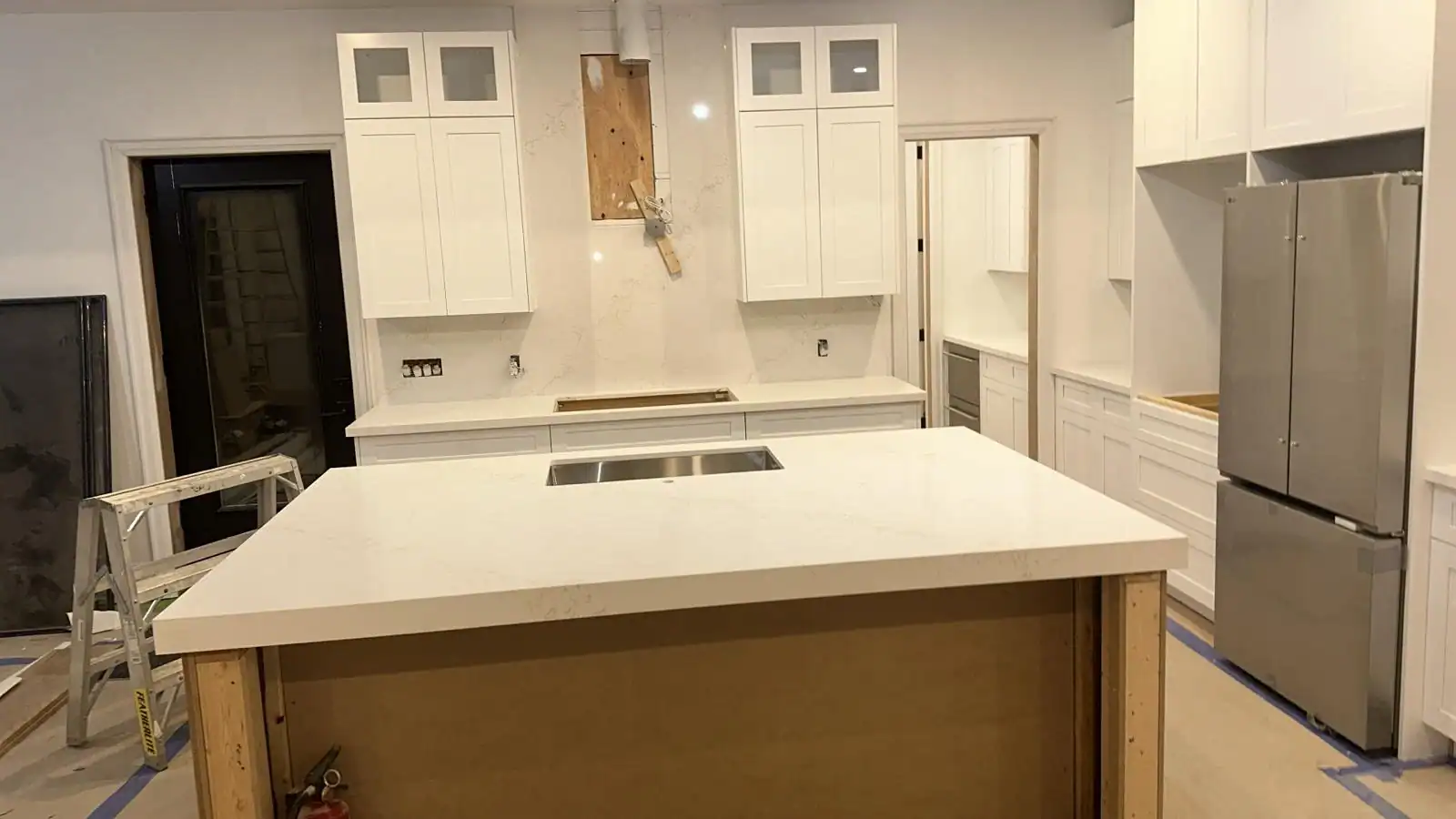
Premium quartz kitchen countertops installed by Stone Valley Countertops in Ontario.

The kitchen above features premium quartz countertops installed in an Ontario home. Because quartz is durable, low maintenance, and available in many colours and patterns, it remains one of the top choices for kitchen renovations, vanity tops, laundry rooms, bars, and fireplace surrounds. In addition, quartz works well for homeowners who want a clean, consistent look without the ongoing sealing that natural stone may require.

In this article, we will break down quartz countertop price per square foot in Ontario, explain what affects the total cost, compare quartz vs granite pricing, and help you understand how to shop smarter before requesting a quote. We will also answer the exact questions people ask Google and AI tools every day.

How Much Do Quartz Countertops Cost in Ontario?

For most Ontario projects, quartz countertop pricing is usually discussed in price per square foot. Yet the truth is simple: the cost can move up or down quickly based on the slab selected and the work required to fabricate and install it properly. As a result, homeowners should look at quartz pricing as a range, not as one flat number.

Typical quartz countertop price ranges in Ontario

  • Entry-level quartz: often suitable for simpler kitchens and more budget-focused renovations.
  • Mid-range quartz: a popular choice for many Ontario homes because it balances appearance, durability, and value.
  • Premium quartz: usually includes designer colours, stronger marble-look veining, luxury finishes, and more complex fabrication requirements.

When homeowners ask, “What is the price per square foot for quartz countertops?” the practical answer is this: the installed price often includes much more than the slab itself. It may include measuring, templating, fabrication, sink cutouts, polishing, installation, seam planning, and finishing work. Therefore, a lower material number does not always mean a lower final job cost.

Quartz Project TypeWhat Usually Affects PriceTypical Notes
Small vanity topMinimum job charge, sink cutout, edge finishEven a small top can cost more per square foot because setup and travel still apply.
Standard kitchenSquare footage, sink cutout, faucet holes, seams, backsplashThis is where most homeowners compare quartz countertop cost most closely.
Large islandSlab usage, waterfall sides, overhang support, seam strategyBig islands can increase waste and require advanced handling.
Luxury kitchenPremium slab, full-height backsplash, mitered edges, matching patternsDesigner features can raise labour and fabrication time significantly.

So, how much do quartz countertops cost in Ontario? In simple terms, a small straightforward job may stay closer to the lower end, while a custom kitchen with a waterfall island, book-matched style veining, full-height backsplash, and premium brand slab will land much higher. Because of that, the best quote is always based on the actual layout, not only on square footage.

What Affects Quartz Countertop Prices?

There is no single reason why one quartz kitchen costs more than another. Instead, several pricing factors work together. Once homeowners understand them, quotes become much easier to compare.

1. Brand and slab design

First, the brand matters. Well-known names such as Caesarstone Quartz and Cambria Quartz are often chosen for premium collections, refined finishes, and strong design consistency. In many cases, quiet solid colours cost less than dramatic marble-look patterns with bold veining. Therefore, appearance alone can shift the final number.

2. Thickness and edge profile

Next, thickness affects cost. Standard polished tops are usually more straightforward than thick-looking mitered edges. If a homeowner wants a luxury apron, a chunky profile, or a 4-inch mitered waterfall appearance, extra labour is required. Consequently, fabrication time rises and so does the quote.

3. Layout complexity

Straight runs are easier. Corners, angles, long spans, window notches, cooktop cutouts, and oversized islands require more planning and handling. In addition, large pieces may need special transport and more installers on site. Therefore, complexity is one of the biggest hidden pricing factors.

4. Sink cutouts and accessories

Undermount sink cutouts, faucet holes, soap dispenser holes, cooktop cutouts, and drain grooves all add work. Although they may look like small details, they require precision. Because quartz is engineered and dense, clean finishing matters. A poor cutout can ruin the visual result and the long-term performance.

5. Backsplash choice

A simple 4-inch backsplash usually costs less than a full-height quartz backsplash. Yet many homeowners still choose full-height because it looks more modern and gives the kitchen a stronger luxury feel. As a result, backsplash style should always be discussed early in the quote process.

6. Overhangs and support requirements

Island seating areas often need support depending on the overhang depth and slab thickness. Therefore, homeowners should review support requirements before fabrication begins. You can learn more in our Countertop Overhang Guide. This step is important because proper support protects the quartz and helps avoid future stress on unsupported areas.

7. Fabrication and installation quality

Finally, not all quotes represent the same workmanship. Precision measuring, seam placement, edge polishing, and careful installation all matter. In fact, a cheaper quote can become expensive later if seams are poor, overhangs are unsupported, or the slab is not installed correctly. For that reason, homeowners should always compare value, not just price.

What Is the Price Per Square Foot for Quartz Countertops?

Many people search for “quartz countertop price per square foot in Ontario” because they want a fast way to budget. That is understandable. Still, square-foot pricing should be treated as a planning tool, not as the final invoice. A 40-square-foot kitchen and another 40-square-foot kitchen can price very differently when one includes a waterfall panel, a premium slab, and multiple cutouts.

As a budgeting approach, homeowners should think in three levels: budget-friendly quartz for clean everyday projects, mid-range quartz for strong resale-friendly kitchens, and premium quartz for luxury design-focused spaces. Moreover, if the slab chosen has strong movement or veining, extra care may be needed to keep the design visually balanced across seams and backsplashes.

If you are still early in the planning stage, our Quartz Countertops page is a good place to explore the material further and understand how quartz performs in real homes.

Are Quartz Countertops Worth the Cost?

Yes, for many homeowners, quartz countertops are worth the cost. They offer a strong mix of durability, style, and low maintenance. Because quartz is non-porous, it does not need routine sealing like some natural stones. In busy family kitchens, that convenience matters. Likewise, quartz is available in a wide variety of looks, from clean modern whites to warm marble-inspired patterns.

In addition, quartz often delivers strong everyday value. It resists stains better than many people expect, it is easy to clean, and it suits both contemporary and classic kitchen designs. Therefore, homeowners who want a premium appearance with less upkeep often see quartz as a smart long-term investment.

Why many Ontario homeowners choose quartz

  • It offers a clean, consistent look across kitchens, bathrooms, bars, and laundry rooms.
  • It is easy to maintain, which makes daily cleaning simpler.
  • It pairs well with modern cabinetry, warm wood tones, and luxury backsplashes.
  • It works well for resale-focused renovations because buyers recognize the material.
  • It gives homeowners access to marble-look designs without the same maintenance routine.

Of course, quartz is not the cheapest countertop category on the market. However, homeowners are not only paying for the slab. They are paying for the finished surface, the fabrication, the fit, the edge work, and the installation quality. When viewed that way, quartz often makes sense for people who want fewer maintenance worries and a polished finished result.

Is Quartz Cheaper Than Granite?

This is one of the most common questions online, and the honest answer is: sometimes yes, sometimes no. Basic granite colours can come in lower than premium quartz. On the other hand, many mid-range quartz options are very competitive, and some exotic granite colours can cost much more. Therefore, quartz is not automatically cheaper or more expensive than granite every time.

The better comparison is value. Granite offers natural variation and one-of-a-kind movement. Quartz offers consistency, easier maintenance, and a broad range of engineered designs. As a result, the best option depends on what matters most to the homeowner. If you want a predictable look and less upkeep, quartz can be the better fit. If you want natural stone character above all else, granite may be the right direction.

Also, brand choice changes the comparison. Entry-level quartz may compete closely with many granite options, while designer quartz collections may land higher. Because of that, homeowners should compare actual slab selections, not only general material labels.

How Homeowners Can Save Money Without Making a Bad Choice

Saving money on quartz does not mean choosing the cheapest quote. Instead, it means making smarter decisions early. First, choose a slab that fits your renovation goals. A clean, timeless quartz can still look high-end without pushing the project into the premium tier. Second, keep the layout practical. Straightforward edges and standard backsplashes usually cost less than heavy custom details.

Third, finalize sink and appliance choices before templating. Changes after fabrication can become expensive. Fourth, ask how seams will be placed and what is included in the quote. Finally, work with an experienced fabricator who can explain where the cost comes from. That way, you are buying clarity and craftsmanship, not confusion.

Final Thoughts on Quartz Countertops Cost in Ontario

Quartz countertops remain one of the best all-around surfaces for Ontario homes. They look premium, perform well, and fit many renovation styles. Even so, the final cost depends on more than slab size. Brand, colour, thickness, edge profile, cutouts, backsplash selection, overhang support, and installation quality all influence the quote.

If you are planning a kitchen renovation, the smartest move is to compare both design and workmanship. In other words, look at what is included, how the layout will be fabricated, and whether the installer understands the details that protect the surface long term. When that is done properly, quartz becomes a beautiful and practical investment.

FAQ: Quartz Countertops Cost in Ontario

How much do quartz countertops cost in Ontario?

Quartz countertops in Ontario are usually priced within a broad installed range that depends on the slab, fabrication work, and installation complexity. A simple project will cost less than a custom kitchen with premium quartz, waterfall ends, full-height backsplash, and multiple cutouts.

What affects quartz countertop prices?

The main factors are brand, slab design, thickness, edge profile, backsplash type, sink and cooktop cutouts, layout complexity, seam planning, island size, overhang support, and installation quality.

Are quartz countertops worth the cost?

Yes, many homeowners believe quartz is worth the cost because it is durable, low maintenance, stylish, and available in many colours and marble-look patterns. It also suits both everyday family kitchens and luxury renovations.

Is quartz cheaper than granite?

Sometimes. Basic granite can be less expensive than premium quartz, while many mid-range quartz options are very competitive. The right comparison depends on the specific slab selected and the project details.

What is the price per square foot for quartz countertops?

Quartz is commonly quoted by the square foot, but the final installed amount depends on more than surface area. Homeowners should use per-square-foot pricing as a planning guide while remembering that cutouts, edge work, backsplashes, and installation details will affect the final quote.

About Stone Valley Countertops
Stone Valley Countertops fabricates, supplies, and installs quartz, granite, marble, porcelain, and other premium surfaces for homeowners, designers, and contractors across Ontario. Our team focuses on precision fabrication, clean installation, and practical guidance so clients understand both the design value and the real job scope before moving forward.

Pricing ranges can move based on supplier costs, slab availability, project scope, edge details, backsplash choices, and installation conditions. Therefore, the best way to price a quartz project accurately is through a real layout-based quote.

Cambria Quartz Countertops Ontario Guide

Cambria Quartz • Ontario

Cambria Quartz Countertops Ontario Guide

If you’re considering Cambria quartz countertops in Ontario, this guide covers what makes Cambria “premium,” where it performs best, how to compare it to other quartz brands, and what to expect from professional fabrication and installation.

Stone Valley Countertops Fabrication + Installation Serving GTA + Ontario

Quick Answer

  • Cambria is a premium quartz brand chosen for bold veining, consistent patterns, and low maintenance.
  • Best for statement islands, waterfall edges, full-height backsplashes, and luxury kitchens.
  • Worth it? Often yes when you want a high-end look and long-term confidence—especially in open-concept homes.
  • Ontario tip: Plan seams, edge detail (miter/waterfall), and sink specs early to avoid delays and maximize the look.

Cambria is one of the most requested premium quartz options we see right now—especially from homeowners who want a “wow” island, clean modern lines, and a surface that’s easy to live with. That’s why searches for Cambria quartz countertops Ontario keep climbing: people want luxury, but without natural-stone maintenance.

Stone Valley perspective: Cambria tends to be chosen when the countertop is the “feature” of the kitchen—not an afterthought.

What Are Cambria Quartz Countertops?

Cambria is an engineered quartz surface designed to deliver a natural-stone look with everyday durability. Quartz is non-porous, which helps it resist staining and makes it low maintenance compared to many natural stones.

  • Non-porous (helps resist staining)
  • Low maintenance (no sealing like many natural stones)
  • Designed patterns (consistent look across large layouts)
  • Great for busy kitchens (easy cleaning for day-to-day life)

Why Cambria Quartz Countertops Are Popular in Ontario

1) Luxury Design Depth (Veining That Looks Real)

Cambria is known for strong movement and premium veining that reads “high-end” in person—perfect for waterfall islands and full-height backsplashes.

2) Low Maintenance for Real Homes

Ontario families want surfaces that don’t demand babying. Quartz is popular because it’s simple to maintain day-to-day.

3) Open-Concept Kitchens Make Countertops the Main Feature

In open layouts, seams, edges, and slab movement are highly visible. That’s why many homeowners investing in Cambria quartz countertops in Ontario also invest in premium fabrication details like mitered edges and clean seam planning.

Are Cambria Quartz Countertops in Ontario Worth the Investment?

Cambria typically sits in a higher tier than many standard quartz options. What you’re paying for is the premium look, the catalog depth, and the “statement surface” outcome that elevates the entire kitchen.

How to decide: If your island is the centerpiece and you want bold veining and a luxury finish, Cambria is commonly worth it. If budget is the priority, there are excellent A-grade quartz options that still look amazing.

Where Cambria Performs Best

  • Kitchen countertops (high-use family kitchens)
  • Waterfall islands (luxury “statement” look)
  • Full-height backsplashes (seamless modern look)
  • Bathroom vanities (clean and low maintenance)
  • Fireplace surrounds (feature wall effect)

Cambria vs Other Quartz Brands (Simple Comparison)

FeatureCambriaTypical Quartz Options
Design realism & depthPremium movement, luxury feelVaries by brand/collection
Best use-casesStatement islands, waterfall edges, feature wallsEveryday upgrades, rentals, budget-to-mid projects
Fabrication “wow factor”Very high with mitered/waterfall detailsDepends on slab + fabrication plan
Budget tierHigherLow to mid (varies)

Installation Tips for Cambria Quartz Countertops in Ontario

Seams: Plan Them Early

The cleanest Cambria installs usually come down to seam planning. We plan seams around sight-lines, slab movement, and the island focal point.

Edges: Standard vs Mitered

If you want that thick “luxury” look, a mitered edge can transform the final result—especially on islands and peninsulas.

Sinks & Faucets: Lock Specs Before Cutting

Confirm sink model, reveal preference, and faucet hole layout before fabrication. It avoids rework and protects timelines.

Outdoor note: Quartz is generally not ideal for direct UV exposure outdoors. For outdoor kitchens, porcelain or certain natural stones are usually better.

FAQs About Cambria Quartz Countertops in Ontario

Is Cambria better than granite?

Granite is natural stone and every slab is unique. Cambria is engineered quartz, which is typically more consistent and lower maintenance. Many homeowners choose Cambria for the non-porous performance and luxury look in busy kitchens.

Do Cambria quartz countertops need sealing?

Quartz surfaces are non-porous, so sealing is not typically required the way it is with many natural stones.

Is Cambria good for an outdoor kitchen in Ontario?

Quartz is generally not ideal for direct UV exposure. For outdoor BBQ counters, we often recommend porcelain or certain natural stones instead.

Is Cambria worth the price in Ontario?

If you want a luxury finish with bold design impact and long-term confidence, Cambria is commonly worth it for high-end renovations. If budget is the priority, there are also excellent A-grade quartz options.

Next Step: Quote & Fabrication Plan

If you’re ready to explore Cambria quartz countertops in Ontario, we can help you choose the right look, plan seams and edges, and execute a premium fabrication + installation outcome.

Stone Valley Countertops
Premium fabrication + installation across the GTA and Ontario.

1-week turnaround

Typical lead time for many projects

Warranty-backed work

5-year workmanship + 25-year Stone Valley Collection

Note: Pricing and availability can vary by pattern, layout complexity, and timing. Confirm final details during slab selection and quoting.

Quartz vs Porcelain Countertops in Ontario (2025 Comparison Guide)

Quartz vs Porcelain Countertops in Ontario: Which Is Better for Your Home in 2025?

When comparing quartz vs porcelain countertops, Ontario homeowners often choose between two premium, durable, and modern surfaces. At first glance, both materials look similar. However, each one performs very differently depending on how and where you plan to use it.

Because this decision affects both daily use and long-term value, it helps to understand the real differences. Below, we clearly break everything down so you can choose with confidence.

What Is Quartz?

Quartz countertops are engineered stone surfaces made by combining natural quartz crystals with resins and pigments. As a result, quartz offers strength, consistency, and reliable performance in everyday spaces.

  • Because quartz is non-porous, it resists stains and bacteria
  • Since it does not need sealing, maintenance stays simple
  • It delivers a clean, consistent appearance
  • It is available in polished, matte, and honed finishes

What Is Porcelain?

Porcelain slabs are manufactured from refined clay and minerals that are fired at extremely high temperatures. Consequently, porcelain becomes an ultra-compact surface known for its strength and heat resistance.

  • Because it handles high temperatures, it works well near heat sources
  • Since it is UV stable, it performs well indoors and outdoors
  • Even though it is thin, it remains extremely strong
  • It works well on walls, fireplaces, and exterior surfaces

For a more detailed material breakdown, you can also review our guide on porcelain countertops pros and cons.

Quartz vs Porcelain Countertops: Key Differences

Durability

Both materials offer excellent durability. However, porcelain performs better in areas exposed to high heat. Quartz works extremely well for daily kitchen use, but it does not respond well to direct heat. Therefore, if you plan to install a surface near a fireplace or cooktop, porcelain usually makes the safer choice.

Additionally, porcelain performs exceptionally well outdoors. If you are planning an exterior project, take a look at the best countertops for outdoor kitchens to see why porcelain stands out.

Maintenance

Quartz remains one of the lowest-maintenance countertop materials available. Because it is non-porous, it resists staining without extra care. Porcelain also stays easy to maintain; however, its thinner profile means professional fabrication and installation matter more.

Appearance

Quartz offers soft, uniform patterns that suit modern and transitional kitchens. Porcelain, on the other hand, excels at replicating marble, concrete, and natural stone with striking realism. Therefore, your design style often determines which material feels right.

Applications

  • Quartz: Kitchens, bathrooms, islands, and vanities
  • Porcelain: Countertops, fireplaces, showers, and outdoor kitchens
Ontario Homeowner Tip:
If you want worry-free daily use, quartz usually works best. However, if heat resistance, outdoor durability, or full-height surfaces matter more, porcelain becomes the stronger option.

Quartz vs Porcelain Countertops for Ontario Homes

When choosing between quartz vs porcelain countertops, think about how you use your space each day. In addition, consider heat exposure and whether the installation will be indoors or outdoors.

For most Ontario kitchens, homeowners continue to choose quartz because of its durability and low maintenance. Meanwhile, porcelain continues to gain popularity for fireplaces, outdoor kitchens, and bold design features.

Quartz vs Porcelain Countertops: FAQs

Below are the most common questions Ontario homeowners ask when comparing quartz vs porcelain countertops.

Is quartz or porcelain better for kitchens?

In most kitchens, quartz works better because it stays forgiving during daily cooking. Since it resists stains and requires little maintenance, homeowners often find quartz easier to live with long term.

Can porcelain countertops be used outdoors in Ontario?

Yes. Porcelain handles UV exposure and temperature changes extremely well. As a result, it remains one of the best materials for outdoor kitchens in Ontario.

Do quartz countertops need sealing?

No. Because quartz is non-porous, it never needs sealing. This makes long-term maintenance much simpler.

Which countertop material is better for fireplaces?

Porcelain works best for fireplace surrounds because it tolerates high heat without damage. Quartz, by comparison, does not handle direct heat as well.

Quartz vs Quartzite: What GTA Homeowners Need to Know

Quartz vs Quartzite: What GTA Homeowners Need to Know

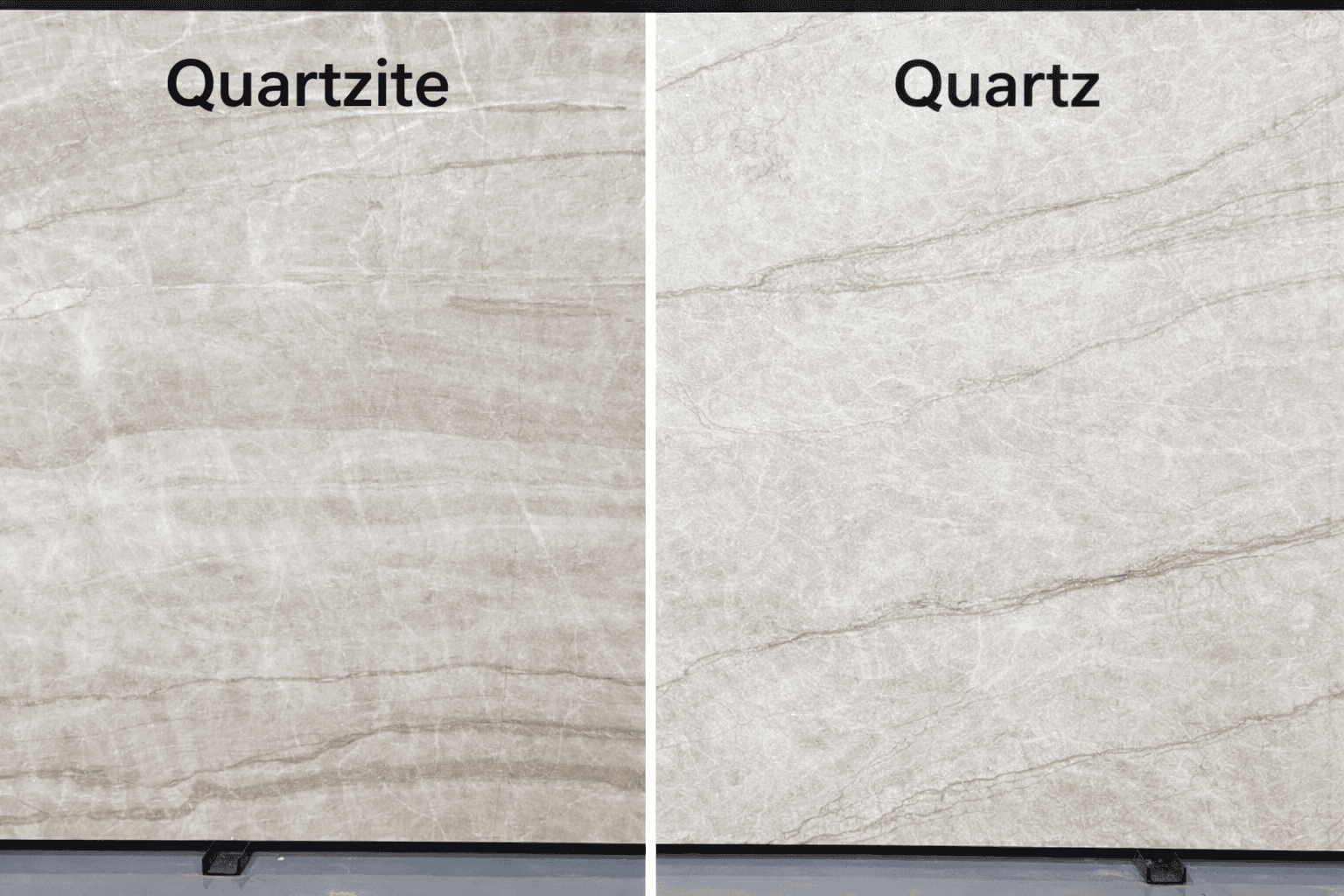
quartz vs quartzite GTA kitchen countertops by Stone Valley Countertops

If you live in the GTA and you’re planning a new kitchen, bathroom, or fireplace feature wall, you’ve probably heard people talk about quartz and quartzite. The names sound almost the same, but the materials are very different – especially when it comes to maintenance, durability, and pricing.

This guide is written for Toronto, Mississauga, Brampton, Oakville, Milton, Etobicoke, and surrounding GTA homeowners who want to choose the right stone the first time. No confusion, no fancy jargon – just clear pros, cons, and real-world advice from a fabrication shop that works with both every day.

If you want to see and touch both options in person, you can visit our Mississauga showroom or browse our material collections here:

Quartz Countertops  |  Quartzite Countertops  |  Quartz Countertop Pricing Guide – GTA

Quick Summary: Quartz vs Quartzite for GTA Homes

Quartz
Engineered stone made from natural quartz, resins, and pigments. Non-porous, low maintenance, and very popular for busy GTA families and condo kitchens.
Quartzite
A natural stone formed from sandstone and heat. Very hard and beautiful, with movement similar to marble, but needs sealing and more care.

Best for: Quartz – low-maintenance everyday kitchens • Quartzite – showpiece kitchens and natural-stone lovers

Look: Quartz – consistent • Quartzite – unique and natural

Maintenance: Quartz – easiest • Quartzite – needs sealing

Price Range (GTA): Both can range from mid to premium depending on the slab

What Is Quartz?

Quartz countertops are made in a factory using crushed natural quartz mixed with resins and colour pigments. The result is a dense, non-porous surface that is very popular in modern GTA kitchens because it’s easy to clean and does not need sealing.

Main Benefits of Quartz

  • Low maintenance: No sealing required, simple day-to-day cleaning.
  • Non-porous: More resistant to stains from coffee, wine, and cooking oils.
  • Consistent patterns: Easier to match across multiple slabs and seams.
  • Huge variety: From plain whites to marble-look veining and concrete styles.

Things to Keep in Mind with Quartz

  • Not recommended for direct high heat – always use trivets or hot pads.
  • Not ideal for uncovered outdoor kitchens exposed to full sun year-round.
  • Some very bright whites and dramatic patterns sit in higher price ranges.

What Is Quartzite?

Quartzite is a natural stone that starts as sandstone and transforms under heat and pressure inside the earth. It is cut from quarries in large blocks, then sliced into slabs and polished – similar to marble and granite.

Main Benefits of Quartzite

  • Natural beauty: Each slab is one of a kind, with movement and veining similar to marble.
  • Very hard: Many quartzites are harder than granite.
  • Heat resistance: Better natural resistance to heat compared to most engineered surfaces.
  • Luxurious feel: Ideal for statement islands, waterfall legs, and feature walls.

Things to Keep in Mind with Quartzite

  • Needs proper sealing to help protect against staining.
  • Some varieties can etch or mark if exposed to harsh cleaners or acids.
  • Slabs can vary more from piece to piece – important to select your exact slab.
  • Fabrication is more demanding and should be done by an experienced shop.

Key Differences: Quartz vs Quartzite

1. Appearance

  • Quartz: Clean, consistent, modern. Great for minimal and contemporary designs.
  • Quartzite: Natural, flowing, and unique. Ideal if you love natural stone character.

2. Maintenance & Stain Resistance

  • Quartz: Non-porous. No sealing. Wipe with mild soap and water – very family friendly.
  • Quartzite: Needs sealing and gentle cleaners. Still practical, but not as “worry-free” as quartz.

3. Durability & Heat

  • Quartz: Very strong and chip-resistant, but resins can be sensitive to high heat.
  • Quartzite: Excellent hardness and better natural heat resistance, but edges still need care.

4. Price in the GTA

In the GTA, both quartz and quartzite can fall into similar price ranges, depending on the brand, colour, thickness, and slab size. Simple solid-colour quartz can start lower, while rare quartzite slabs and premium marble-look quartz designs can move into higher price brackets.

For current numbers, you can read our detailed Quartz Countertop Pricing Guide – GTA.

5. Best Use Cases

Quartz is usually best when:

  • You want low-maintenance, “wipe and go” countertops.
  • You have a busy family home or rental property.
  • You’re doing a clean, modern kitchen or condo.
  • You want a predictable look across all pieces.

Quartzite is usually best when:

  • You love the look of natural stone and unique veining.
  • You want a true showpiece island or feature wall.
  • You don’t mind a bit of ongoing care and sealing.
  • You want a natural alternative to marble with more strength.

How Stone Valley Fabricates Quartz & Quartzite in the GTA

At Stone Valley Countertops, we work with both quartz and quartzite every day in our Ontario fabrication shop. Our team uses the Breton Genya CNC system for precision cutting, polishing, and miters, along with hand-finishing from experienced stone craftsmen.

Whether you choose quartz or quartzite, we:

  • Template your project digitally for accuracy.
  • Plan seams, grain direction, and vein flow before cutting.
  • Use mitered edges for clean waterfall legs and thicker-looking profiles.
  • Offer a 5-year workmanship warranty on our installations.

If you’re not sure which surface is right for you, we can walk you through real samples and help you match the stone to your lifestyle, budget, and design.

Still deciding between quartz and quartzite?
Book a free showroom consultation and bring your drawings or pictures.
Call or WhatsApp: (416) 587-4398
Mississauga • Bowmanville • Welland • GTA & beyond

Quartz vs Quartzite – FAQ for GTA Homeowners

Is quartz or quartzite better for a busy family kitchen?

For most busy GTA families, quartz is easier to live with day-to-day because it is non-porous and does not need sealing. If you love the look of natural stone and don’t mind a bit more care, quartzite can also work well.

Which is more expensive: quartz or quartzite?

Both can range from mid to premium price points in the GTA. Entry-level quartz can start lower, while rare quartzites and high-end designer quartz colours can sit at the top end of the price range. The best way to compare is to request quotes for specific colours you like.

Does quartzite stain or etch easily?

Properly sealed quartzite is fairly resistant, but like any natural stone, it can mark or etch if exposed to strong acids or harsh cleaners. Gentle cleaners and regular sealing are important, especially around cooking zones.

Can I put hot pots directly on quartz or quartzite?

We do not recommend placing hot pots directly on any stone surface. Quartz resins can react to high heat, and even natural stones like quartzite and granite can suffer thermal shock or damage in extreme cases. Always use trivets or hot pads.

How do I decide between quartz and quartzite?

Think about how you use your kitchen, how much maintenance you are comfortable with, and what look you love. If you want simple, consistent, and low-maintenance, quartz is usually the best fit. If you want a natural, one-of-a-kind statement, quartzite is a great option – especially when professionally fabricated and sealed.

To see real slabs and discuss your project with our team, you can visit our Mississauga showroom or contact us online for guidance and a detailed quote.

Learn more about engineered quartz surfaces at Silestone by Cosentino.