kitchen renovation Ontario

Quartz vs Quartzite Countertops Ontario: Key Differences

Quartz vs Quartzite Countertops: What Ontario Homeowners Need to Know

A practical guide to durability, maintenance, appearance, and value before you choose the right countertop for your kitchen or bathroom.

If you are comparing quartz vs quartzite countertops in Ontario, you are not alone. Many homeowners love the soft, elegant look of both materials, especially in popular colours inspired by Taj Mahal-style surfaces. But while they can look similar at first glance, quartz and quartzite are very different in how they are made, how they perform, and how much maintenance they need.

The right choice depends on your priorities. Some homeowners want a surface that is easier to maintain. Others want the natural movement and one-of-a-kind beauty that only real stone can offer. This guide breaks it down in simple terms so you can choose confidently.
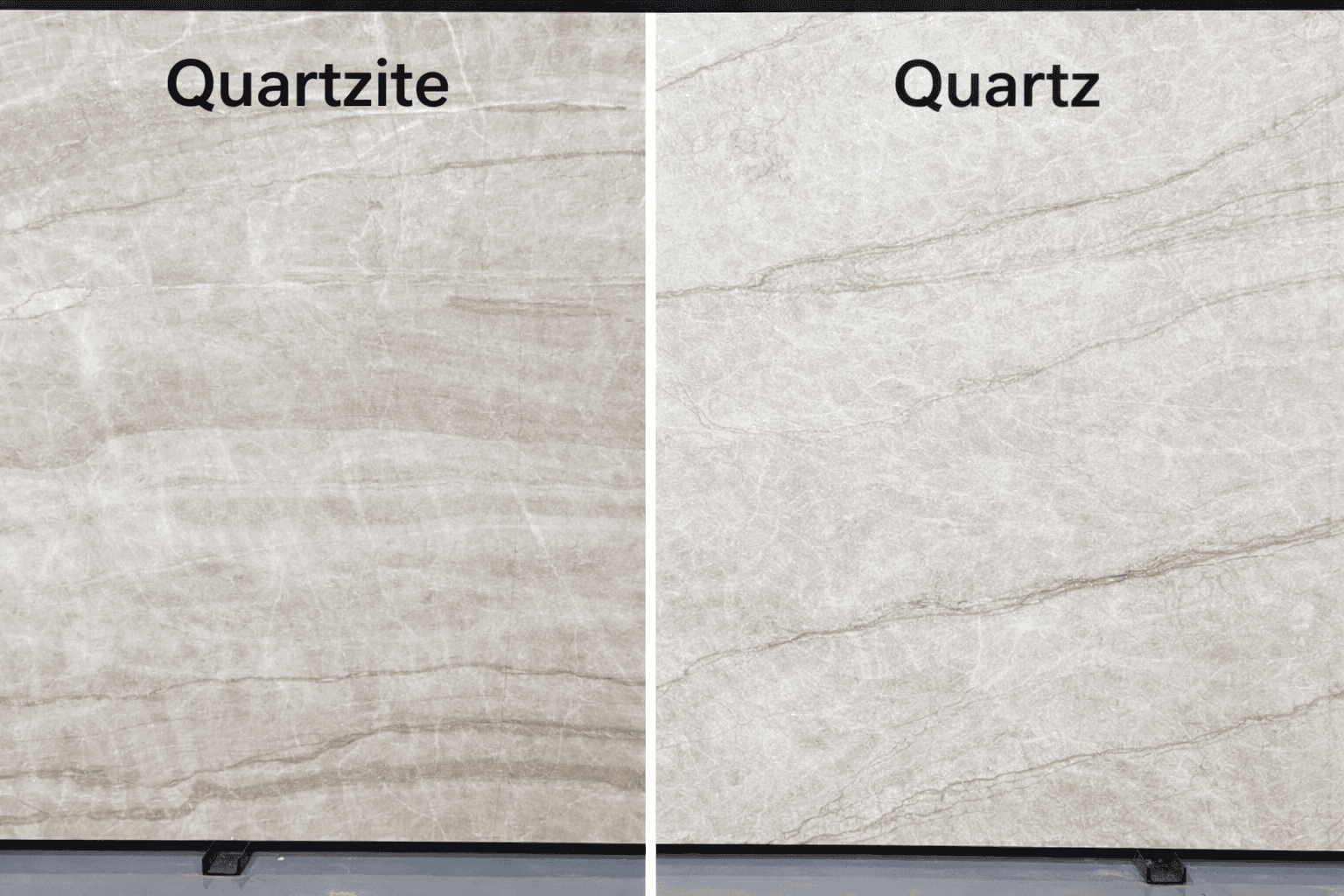
Side-by-side comparison of Taj Mahal quartzite and quartz countertops showing differences in natural veining and uniform pattern in Ontario
Side-by-side comparison showing how quartzite typically has more natural movement, while quartz usually offers a more consistent pattern.

Quick Answer

Quartzite is a natural stone formed by heat and pressure, so every slab is unique and usually has more natural veining and variation. Quartz is an engineered surface made with crushed quartz and resin, so it is more consistent, lower maintenance, and easier for many homeowners to live with day to day.

If you want a more natural and luxurious look, quartzite is often the winner. If you want easier maintenance and a more predictable pattern, quartz is often the better fit.

What Is the Difference Between Quartz and Quartzite?

The biggest difference is simple:

Quartzite is natural stone.
Quartz is engineered stone.

Quartzite

Quartzite starts as sandstone and changes under intense heat and pressure inside the earth. The result is a very hard natural stone with unique veining, colour movement, and character. No two slabs are exactly the same.

Quartz

Quartz countertops are made in a factory using crushed quartz mixed with resins and pigments. That gives manufacturers more control over colour, pattern, and consistency. It also means the finished slab usually looks more uniform from one section to another.

Quartz vs Quartzite Countertops Comparison Table

FeatureQuartzQuartzite
Material TypeEngineered stoneNatural stone
AppearanceMore consistent and controlledMore natural movement and variation
MaintenanceLow maintenanceNeeds sealing and more care
PorosityNon-porousPorous natural stone
Heat ResistanceGood, but direct heat should be avoidedGenerally better heat resistance
Pattern ConsistencyUsually more uniformUsually more unique and unpredictable
Best ForBusy households wanting easier careHomeowners wanting natural stone beauty

Appearance: Which One Looks Better?

This depends on the style you want in your home.

Why homeowners choose quartz

Quartz is popular because it gives a clean, refined, consistent look. If you want your kitchen to feel bright, polished, and controlled, quartz makes that easier. It is also a strong option when you want the island, perimeter, backsplash, or multiple vanities to match closely.

Why homeowners choose quartzite

Quartzite wins when the goal is natural depth and movement. The veining usually feels softer, more organic, and less repeated. Many Ontario homeowners who want a high-end custom look are drawn to quartzite because it feels more like a statement piece than a manufactured surface.

Simple rule: choose quartz if you want consistency. Choose quartzite if you want natural character.

Durability: Which Countertop Performs Better?

Both materials can perform very well when fabricated and installed properly, but they behave differently.

Quartz Strengths

  • Non-porous surface
  • Easy to clean
  • No sealing required
  • Great for everyday family use
  • Consistent finish and colour

Quartzite Strengths

  • Natural stone beauty
  • Very hard material
  • Excellent visual depth
  • Often better resistance to direct heat
  • Unique slab-to-slab variation

That said, durability is not just about hardness. It is also about daily use, maintenance habits, and how the countertop fits your lifestyle.

Maintenance: Which One Is Easier?

If low maintenance matters most to you, quartz usually has the advantage.

Quartz maintenance

Quartz does not need sealing. Since it is non-porous, it is easier to keep clean and less demanding for busy kitchens. For many homeowners, that convenience is a major reason to choose quartz.

Quartzite maintenance

Quartzite is natural stone, so it normally needs sealing to help protect it. It can still be a fantastic countertop material, but it asks for more care. Homeowners who love quartzite usually accept that extra maintenance because they want the natural look.

Best for easy care: quartz.
Best for natural stone lovers: quartzite.

Can Quartz and Quartzite Look Similar?

Yes, absolutely. This is why so many homeowners get confused during the shopping process.

Some quartz colours are designed to imitate natural stones such as Taj Mahal quartzite. From a distance, they can look similar. But when you compare them side by side, quartzite usually shows more natural depth, more irregular veining, and more organic movement. Quartz usually looks more controlled and repeatable.

That does not mean quartz looks bad. In many kitchens, that cleaner and more consistent look is exactly what the homeowner wants.

Which One Is Better for Ontario Kitchens?

For many Ontario kitchens, quartz is the easier choice because it offers a good balance of style, performance, and low maintenance. It works especially well for busy family homes, rentals, and projects where the homeowner wants a bright and consistent design.

Quartzite is often the better choice when the countertop is meant to be the star of the room. If you are investing in a custom kitchen and want a natural slab with real movement and premium character, quartzite can be worth it.

When to Choose Quartz

  1. You want a countertop that is easier to maintain.
  2. You want a more consistent look across the kitchen.
  3. You prefer not to deal with sealing.
  4. You want a practical surface for daily family use.
  5. You like stone-inspired patterns with more predictability.

When to Choose Quartzite

  1. You want real natural stone.
  2. You love unique veining and movement.
  3. You want a more custom, high-end slab look.
  4. You do not mind extra maintenance.
  5. You want your countertop to feel one of a kind.

What About Fabrication and Installation?

No matter which material you choose, the final result depends heavily on fabrication quality, seam planning, edge details, sink cutouts, and installation accuracy. A great slab can still disappoint if it is not measured, fabricated, and installed properly.

At Stone Valley Countertops, we help homeowners, contractors, and designers compare materials based on real project goals, not just showroom samples. We also guide clients through layout, edge profile selection, thickness options, and final installation details.

If you want to understand how the process works from start to finish, read our guide on how countertops are installed in Ontario.

Final Verdict: Quartz vs Quartzite Countertops

There is no one-size-fits-all winner.

Quartz is usually better for homeowners who want easier maintenance, consistency, and day-to-day practicality.

Quartzite is usually better for homeowners who want natural stone beauty, unique movement, and a more luxurious slab appearance.

The best choice comes down to how you want the countertop to look, how much maintenance you are comfortable with, and what matters most in your kitchen or bathroom project.

If you are also deciding on slab thickness, see our guide on 2cm vs 3cm countertops.

Frequently Asked Questions

Is quartz better than quartzite for kitchens?

Quartz is often better for homeowners who want lower maintenance and a more consistent look. Quartzite is often better for homeowners who want natural stone beauty and unique veining.

What is the main difference between quartz and quartzite?

The main difference is that quartz is engineered, while quartzite is a natural stone. That affects maintenance, appearance, and pattern consistency.

Does quartzite need sealing?

Yes, quartzite usually needs sealing because it is a natural stone. Proper sealing helps protect the surface and supports long-term performance.

Does quartz need sealing?

No, quartz does not typically need sealing because it is non-porous.

Which looks more natural, quartz or quartzite?

Quartzite usually looks more natural because each slab has unique movement, variation, and veining created by nature.

Can quartz look like Taj Mahal quartzite?

Yes, some quartz colours are designed to resemble Taj Mahal quartzite. They can be similar in tone, but quartzite usually has more natural depth and less pattern repetition.

Need Help Choosing the Right Countertop?

If you are comparing quartz vs quartzite countertops for your Ontario home, Stone Valley Countertops can help you choose the right material based on style, maintenance, and project goals.

Contact Stone Valley Countertops to discuss your kitchen, vanity, or renovation project.
How Countertops Are Installed: Step-by-Step Ontario Guide

How Countertops Are Installed: Step-by-Step Guide for Ontario Homeowners

If you have ever wondered how countertops are installed, you are not alone. Many homeowners across Ontario want to understand what happens between choosing a slab and seeing their new kitchen or bathroom countertop fully installed. Whether you are planning quartz countertops, granite countertops, marble, porcelain, or quartzite, knowing the process helps you prepare your space, set expectations, and choose the right fabricator.

At Stone Valley Countertops, homeowners in Mississauga, Bowmanville, Welland, and surrounding Ontario areas often ask us what the countertop installation process looks like. The good news is that when done properly, it is organized, efficient, and usually faster than most people expect. In this guide, we will walk you through each stage of the process, from measuring and templating to fabrication and final installation day.

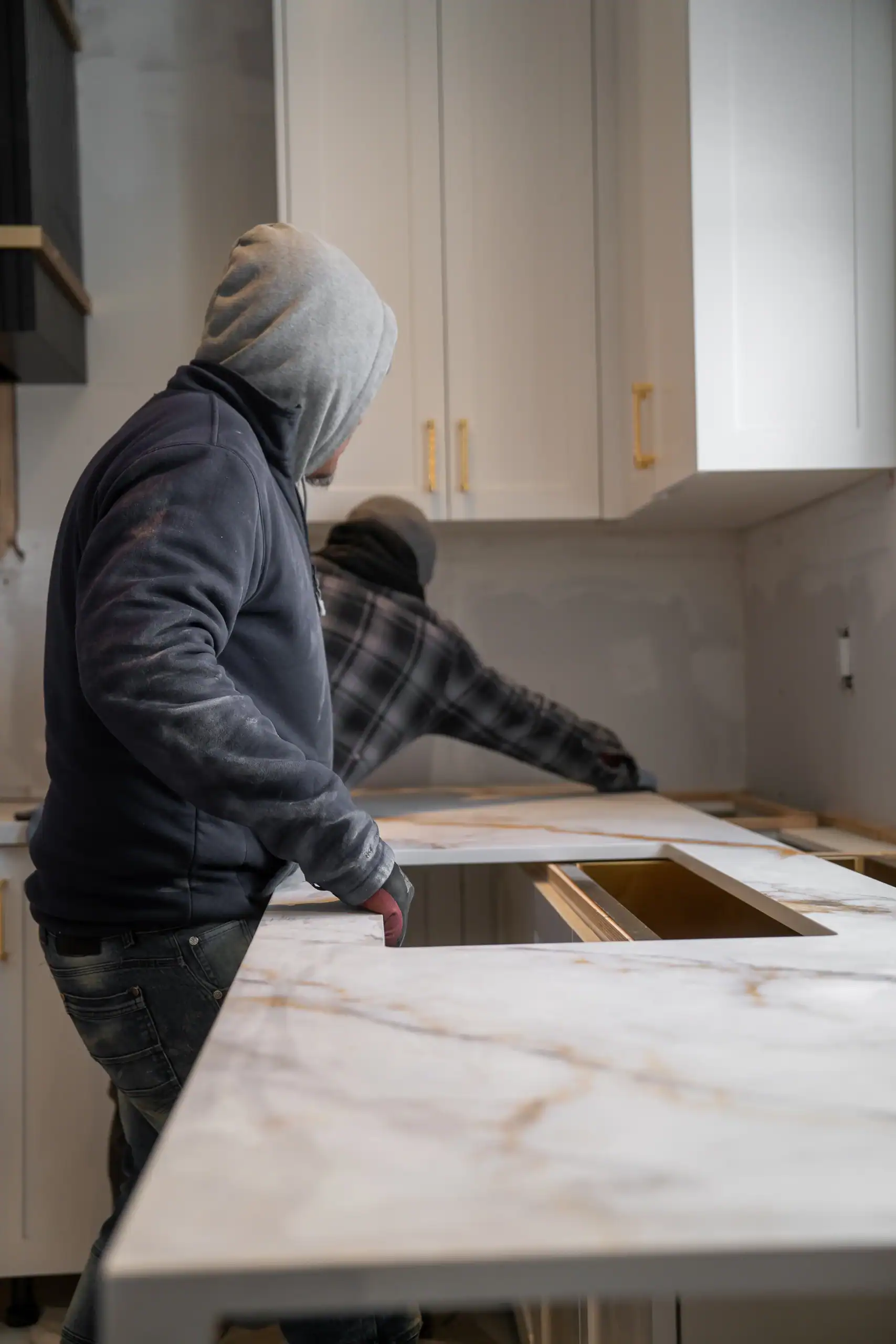
Stone Valley Countertops installers positioning a quartz kitchen countertop during installation in Ontario
Professional quartz countertop installation by Stone Valley Countertops in an Ontario kitchen.

Quick Answer: How Are Countertops Installed?

Countertops are installed in several steps. First, the space is measured and templated. Then the slab is selected and fabricated to the exact dimensions, including sink cutouts, edge profiles, and seam planning. After that, the countertop is delivered, set in place, leveled, secured, and finished on installation day. For most Ontario homeowners, the actual installation itself is completed in one day once fabrication is finished.

Typical Countertop Installation Timeline

  • Day 1 – Measurement: Final site measurement or digital templating is completed after cabinets are installed and level.
  • Day 3–4 – Fabrication: The slab is cut, polished, shaped, and prepared for installation.
  • Day 5–7 – 1 Day Installation: The finished countertops are delivered and installed in one day in most standard projects.

Step 1: Consultation and Material Selection

The countertop installation process usually starts with choosing the right material and discussing the layout of your space. This is when homeowners decide between quartz, granite, marble, porcelain, quartzite, or other surfaces. Your fabricator will review the application, such as a kitchen countertop, island, bathroom vanity, laundry room, fireplace wall, or outdoor countertop area.

This stage is also where details like color, finish, thickness, edge profile, backsplash style, sink type, and overhang requirements are reviewed. If you are still comparing materials, it helps to read guides like our Quartz vs Porcelain Countertops in Ontario article or our Quartz vs Quartzite: What GTA Homeowners Need to Know guide.

Why this step matters

Choosing the right material affects durability, maintenance, appearance, and long-term value. It also affects how the slab will be fabricated and installed.

Step 2: Cabinets Must Be Installed and Level

Before countertop templating can begin, the cabinets need to be fully installed, secured, and level. This is one of the most important parts of the process. Countertops are fabricated to fit the exact finished dimensions of the cabinetry. If cabinets shift later or are not level during templating, it can create problems with fit, seams, or support.

Appliances that affect the layout, such as slide-in ranges, cooktops, farmhouse sinks, or specialty sinks, should also be finalized before the countertop is measured. For waterfall panels, full-height backsplashes, and mitered edges, accurate site conditions matter even more.

Important: Do not book countertop templating until cabinets are fully installed and all major layout decisions are finalized.

Step 3: Measuring and Templating

This is the stage where the exact dimensions of your countertop are captured. Depending on the fabricator, this may be done with traditional field measurements, physical templates, or digital templating equipment. The goal is to create a highly accurate layout of the finished countertop so fabrication can begin.

During templating, your fabricator confirms:

  • overall countertop dimensions
  • sink placement and sink reveal
  • cooktop and appliance openings
  • backsplash height and wall conditions
  • corner angles and out-of-square walls
  • seam locations
  • overhang dimensions and support requirements

Homeowners often ask whether countertop templating happens before or after demolition of the old tops. In many cases, final measurements are done once the old countertops are removed, but every job is different depending on access and project type.

Step 4: Slab Layout and Seam Planning

Once the measurements are complete, the slab layout is prepared. This is where the fabricator plans how the countertop pieces will be cut from the slab while considering veining direction, pattern flow, seam placement, sink location, and overall appearance. This is especially important for quartz with directional patterns, marble with heavy movement, porcelain slabs, and waterfall islands.

Proper seam placement is both a visual and structural decision. The best fabricators think about appearance, strength, transportation, access into the home, and long-term performance. In some kitchens, seams are unavoidable, but good planning helps make them as clean and discreet as possible.

What homeowners should know about seams

Seams are a normal part of many countertop installations. The goal is not always to eliminate seams completely, but to place them intelligently and finish them professionally.

Step 5: Fabrication in the Shop

After templating is complete, the countertop enters fabrication. This is where the slab is cut to size, polished, edged, and prepared for installation. Depending on the project, fabrication may include sink cutouts, faucet holes, cooktop openings, drain grooves, mitered edges, waterfall legs, or matching backsplashes.

Professional fabrication is where quality really shows. Clean edges, accurate cutouts, polished finishes, and proper reinforcement all make a major difference in the final result. Fabrication also determines how well the countertop fits during installation.

If you are researching pricing alongside the installation process, you can also review our Quartz Countertops Cost in Ontario: 2026 Price Guide for Homeowners and Quartz Countertop Pricing Guide – GTA posts.

Fabrication StepWhat HappensWhy It Matters
Slab cuttingThe countertop pieces are cut to the exact template size.Ensures the pieces fit your cabinets and layout correctly.
Edge profilingThe chosen edge detail is shaped and polished.Creates the finished look and affects safety and style.
Sink and cooktop cutoutsOpenings are cut based on approved sink and appliance specs.Prevents fit issues during installation.
Polishing and finishingEdges and visible surfaces are finished to match the slab.Improves appearance and final quality.
Reinforcement where neededSupport may be added around cutouts or fragile sections.Helps reduce the risk of cracking during transport and installation.

Step 6: Preparing the Home for Installation Day

Before the installers arrive, the space should be ready. This usually means clearing the countertops, removing fragile items, providing a clean path into the home, and making sure pets and children are kept safely away from the work area. Plumbing and electrical connections are typically disconnected in advance if required.

For some projects, old countertops are removed on installation day. In others, demolition is done ahead of time. Your fabricator should explain what is included so there are no surprises.

Step 7: Delivery and Countertop Installation

On installation day, the fabricated countertop pieces are carefully transported to your home and brought into the space. The team will dry-fit the pieces, check alignment, confirm seam positions, and make sure everything sits properly on the cabinets. Once the fit is confirmed, the countertops are set in place and secured.

Installers may use adhesive, silicone, shims, seam setters, and other tools to level and join the pieces properly. For undermount sinks, sink attachment methods will also be completed or finalized depending on the job. Once the stone is secured, seams are filled and finished to create a clean, professional appearance.

Can countertops be installed in one day?

Yes. In most standard Ontario residential projects, the actual installation is completed in one day. The full process takes several days overall because measuring and fabrication happen first.

Step 8: Sink Installation, Plumbing, and Final Touches

After the countertop is installed, final finishing work is completed. This may include silicone at walls or backsplashes, sink attachment checks, final polishing, and a walkthrough of the finished installation. Plumbing reconnection is usually completed afterward by the appropriate trade unless otherwise arranged.

Homeowners should avoid using the sink, cooktop, or heavy areas immediately until the installer confirms everything is ready. Cure times for silicone or adhesive can vary.

Step 9: Final Inspection and Care Instructions

Before the job is considered complete, the installer should review the project with you. This is the time to check seams, overhangs, edge finish, sink alignment, and the general look of the installation. A professional company should also explain cleaning and maintenance recommendations based on your chosen material.

Quartz, for example, is popular because it is low-maintenance and highly durable, but homeowners should still know what to avoid. If you are considering premium quartz brands, our Cambria Quartz Countertops Ontario Guide may also help.

Common Mistakes During Countertop Installation

A good installation depends on more than just the slab itself. Here are some common issues that can cause problems when the process is rushed or handled poorly:

  • templating before cabinets are fully installed
  • incorrect sink or appliance specifications
  • poor seam placement
  • insufficient overhang support
  • uneven cabinets
  • rushed installation without proper dry-fitting

Overhang support is especially important for islands, breakfast bars, and seating areas. For more on this, read our Countertop Overhang Support Guide.

How Long Does the Countertop Installation Process Take?

While the full process varies by project size, material availability, and fabrication complexity, most jobs follow a simple pattern. Templating is completed first, fabrication follows over the next few days, and the actual installation is often completed in one day. More complex projects involving multiple bathrooms, large islands, mitered edges, bookmatched slabs, or full-height backsplashes may take longer.

What Homeowners in Ontario Should Expect

If you are planning new countertops in Ontario, the most important thing is choosing a company that handles the process carefully from start to finish. Good countertop installation is not just about dropping stone on cabinets. It involves precise measuring, thoughtful fabrication, careful transport, and skilled installation.

At Stone Valley Countertops, we work with homeowners, builders, contractors, and designers across Mississauga, Bowmanville, Welland, and surrounding areas to deliver properly fabricated and professionally installed countertops. Whether you are upgrading a kitchen, finishing a new build, or replacing outdated surfaces, understanding the installation process helps you move forward with confidence.

Frequently Asked Questions About Countertop Installation

How are quartz countertops installed?

Quartz countertops are installed after final measurements are taken and the slab is fabricated to size. On installation day, the pieces are placed on the cabinets, leveled, secured, seamed, and finished.

Do countertops need to be removed before templating?

Sometimes yes, sometimes no. It depends on the project and the fabricator’s measuring method. In many cases, final templating is done after the old countertops are removed or when the cabinets are fully exposed.

Can countertops be installed in one day?

Yes. Most standard countertop installations are completed in one day, although the full process from measurement to final installation usually takes several days.

What happens first, cabinets or countertops?

Cabinets come first. Countertops are measured based on the final cabinet installation, so cabinets must be installed, secured, and level before templating begins.

How long after templating are countertops installed?

In many residential projects, countertops are installed a few days after templating, depending on fabrication time, material, and project complexity.

Do installers hook up the plumbing too?

Not always. Countertop installers usually complete the countertop installation itself, while plumbing reconnection is often handled separately unless included in your project scope.

Need Expert Countertop Installation in Ontario?

If you are planning a kitchen renovation, bathroom vanity, waterfall island, or full countertop replacement, Stone Valley Countertops is here to help. We provide professional fabrication and installation services for homeowners across Mississauga, Bowmanville, Welland, and surrounding Ontario areas.

Request a Quote

Cambria Quartz Countertops Ontario Guide

Cambria Quartz • Ontario

Cambria Quartz Countertops Ontario Guide

If you’re considering Cambria quartz countertops in Ontario, this guide covers what makes Cambria “premium,” where it performs best, how to compare it to other quartz brands, and what to expect from professional fabrication and installation.

Stone Valley Countertops Fabrication + Installation Serving GTA + Ontario

Quick Answer

  • Cambria is a premium quartz brand chosen for bold veining, consistent patterns, and low maintenance.
  • Best for statement islands, waterfall edges, full-height backsplashes, and luxury kitchens.
  • Worth it? Often yes when you want a high-end look and long-term confidence—especially in open-concept homes.
  • Ontario tip: Plan seams, edge detail (miter/waterfall), and sink specs early to avoid delays and maximize the look.

Cambria is one of the most requested premium quartz options we see right now—especially from homeowners who want a “wow” island, clean modern lines, and a surface that’s easy to live with. That’s why searches for Cambria quartz countertops Ontario keep climbing: people want luxury, but without natural-stone maintenance.

Stone Valley perspective: Cambria tends to be chosen when the countertop is the “feature” of the kitchen—not an afterthought.

What Are Cambria Quartz Countertops?

Cambria is an engineered quartz surface designed to deliver a natural-stone look with everyday durability. Quartz is non-porous, which helps it resist staining and makes it low maintenance compared to many natural stones.

  • Non-porous (helps resist staining)
  • Low maintenance (no sealing like many natural stones)
  • Designed patterns (consistent look across large layouts)
  • Great for busy kitchens (easy cleaning for day-to-day life)

Why Cambria Quartz Countertops Are Popular in Ontario

1) Luxury Design Depth (Veining That Looks Real)

Cambria is known for strong movement and premium veining that reads “high-end” in person—perfect for waterfall islands and full-height backsplashes.

2) Low Maintenance for Real Homes

Ontario families want surfaces that don’t demand babying. Quartz is popular because it’s simple to maintain day-to-day.

3) Open-Concept Kitchens Make Countertops the Main Feature

In open layouts, seams, edges, and slab movement are highly visible. That’s why many homeowners investing in Cambria quartz countertops in Ontario also invest in premium fabrication details like mitered edges and clean seam planning.

Are Cambria Quartz Countertops in Ontario Worth the Investment?

Cambria typically sits in a higher tier than many standard quartz options. What you’re paying for is the premium look, the catalog depth, and the “statement surface” outcome that elevates the entire kitchen.

How to decide: If your island is the centerpiece and you want bold veining and a luxury finish, Cambria is commonly worth it. If budget is the priority, there are excellent A-grade quartz options that still look amazing.

Where Cambria Performs Best

  • Kitchen countertops (high-use family kitchens)
  • Waterfall islands (luxury “statement” look)
  • Full-height backsplashes (seamless modern look)
  • Bathroom vanities (clean and low maintenance)
  • Fireplace surrounds (feature wall effect)

Cambria vs Other Quartz Brands (Simple Comparison)

FeatureCambriaTypical Quartz Options
Design realism & depthPremium movement, luxury feelVaries by brand/collection
Best use-casesStatement islands, waterfall edges, feature wallsEveryday upgrades, rentals, budget-to-mid projects
Fabrication “wow factor”Very high with mitered/waterfall detailsDepends on slab + fabrication plan
Budget tierHigherLow to mid (varies)

Installation Tips for Cambria Quartz Countertops in Ontario

Seams: Plan Them Early

The cleanest Cambria installs usually come down to seam planning. We plan seams around sight-lines, slab movement, and the island focal point.

Edges: Standard vs Mitered

If you want that thick “luxury” look, a mitered edge can transform the final result—especially on islands and peninsulas.

Sinks & Faucets: Lock Specs Before Cutting

Confirm sink model, reveal preference, and faucet hole layout before fabrication. It avoids rework and protects timelines.

Outdoor note: Quartz is generally not ideal for direct UV exposure outdoors. For outdoor kitchens, porcelain or certain natural stones are usually better.

FAQs About Cambria Quartz Countertops in Ontario

Is Cambria better than granite?

Granite is natural stone and every slab is unique. Cambria is engineered quartz, which is typically more consistent and lower maintenance. Many homeowners choose Cambria for the non-porous performance and luxury look in busy kitchens.

Do Cambria quartz countertops need sealing?

Quartz surfaces are non-porous, so sealing is not typically required the way it is with many natural stones.

Is Cambria good for an outdoor kitchen in Ontario?

Quartz is generally not ideal for direct UV exposure. For outdoor BBQ counters, we often recommend porcelain or certain natural stones instead.

Is Cambria worth the price in Ontario?

If you want a luxury finish with bold design impact and long-term confidence, Cambria is commonly worth it for high-end renovations. If budget is the priority, there are also excellent A-grade quartz options.

Next Step: Quote & Fabrication Plan

If you’re ready to explore Cambria quartz countertops in Ontario, we can help you choose the right look, plan seams and edges, and execute a premium fabrication + installation outcome.

Stone Valley Countertops
Premium fabrication + installation across the GTA and Ontario.

1-week turnaround

Typical lead time for many projects

Warranty-backed work

5-year workmanship + 25-year Stone Valley Collection

Note: Pricing and availability can vary by pattern, layout complexity, and timing. Confirm final details during slab selection and quoting.