Countertops

How Countertops Are Installed: Step-by-Step Ontario Guide

How Countertops Are Installed: Step-by-Step Guide for Ontario Homeowners

If you have ever wondered how countertops are installed, you are not alone. Many homeowners across Ontario want to understand what happens between choosing a slab and seeing their new kitchen or bathroom countertop fully installed. Whether you are planning quartz countertops, granite countertops, marble, porcelain, or quartzite, knowing the process helps you prepare your space, set expectations, and choose the right fabricator.

At Stone Valley Countertops, homeowners in Mississauga, Bowmanville, Welland, and surrounding Ontario areas often ask us what the countertop installation process looks like. The good news is that when done properly, it is organized, efficient, and usually faster than most people expect. In this guide, we will walk you through each stage of the process, from measuring and templating to fabrication and final installation day.
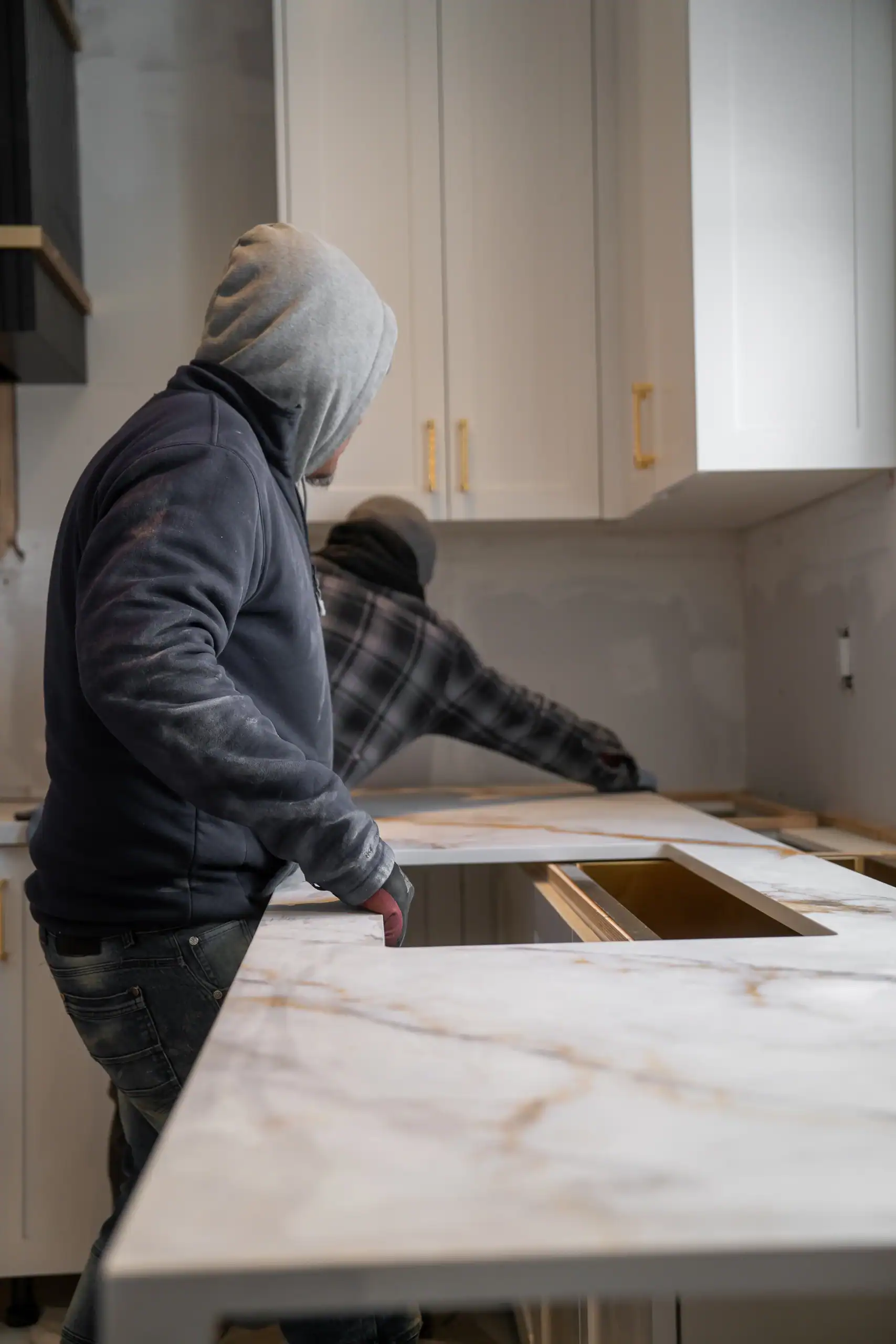
Stone Valley Countertops installers positioning a quartz kitchen countertop during installation in Ontario
Professional quartz countertop installation by Stone Valley Countertops in an Ontario kitchen.

Quick Answer: How Are Countertops Installed?

Countertops are installed in several steps. First, the space is measured and templated. Then the slab is selected and fabricated to the exact dimensions, including sink cutouts, edge profiles, and seam planning. After that, the countertop is delivered, set in place, leveled, secured, and finished on installation day. For most Ontario homeowners, the actual installation itself is completed in one day once fabrication is finished.

Typical Countertop Installation Timeline

  • Day 1 – Measurement: Final site measurement or digital templating is completed after cabinets are installed and level.
  • Day 3–4 – Fabrication: The slab is cut, polished, shaped, and prepared for installation.
  • Day 5–7 – 1 Day Installation: The finished countertops are delivered and installed in one day in most standard projects.

Step 1: Consultation and Material Selection

The countertop installation process usually starts with choosing the right material and discussing the layout of your space. This is when homeowners decide between quartz, granite, marble, porcelain, quartzite, or other surfaces. Your fabricator will review the application, such as a kitchen countertop, island, bathroom vanity, laundry room, fireplace wall, or outdoor countertop area.

This stage is also where details like color, finish, thickness, edge profile, backsplash style, sink type, and overhang requirements are reviewed. If you are still comparing materials, it helps to read guides like our Quartz vs Porcelain Countertops in Ontario article or our Quartz vs Quartzite: What GTA Homeowners Need to Know guide.

Why this step matters

Choosing the right material affects durability, maintenance, appearance, and long-term value. It also affects how the slab will be fabricated and installed.

Step 2: Cabinets Must Be Installed and Level

Before countertop templating can begin, the cabinets need to be fully installed, secured, and level. This is one of the most important parts of the process. Countertops are fabricated to fit the exact finished dimensions of the cabinetry. If cabinets shift later or are not level during templating, it can create problems with fit, seams, or support.

Appliances that affect the layout, such as slide-in ranges, cooktops, farmhouse sinks, or specialty sinks, should also be finalized before the countertop is measured. For waterfall panels, full-height backsplashes, and mitered edges, accurate site conditions matter even more.

Important: Do not book countertop templating until cabinets are fully installed and all major layout decisions are finalized.

Step 3: Measuring and Templating

This is the stage where the exact dimensions of your countertop are captured. Depending on the fabricator, this may be done with traditional field measurements, physical templates, or digital templating equipment. The goal is to create a highly accurate layout of the finished countertop so fabrication can begin.

During templating, your fabricator confirms:

  • overall countertop dimensions
  • sink placement and sink reveal
  • cooktop and appliance openings
  • backsplash height and wall conditions
  • corner angles and out-of-square walls
  • seam locations
  • overhang dimensions and support requirements

Homeowners often ask whether countertop templating happens before or after demolition of the old tops. In many cases, final measurements are done once the old countertops are removed, but every job is different depending on access and project type.

Step 4: Slab Layout and Seam Planning

Once the measurements are complete, the slab layout is prepared. This is where the fabricator plans how the countertop pieces will be cut from the slab while considering veining direction, pattern flow, seam placement, sink location, and overall appearance. This is especially important for quartz with directional patterns, marble with heavy movement, porcelain slabs, and waterfall islands.

Proper seam placement is both a visual and structural decision. The best fabricators think about appearance, strength, transportation, access into the home, and long-term performance. In some kitchens, seams are unavoidable, but good planning helps make them as clean and discreet as possible.

What homeowners should know about seams

Seams are a normal part of many countertop installations. The goal is not always to eliminate seams completely, but to place them intelligently and finish them professionally.

Step 5: Fabrication in the Shop

After templating is complete, the countertop enters fabrication. This is where the slab is cut to size, polished, edged, and prepared for installation. Depending on the project, fabrication may include sink cutouts, faucet holes, cooktop openings, drain grooves, mitered edges, waterfall legs, or matching backsplashes.

Professional fabrication is where quality really shows. Clean edges, accurate cutouts, polished finishes, and proper reinforcement all make a major difference in the final result. Fabrication also determines how well the countertop fits during installation.

If you are researching pricing alongside the installation process, you can also review our Quartz Countertops Cost in Ontario: 2026 Price Guide for Homeowners and Quartz Countertop Pricing Guide – GTA posts.

Fabrication StepWhat HappensWhy It Matters
Slab cuttingThe countertop pieces are cut to the exact template size.Ensures the pieces fit your cabinets and layout correctly.
Edge profilingThe chosen edge detail is shaped and polished.Creates the finished look and affects safety and style.
Sink and cooktop cutoutsOpenings are cut based on approved sink and appliance specs.Prevents fit issues during installation.
Polishing and finishingEdges and visible surfaces are finished to match the slab.Improves appearance and final quality.
Reinforcement where neededSupport may be added around cutouts or fragile sections.Helps reduce the risk of cracking during transport and installation.

Step 6: Preparing the Home for Installation Day

Before the installers arrive, the space should be ready. This usually means clearing the countertops, removing fragile items, providing a clean path into the home, and making sure pets and children are kept safely away from the work area. Plumbing and electrical connections are typically disconnected in advance if required.

For some projects, old countertops are removed on installation day. In others, demolition is done ahead of time. Your fabricator should explain what is included so there are no surprises.

Step 7: Delivery and Countertop Installation

On installation day, the fabricated countertop pieces are carefully transported to your home and brought into the space. The team will dry-fit the pieces, check alignment, confirm seam positions, and make sure everything sits properly on the cabinets. Once the fit is confirmed, the countertops are set in place and secured.

Installers may use adhesive, silicone, shims, seam setters, and other tools to level and join the pieces properly. For undermount sinks, sink attachment methods will also be completed or finalized depending on the job. Once the stone is secured, seams are filled and finished to create a clean, professional appearance.

Can countertops be installed in one day?

Yes. In most standard Ontario residential projects, the actual installation is completed in one day. The full process takes several days overall because measuring and fabrication happen first.

Step 8: Sink Installation, Plumbing, and Final Touches

After the countertop is installed, final finishing work is completed. This may include silicone at walls or backsplashes, sink attachment checks, final polishing, and a walkthrough of the finished installation. Plumbing reconnection is usually completed afterward by the appropriate trade unless otherwise arranged.

Homeowners should avoid using the sink, cooktop, or heavy areas immediately until the installer confirms everything is ready. Cure times for silicone or adhesive can vary.

Step 9: Final Inspection and Care Instructions

Before the job is considered complete, the installer should review the project with you. This is the time to check seams, overhangs, edge finish, sink alignment, and the general look of the installation. A professional company should also explain cleaning and maintenance recommendations based on your chosen material.

Quartz, for example, is popular because it is low-maintenance and highly durable, but homeowners should still know what to avoid. If you are considering premium quartz brands, our Cambria Quartz Countertops Ontario Guide may also help.

Common Mistakes During Countertop Installation

A good installation depends on more than just the slab itself. Here are some common issues that can cause problems when the process is rushed or handled poorly:

  • templating before cabinets are fully installed
  • incorrect sink or appliance specifications
  • poor seam placement
  • insufficient overhang support
  • uneven cabinets
  • rushed installation without proper dry-fitting

Overhang support is especially important for islands, breakfast bars, and seating areas. For more on this, read our Countertop Overhang Support Guide.

How Long Does the Countertop Installation Process Take?

While the full process varies by project size, material availability, and fabrication complexity, most jobs follow a simple pattern. Templating is completed first, fabrication follows over the next few days, and the actual installation is often completed in one day. More complex projects involving multiple bathrooms, large islands, mitered edges, bookmatched slabs, or full-height backsplashes may take longer.

What Homeowners in Ontario Should Expect

If you are planning new countertops in Ontario, the most important thing is choosing a company that handles the process carefully from start to finish. Good countertop installation is not just about dropping stone on cabinets. It involves precise measuring, thoughtful fabrication, careful transport, and skilled installation.

At Stone Valley Countertops, we work with homeowners, builders, contractors, and designers across Mississauga, Bowmanville, Welland, and surrounding areas to deliver properly fabricated and professionally installed countertops. Whether you are upgrading a kitchen, finishing a new build, or replacing outdated surfaces, understanding the installation process helps you move forward with confidence.

Frequently Asked Questions About Countertop Installation

How are quartz countertops installed?

Quartz countertops are installed after final measurements are taken and the slab is fabricated to size. On installation day, the pieces are placed on the cabinets, leveled, secured, seamed, and finished.

Do countertops need to be removed before templating?

Sometimes yes, sometimes no. It depends on the project and the fabricator’s measuring method. In many cases, final templating is done after the old countertops are removed or when the cabinets are fully exposed.

Can countertops be installed in one day?

Yes. Most standard countertop installations are completed in one day, although the full process from measurement to final installation usually takes several days.

What happens first, cabinets or countertops?

Cabinets come first. Countertops are measured based on the final cabinet installation, so cabinets must be installed, secured, and level before templating begins.

How long after templating are countertops installed?

In many residential projects, countertops are installed a few days after templating, depending on fabrication time, material, and project complexity.

Do installers hook up the plumbing too?

Not always. Countertop installers usually complete the countertop installation itself, while plumbing reconnection is often handled separately unless included in your project scope.

Need Expert Countertop Installation in Ontario?

If you are planning a kitchen renovation, bathroom vanity, waterfall island, or full countertop replacement, Stone Valley Countertops is here to help. We provide professional fabrication and installation services for homeowners across Mississauga, Bowmanville, Welland, and surrounding Ontario areas.
Request a Quote

Quartz vs Porcelain Countertops in Ontario (2025 Comparison Guide)

Quartz vs Porcelain Countertops in Ontario: Which Is Better for Your Home in 2025?

When comparing quartz vs porcelain countertops, Ontario homeowners often choose between two premium, durable, and modern surfaces. At first glance, both materials look similar. However, each one performs very differently depending on how and where you plan to use it.

Because this decision affects both daily use and long-term value, it helps to understand the real differences. Below, we clearly break everything down so you can choose with confidence.

What Is Quartz?

Quartz countertops are engineered stone surfaces made by combining natural quartz crystals with resins and pigments. As a result, quartz offers strength, consistency, and reliable performance in everyday spaces.

  • Because quartz is non-porous, it resists stains and bacteria
  • Since it does not need sealing, maintenance stays simple
  • It delivers a clean, consistent appearance
  • It is available in polished, matte, and honed finishes

What Is Porcelain?

Porcelain slabs are manufactured from refined clay and minerals that are fired at extremely high temperatures. Consequently, porcelain becomes an ultra-compact surface known for its strength and heat resistance.

  • Because it handles high temperatures, it works well near heat sources
  • Since it is UV stable, it performs well indoors and outdoors
  • Even though it is thin, it remains extremely strong
  • It works well on walls, fireplaces, and exterior surfaces

For a more detailed material breakdown, you can also review our guide on porcelain countertops pros and cons.

Quartz vs Porcelain Countertops: Key Differences

Durability

Both materials offer excellent durability. However, porcelain performs better in areas exposed to high heat. Quartz works extremely well for daily kitchen use, but it does not respond well to direct heat. Therefore, if you plan to install a surface near a fireplace or cooktop, porcelain usually makes the safer choice.

Additionally, porcelain performs exceptionally well outdoors. If you are planning an exterior project, take a look at the best countertops for outdoor kitchens to see why porcelain stands out.

Maintenance

Quartz remains one of the lowest-maintenance countertop materials available. Because it is non-porous, it resists staining without extra care. Porcelain also stays easy to maintain; however, its thinner profile means professional fabrication and installation matter more.

Appearance

Quartz offers soft, uniform patterns that suit modern and transitional kitchens. Porcelain, on the other hand, excels at replicating marble, concrete, and natural stone with striking realism. Therefore, your design style often determines which material feels right.

Applications

  • Quartz: Kitchens, bathrooms, islands, and vanities
  • Porcelain: Countertops, fireplaces, showers, and outdoor kitchens
Ontario Homeowner Tip:
If you want worry-free daily use, quartz usually works best. However, if heat resistance, outdoor durability, or full-height surfaces matter more, porcelain becomes the stronger option.

Quartz vs Porcelain Countertops for Ontario Homes

When choosing between quartz vs porcelain countertops, think about how you use your space each day. In addition, consider heat exposure and whether the installation will be indoors or outdoors.

For most Ontario kitchens, homeowners continue to choose quartz because of its durability and low maintenance. Meanwhile, porcelain continues to gain popularity for fireplaces, outdoor kitchens, and bold design features.

Quartz vs Porcelain Countertops: FAQs

Below are the most common questions Ontario homeowners ask when comparing quartz vs porcelain countertops.

Is quartz or porcelain better for kitchens?

In most kitchens, quartz works better because it stays forgiving during daily cooking. Since it resists stains and requires little maintenance, homeowners often find quartz easier to live with long term.

Can porcelain countertops be used outdoors in Ontario?

Yes. Porcelain handles UV exposure and temperature changes extremely well. As a result, it remains one of the best materials for outdoor kitchens in Ontario.

Do quartz countertops need sealing?

No. Because quartz is non-porous, it never needs sealing. This makes long-term maintenance much simpler.

Which countertop material is better for fireplaces?

Porcelain works best for fireplace surrounds because it tolerates high heat without damage. Quartz, by comparison, does not handle direct heat as well.

Quartz Countertop Pricing Guide – GTA

Quartz Countertop Pricing Guide – GTA

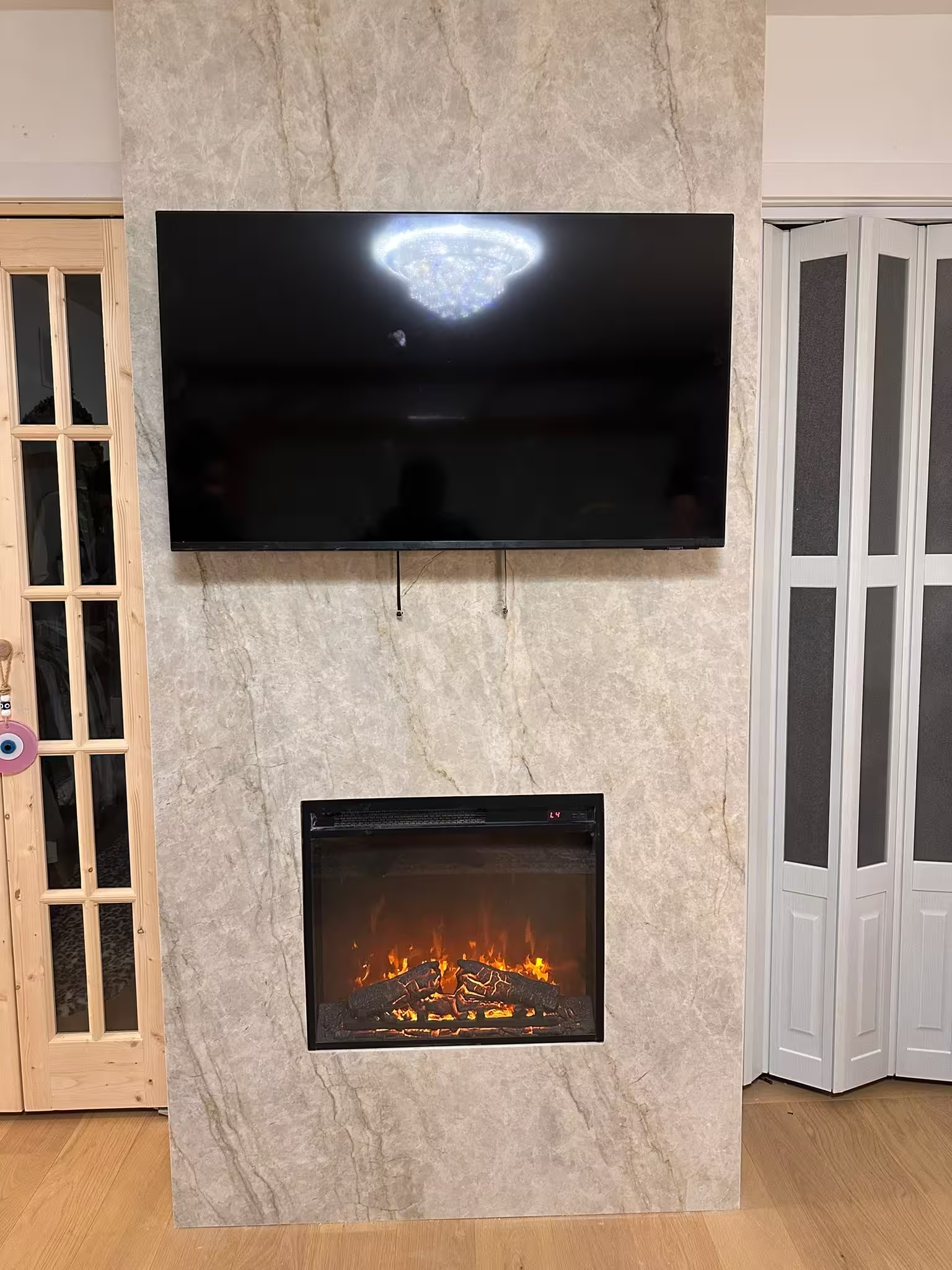
quartz countertop pricing fireplace enclosure GTA by Stone Valley Countertops

Quartz countertop pricing in the GTA is one of the most important factors homeowners look for before planning a renovation. This quartz countertop pricing guide explains real material costs, fabrication fees, and installation pricing across Mississauga, Toronto, and surrounding areas.

Explore more materials: Quartz Countertops and Granite Countertops.

This guide includes:

  • Average quartz cost per sq. ft. in the GTA
  • What affects your countertop pricing
  • How slab grades work
  • Installation and fabrication costs
  • Pricing examples for real kitchens

Quartz Countertop Pricing in the GTA

The typical quartz countertop project in the Greater Toronto Area ranges from:

$3,200 – $6,500+ for an average kitchen

This quartz countertop pricing guide helps GTA homeowners compare fair and accurate market rates before choosing a fabricator.

Price Breakdown by Quality Tier

  • A-Grade Quartz: $65 – $85 per sq. ft. installed
  • B-Grade Quartz: $85 – $105 per sq. ft. installed
  • Premium / Luxury Quartz: $110 – $180+ per sq. ft. installed

A-Grade quartz includes popular whites, light veining, and subtle patterns — the most common choice for GTA homes.

Premium quartz includes dramatic veining, marble-look slabs, bookmatching, and ultra-white designs.

What Impacts Quartz Pricing?

Understanding quartz countertop pricing is essential because fabrication complexity, slab grade, and installation conditions vary throughout the GTA.

1. Slab Grade & Supplier

Premium slabs from major brands like Caesarstone, Silestone, and Vicostone cost more than generic or private-label options.

2. Thickness (2cm vs 3cm)

  • 2cm is standard for GTA homes
  • 3cm adds cost and requires heavier lifting

3. Edge Profile

  • Standard edge (Eased): included
  • Mitered waterfall edge: +$900 – $1,800 each

4. Cutouts & Fabrication Options

  • Undermount sink cutout: $250 – $350
  • Cooktop cutout: $250 – $450
  • Full-height backsplash: $900 – $2,200+
  • Shower walls / fireplace cladding: varies by panel size

Example Quartz Countertop Pricing – GTA Projects

Small Condo Kitchen

Average Cost: $2,400 – $3,800

Standard Family Kitchen

Average Cost: $3,800 – $6,500

Large Luxury Kitchen with Waterfalls

Average Cost: $8,500 – $18,000+

If you want personalized quartz countertop pricing for your kitchen, our Mississauga showroom can create an exact estimate based on your layout.

How Stone Valley Countertops Keeps Pricing Fair

At Stone Valley Countertops, all fabrication is done locally in Ontario using industry-leading equipment. Our shop is powered by the Breton Genya CNC system — one of the most advanced stone-cutting machines in the world. This ensures razor-sharp precision, flawless miters, perfect seams, and consistent results on every single project.

We combine advanced CNC technology with skilled installers, detailed templating, and strict quality control to deliver exceptional quartz craftsmanship throughout the GTA.

We service the entire GTA from our Mississauga showroom:

3190 Ridgeway Dr Unit 4, Mississauga, ON

Get exact quartz pricing for your project.
Call or WhatsApp: (416) 587-4398
1-week turnaround • Free showroom consultation • Expert installation

Quartz Countertop FAQ

How much do quartz countertops cost per sq. ft. in Ontario?

Most GTA homeowners pay between $65 and $120 per sq. ft. fully installed.

Is quartz cheaper than granite?

Mid-range quartz is usually slightly more expensive but requires far less maintenance.

Are waterfall edges worth it?

Yes — they elevate the design and significantly improve resale value. Expect $900–$1,800 per side.

Does thickness affect price?

3cm quartz costs more due to increased material cost and additional labour.

How fast is installation?

Stone Valley Countertops offers a 1-week turnaround from template to installation.

Learn more about quartz surfaces at Silestone by Cosentino.

Waterfall Countertops 2025: Bold Designs for Modern Kitchens

Waterfall Countertops 2025: Bold Designs for Modern Kitchens

Waterfall countertops are making a bold comeback in 2025 kitchen design, merging sleek aesthetics with high-end luxury. As homeowners continue to embrace modern and minimalist styles, this trend has surged in popularity. Whether you’re remodeling a contemporary space or building your dream kitchen, this guide explores everything you need to know—from materials and pros & cons to expert styling tips.

What Are Waterfall Countertops?

Unlike traditional countertops that end at the edge of the cabinet, waterfall countertops continue vertically down the sides, forming a continuous “waterfall” effect. As a result, the surface flows smoothly from top to bottom, creating a striking and seamless finish. The result is a sophisticated, elegant look often used in kitchen islands, peninsulas, and even bathroom vanities.

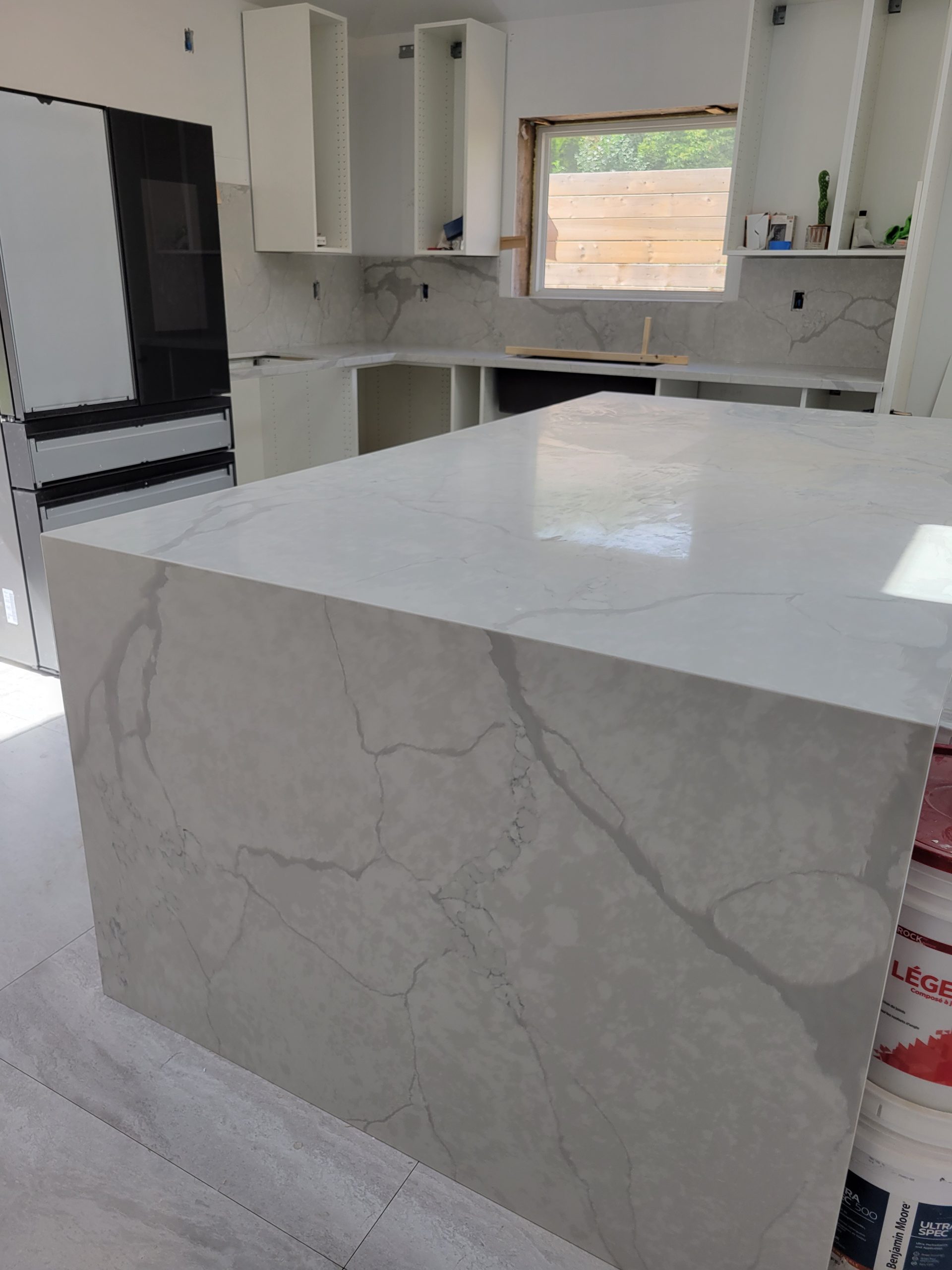
Waterfall countertops 2025 with white quartz island and wood base
Waterfall quartz countertop in a modern kitchen island design

Why Waterfall Countertops Are Trending in 2025

Waterfall countertops have become a design focal point in modern homes. This is largely because they combine form and function in a unique way. Below are a few reasons why they’re dominating kitchen trends in 2025:

  • Modern Minimalism: Clean lines and continuous surfaces complement today’s minimalist kitchen styles.
  • Luxury Appeal: Waterfall designs often feature high-end materials like quartz or marble, elevating perceived home value.
  • Durability + Protection: The vertical slab adds protection against scuffs and wear on cabinet sides.
  • Showcase Slabs: Perfect for dramatic veining in quartz or stone slabs that deserve to be a focal point.

Moreover, this trend aligns well with open-concept living spaces, where visual continuity is key. Learn more about modern countertop trends in our 2025 guide.

Best Materials for Waterfall Countertops

Choosing the right material is key to achieving both beauty and function. Below are the top material options to consider:

Quartz

Engineered quartz is the most popular option due to its durability, non-porous surface, and wide color availability. In addition, it’s perfect for waterfall applications thanks to its seamless appearance and low maintenance. Learn more about quartz as a waterfall material.

Also, check out Caesarstone’s guide to the waterfall countertop trend for real examples and design tips from a top manufacturer.

Marble

While marble offers timeless beauty, it is also porous and more prone to scratching and staining. Therefore, it’s best for low-traffic kitchens or spaces where aesthetics take priority over durability.

Granite

Granite works well for waterfall designs, especially if you’re going for a natural stone look. Furthermore, it’s highly durable and heat-resistant, making it ideal for active kitchens.

Porcelain

Porcelain slabs are becoming a go-to for ultra-modern designs. Not only are they lightweight and strong, but they also resist wear and tear exceptionally well.

Pros and Cons of Waterfall Countertops

✔️ Pros

  • Elegant, high-end appearance
  • Protects cabinetry sides from wear and spills
  • Highlights beautiful veining and patterns
  • Pairs well with open-concept layouts

❌ Cons

  • Higher material and fabrication cost
  • Less flexibility with storage (cabinet sides hidden)
  • Requires precise installation for slab alignment

While the pros far outweigh the cons for most homeowners, it’s essential to factor in your budget and kitchen layout before committing to this trend.

Where to Use Waterfall Countertops

Waterfall edges are versatile and can elevate several parts of your home. Here are a few popular placements:

  • Kitchen Islands: The most common application—creates a bold centerpiece that draws attention.
  • Bathroom Vanities: Adds a touch of luxury to upscale bathrooms and powder rooms.
  • Bar Tops and Dining Areas: Helps to unify the kitchen and entertainment space with a clean visual flow.

Ultimately, your layout and lifestyle will determine the best placement. However, most homeowners opt for a kitchen island waterfall edge first.

Design Tips for a Stunning Waterfall Countertop

Want to make your waterfall countertop truly stand out? Consider these expert-approved design tips:

  • Use Bookmatched Slabs: Align veining patterns for a dramatic, seamless look.
  • Contrast with Cabinets: Pair white quartz with dark cabinets or vice versa for a high-impact design.
  • Pair with Matching Backsplash: This unifies the space and makes the waterfall feature feel intentional.
  • Choose the Right Edge Style: See our guide to edge styles for modern kitchens.
  • Coordinate with Cabinets: Explore ideas for countertop and cabinet combinations that work.

In addition, don’t overlook lighting. Under-cabinet or toe-kick lighting can highlight the waterfall edge and add dimension at night.

How Much Do Waterfall Countertops Cost?

Expect to pay 20% to 50% more than a standard countertop installation. This is due to extra slab material, mitered edging, and more complex fabrication labor. On average, waterfall quartz countertops cost between $85–$150 per square foot, depending on the slab style and level of customization.

However, many homeowners see it as a worthwhile investment given the long-term aesthetic and resale value.

Maintenance & Cleaning Tips

Maintaining your waterfall countertop is easy—especially when using quartz or porcelain. Simply wipe with a mild soap and water solution regularly. Avoid harsh chemicals or abrasive pads, which can damage the finish over time.

For long-term care, review our full countertop maintenance guide.

Final Thoughts: Is a Waterfall Countertop Right for You?

If you’re planning a kitchen upgrade, waterfall countertops 2025 are one of the best statement features to consider for style, luxury, and value. It’s functional, stunning, and adds long-term value—especially when using durable materials like quartz.

Therefore, if you’re after sleek design and lasting impact, this trend is worth every penny.

FAQs About Waterfall Countertops

Are waterfall countertops going out of style?

Not at all. In fact, they’re gaining momentum in 2025 due to the rise of minimalist and luxury kitchen design trends.

What is the best material for a waterfall countertop?

Quartz is ideal because it’s durable, non-porous, and available in large slabs perfect for mitered edges and seamless designs.

Do waterfall countertops increase home value?

Yes — especially when installed in high-traffic, visible areas like kitchen islands. They signal custom work and design investment.

Can you install waterfall countertops on existing cabinets?

Yes, but it requires measuring, fabricating new slabs, and ensuring structural support on the sides for the vertical piece.

Polished vs Honed Countertops: Which Finish Is Right for Your Home?

Polished vs Honed Countertops: Which Finish Is Right for Your Home?

When choosing a countertop finish, the decision between polished vs honed countertops can significantly influence both the look and maintenance of your kitchen or bathroom. In this guide, we explore the key differences between these two popular finishes to help you make an informed choice that matches your lifestyle and design vision.

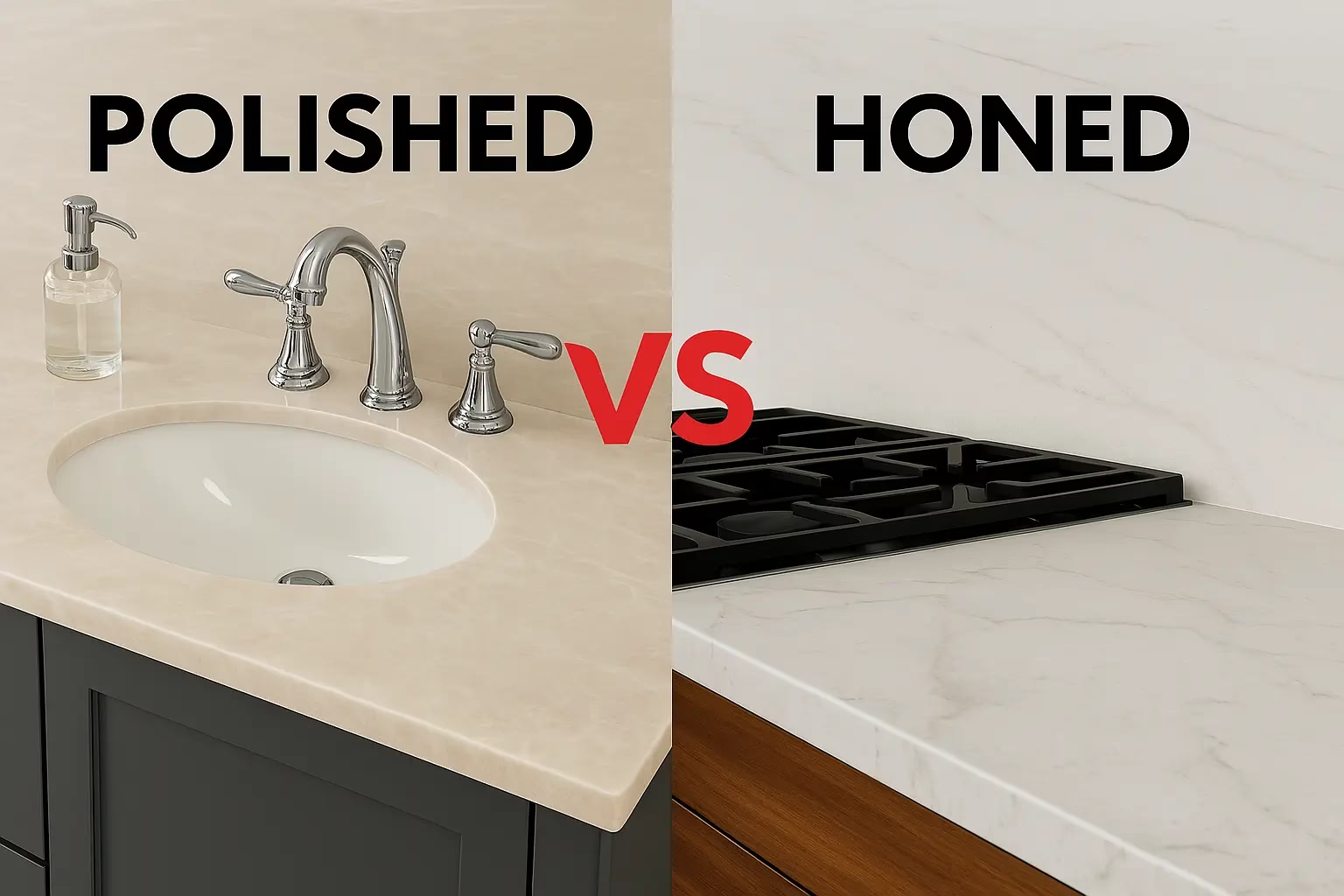
Polished vs Honed Countertop Finishes Comparison – Stone Valley Countertops

What Are Countertop Finishes?

Countertop finishes determine the surface texture and reflectivity of your stone, quartz, or engineered slab. The two most common finishes are polished and honed, each offering distinct advantages depending on your design goals and daily use.

Polished Countertops

A polished finish gives countertops a high-gloss, mirror-like surface that enhances the natural colors and veining of the material. This finish offers a luxurious, modern appeal but can reflect light and show fingerprints or smudges more easily than matte alternatives.

  • Pros: Enhances color and pattern; easy to wipe clean
  • Cons: Can show fingerprints; may be too reflective for some design styles

Polished surfaces work exceptionally well with quartz countertops and granite countertops, making them a top pick for sleek, high-end kitchens and bathrooms.

Honed Countertops

A honed finish features a smooth, matte surface with little to no shine. It creates a more natural, understated aesthetic and tends to hide minor scratches or smudges better than polished finishes. Honed countertops are ideal for warm, relaxed, or traditional interiors.

  • Pros: Subtle and natural appearance; hides scratches and imperfections
  • Cons: May require more upkeep to maintain a consistent look

This finish is often selected for high-traffic areas where durability matters most and pairs beautifully with marble countertops and natural stones.

Polished vs Honed: A Side-by-Side Comparison

FeaturePolishedHoned
AestheticsHigh-gloss and reflectiveMatte and subtle
MaintenanceEasy to clean but shows fingerprintsHides minor scratches better
Style SuitabilityModern, high-end designsTraditional, natural looks
Light ReflectionReflects light, brightening spaceAbsorbs light, offering a softer look

Which Finish Is Right for You?

Your choice between polished and honed countertops ultimately depends on your design preferences and practical needs:

  • Choose Polished if you prefer a modern, sleek look and don’t mind light cleaning to maintain the shine.
  • Choose Honed if you want a more natural, low-glare appearance that hides small imperfections better.

Countertop Care and Maintenance

Regardless of finish, proper care helps your countertops look beautiful for years. Clean daily with mild soap and water, avoid abrasive pads, and reseal natural stone surfaces as recommended by the manufacturer.

For detailed tips, visit our countertop maintenance guide.

Frequently Asked Questions

What is the difference between polished and honed countertops?

Polished countertops have a glossy, reflective surface that enhances color and pattern. Honed countertops are matte and smooth, providing a softer, more natural appearance.

Which countertop finish is easier to maintain?

Polished finishes are easier to clean but may show fingerprints or smudges. Honed finishes hide scratches better but may need more frequent sealing, especially with natural stone.

Which finish is better for modern kitchens?

Polished finishes suit modern, contemporary kitchens. Honed finishes work beautifully in rustic, natural, or transitional designs.

Final Thoughts

Choosing the right countertop finish can dramatically influence your space’s look and feel. Whether you prefer the reflective sophistication of polished surfaces or the quiet elegance of honed stone, the right finish should align with your lifestyle and aesthetic goals.

Need expert advice? Contact Stone Valley Countertops to explore samples and find the perfect finish for your kitchen or bathroom.