How to Choose Stone Finish for Your Countertops
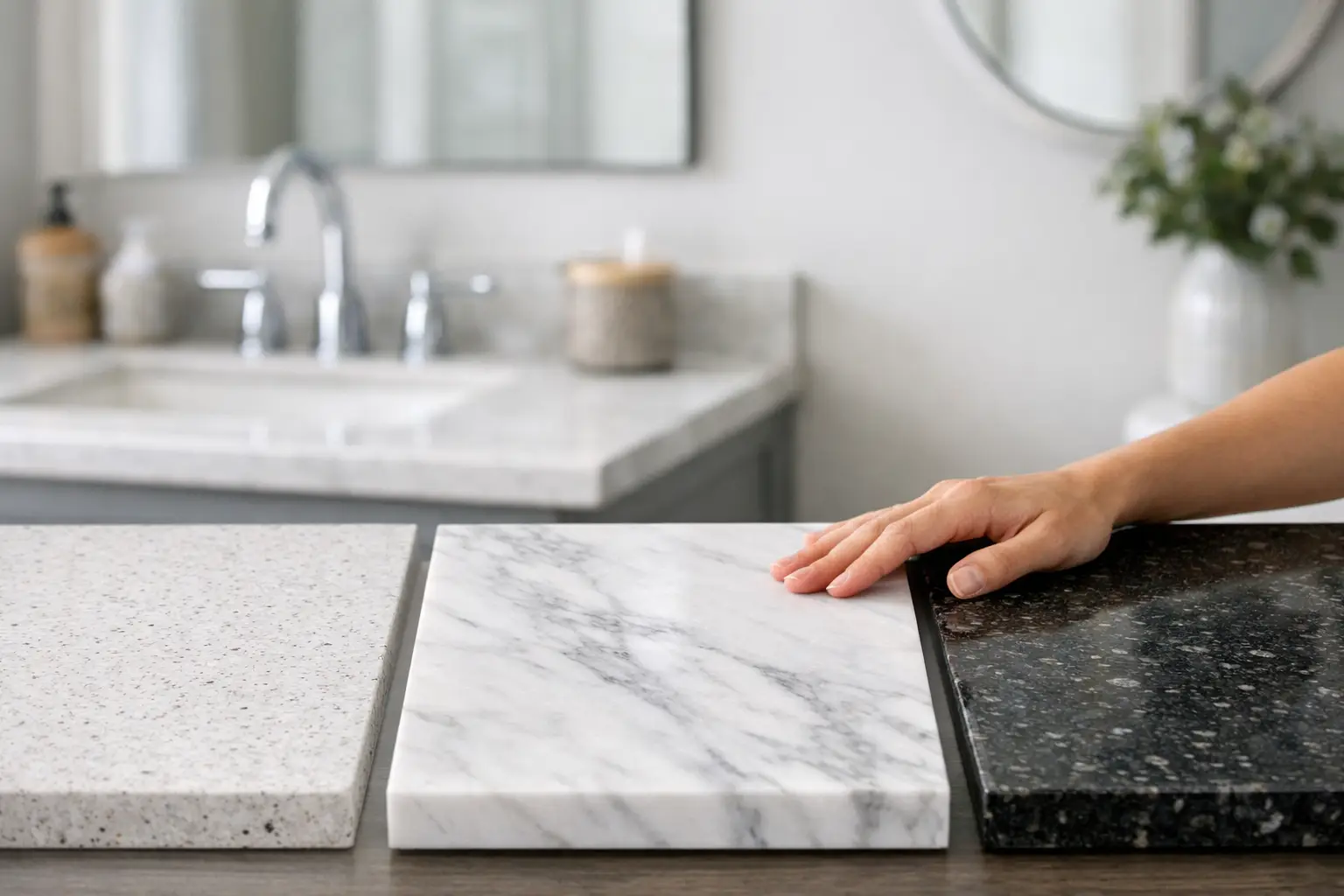
A slab can look completely different once its finish changes. The same dark granite may appear crisp and reflective when polished, soft and understated when honed, or richly textured when leathered. Knowing how to choose stone finish helps you look beyond a showroom sample and select a countertop surface that works with your lighting, cooking habits, cleaning routine, and overall design.
Finish is more than a style choice. It affects how a surface reflects light, shows fingerprints, feels to the touch, and handles everyday messes. The right answer depends on the material and where the countertop will be used.
Quick Answer: To choose the right stone finish, consider the countertop material, room lighting, cleaning habits, and how much daily use the surface will get. Polished finishes are generally easiest to wipe clean and bring out colour and veining. Honed finishes provide a softer, low-sheen appearance but can show oils and marks on some stones. Leathered finishes add texture and can disguise fingerprints, while matte finishes reduce glare and create a quieter look. Not every finish is available for every countertop material.
Start With the Room, Not Just the Sample
A finish that looks great on a small sample may feel different across a large island or a full-height backsplash. Before choosing, consider the amount of natural light in the room, the cabinet colour, and whether the countertop will be a quiet backdrop or a focal point.
Polished stone reflects light and can make a smaller or darker kitchen feel brighter. It also brings out veining, crystals, and movement in granite, marble, and quartzite. In a kitchen with plenty of windows or glossy cabinetry, though, that reflection can feel busier than expected.
Honed, matte, and leathered finishes absorb more light. They often suit warm wood cabinets, painted cabinetry, and spaces where homeowners want a calmer, less formal look. A textured finish can add depth to a large island without relying on a dramatic pattern.
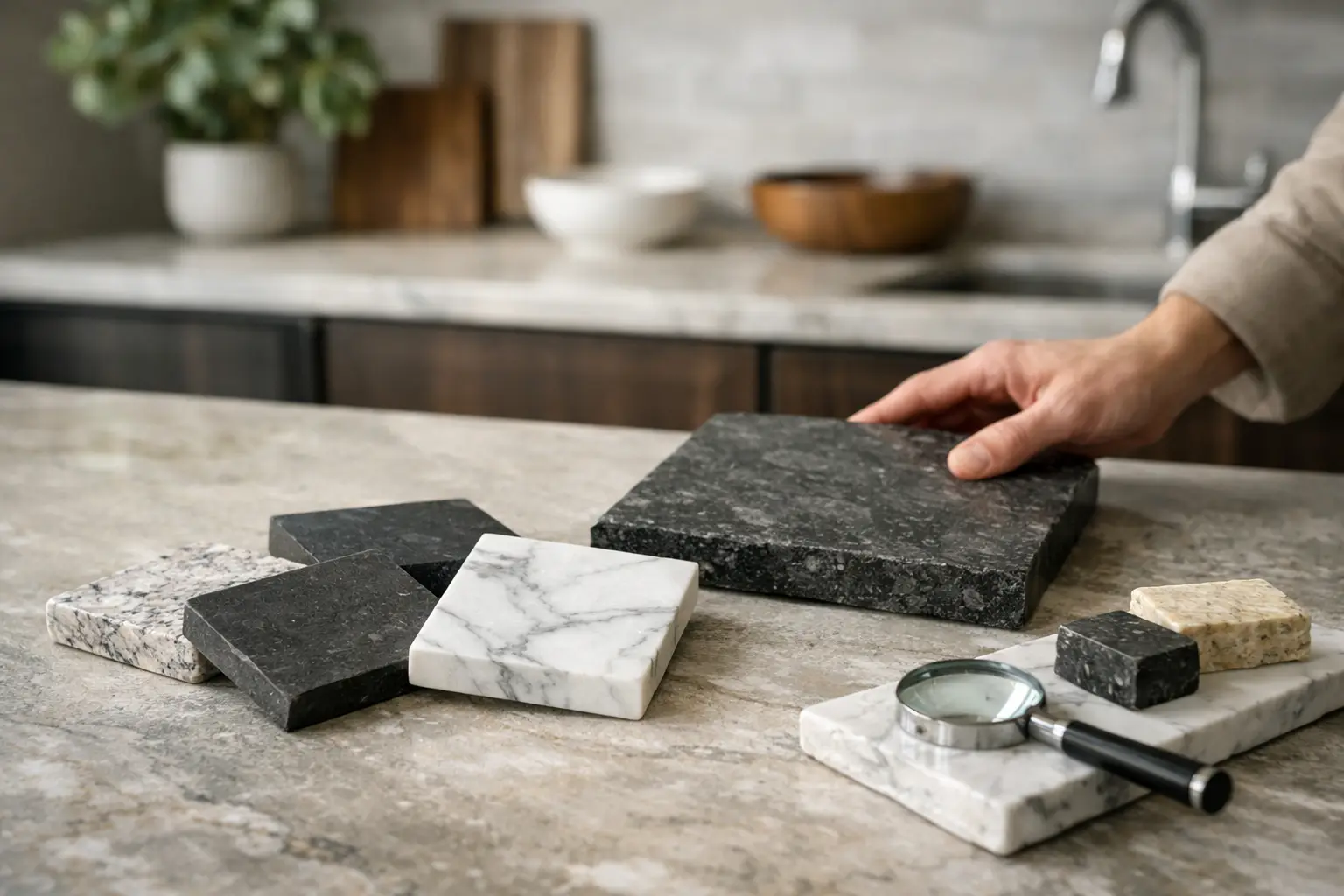
It is also worth viewing the actual slab, not only a display chip. Natural stone has variation from one area of a slab to another, while engineered materials can have changes in pattern direction or finish from one production batch to the next. Our guide on how to compare stone slabs before you buy explains what to look for before approving a slab.
Whenever possible, look at the material under daylight and lighting similar to what you will have in the finished room. A finish that looks subtle under showroom lighting can behave differently beside your cabinets, flooring, and backsplash.
How to Choose Stone Finish by Material
Not every finish is available or equally practical on every surface. The countertop material should guide the decision first.
Quartz and Engineered Stone
Most quartz countertops come in a polished finish, although many collections also offer matte, suede, or concrete-like surfaces. Polished quartz is easy to clean and typically works well in busy kitchens because its nonporous surface resists ordinary household spills.
Matte quartz has a softer appearance and can reduce glare, but darker matte colours may show fingerprints, hand oils, or smudges more readily than a polished surface. This does not make matte quartz a poor choice. It simply means it may need more frequent wiping around a sink, cooktop, or heavily used island.
Quartz is not usually leathered in the same way as natural granite or quartzite. If texture is the goal, ask to see finish options made specifically for the quartz collection rather than assuming every slab can be altered after purchase.
Granite and Quartzite
Granite and quartzite offer some of the broadest finish choices. Polished is common and highlights the stone’s colour, veining, and natural crystals. It is a practical choice for many kitchens because it is straightforward to wipe down and tends to make colours appear richer.
Honed granite or quartzite has a low-sheen appearance that can feel contemporary or more relaxed. On some dark natural stones, honed finishes can show oils, water marks, and fingerprints more than polished versions. Proper sealing helps, but sealing does not make natural stone maintenance-free.
Leathered finishes are textured with a soft sheen rather than a high gloss. They are especially popular on granites and some quartzites with movement or a weathered character. The texture can help disguise minor fingerprints and water spots, although crumbs and residue can settle into deeper texture if the surface is not wiped thoroughly.
If you are deciding between these two natural stones as well as their finish options, read our quartzite vs granite durability comparison.
Marble
Marble is often selected for its natural veining and character, not because it is the lowest-maintenance countertop option. A polished marble surface is reflective and classic, but it can show etching from acidic foods and drinks.
Etching is a change in the surface sheen, not necessarily a stain, and it is usually more noticeable on polished finishes.
A honed marble finish can make future etching less obvious because the surface begins with a softer sheen. It can still etch and stain, and many marble surfaces require routine sealing. For a baking area, bathroom vanity, or fireplace surround, honed marble can be a thoughtful fit if you appreciate a surface that develops character over time.
For a high-use family kitchen, it is important to be realistic about that trade-off before choosing marble based on appearance alone.
Porcelain and Sintered Stone
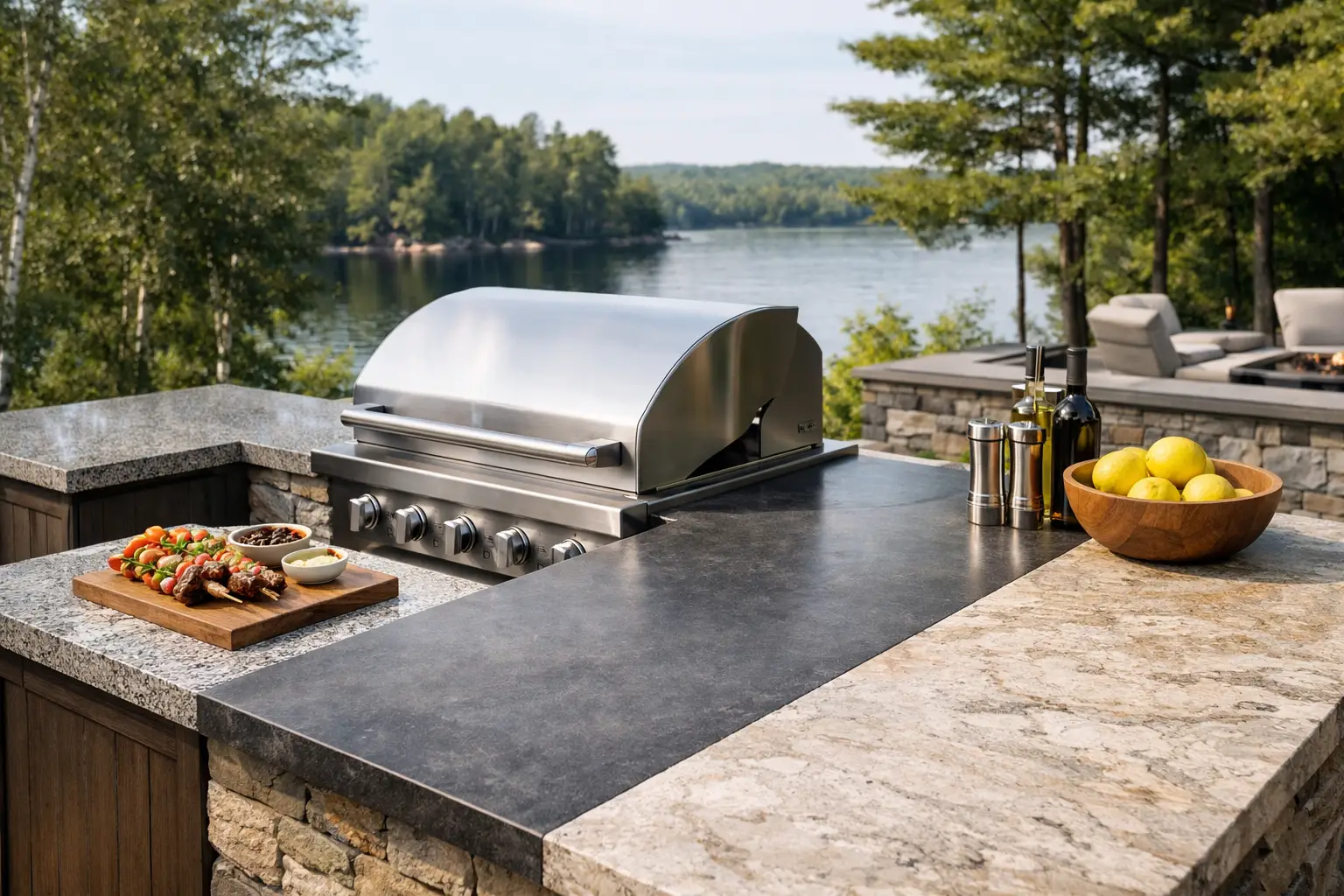
Porcelain and sintered stone are available in polished, matte, textured, and stone-like finishes. Their low porosity and resistance to everyday staining make them useful for kitchens, bathroom walls, fireplace surrounds, and, where the specific product is approved for exterior use, outdoor BBQ countertops.
A textured porcelain can be appealing for a waterfall island or outdoor counter, but the fabrication details matter. Mitres, seams, edge profiles, and sink cutouts should be planned around the material’s pattern and finish.
A polished porcelain surface may show light reflections at seams more readily, while a matte surface can create a more uniform visual field.
Understand the Four Common Countertop Finishes
The names can vary slightly by supplier and manufacturer, but most countertop finish discussions come back to polished, honed, leathered, and matte surfaces.
Polished: The most reflective option. It brings out colour, crystals, and veining and is generally easy to wipe clean.
Honed: Smooth but low-sheen. It gives stone a softer appearance and can make a kitchen or bathroom feel less formal.
Leathered: A textured natural stone finish with a subtle sheen. It is commonly seen on granite and some quartzites.
Matte: A broad term for low-sheen engineered stone, porcelain, and sintered surfaces. It reduces glare and creates a quieter appearance.
The best finish cannot be chosen by appearance alone. Colour also matters. A dark honed stone, for example, may show hand oils more readily than a lighter version of the same material.
Match Maintenance to Real Household Habits
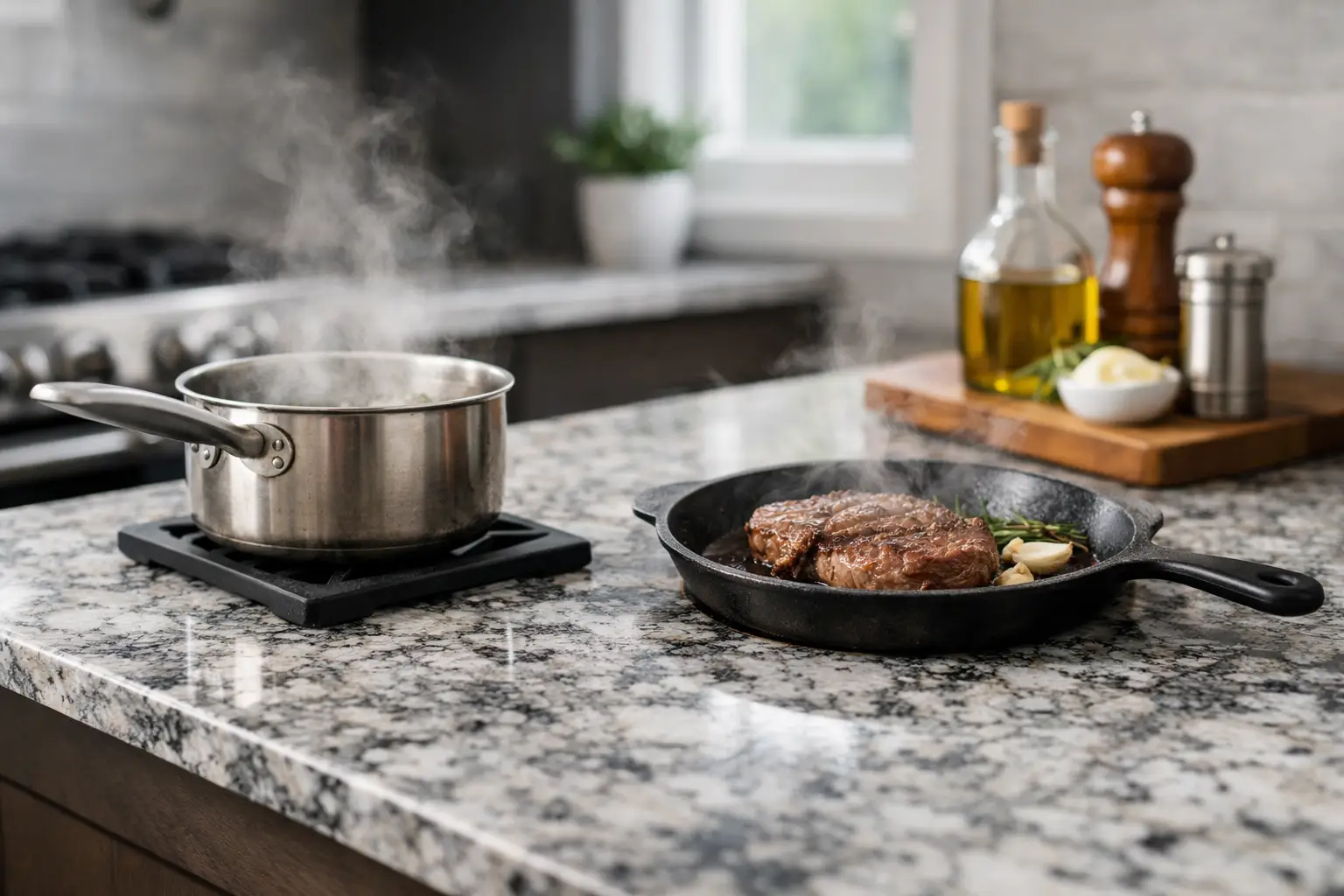
A countertop should suit the way your household actually uses the room. If the kitchen is used for frequent cooking, packed lunches, and quick cleanup, a polished quartz, granite, quartzite, porcelain, or sintered stone surface is often easier to live with than a deeply textured or delicate finish.
If you are drawn to honed marble or a dark matte quartz, choose it because you like the look enough to accept its care needs. Use a pH-neutral stone cleaner or mild soap and water as recommended for the material. Avoid abrasive pads, harsh chemicals, and acidic cleaners on natural stone.
Natural stones such as marble, granite, and quartzite may need periodic sealing depending on their density, finish, and use.
If granite is one of the materials you are considering, our guide on whether granite countertops need sealing explains why sealing requirements vary from one stone to another.
Sealer helps slow absorption, but it does not prevent etching, scratches, or every possible stain. Engineered surfaces generally do not require sealing, but they still benefit from routine cleaning and sensible use.
Consider Finish Alongside Edges, Thickness, and Details
Countertop finish should not be selected separately from fabrication details. A polished slab with a simple eased edge creates a clean, contemporary look. A honed or leathered natural stone can pair well with a thicker-looking mitred edge or a waterfall island, especially when the slab’s veining is carefully aligned through the return.
For a waterfall, ask to see how the pattern will travel from the horizontal countertop down the side panel. A strong vein can be book-matched or mitred for continuity, while a more uniform material may allow greater flexibility.
Our guide on how to plan a waterfall island explains why slab layout, vein direction, edge fabrication, and seam placement should be considered together.
On a textured finish, the edge treatment should feel intentional rather than like a glossy strip added to a matte surface.
Sink selection matters too. An undermount sink keeps the countertop edge easy to wipe, but a textured surface around the sink requires regular cleaning attention. Drain grooves, seams near a cooktop, and large overhangs should also be reviewed during templating so the final design supports both appearance and daily use.
Make the Decision With Full-Size Information
The most useful final step is to compare samples against your cabinet door, backsplash, and hardware in the room itself. Place the sample flat, then hold it upright. Light hits a countertop and a backsplash differently, and a finish that seems subtle vertically may have more glare when used across an island.
Ask your fabricator whether the selected finish affects available thicknesses, edge options, seam visibility, or lead time. Clear answers before templating help avoid surprises after the slab is chosen.
At Stone Valley Countertops, finish, slab layout, edge details, and installation planning are reviewed together because each of those decisions affects how the finished countertop looks and performs.
The best finish is the one you will still appreciate after the first busy week of cooking, cleaning, and living around it. Choose with your real routine in mind, and let the material’s natural character do the rest.
Frequently Asked Questions About Stone Countertop Finishes
What Is the Easiest Stone Countertop Finish to Maintain?
Polished finishes are generally among the easiest to wipe clean because they have a smooth surface. Maintenance still depends on the countertop material. Polished quartz requires different care than polished granite, quartzite, or marble.
Is Honed or Polished Stone Better for Kitchen Countertops?
Neither finish is automatically better. Polished stone reflects more light and usually makes colour and veining appear stronger. Honed stone has a softer, low-sheen appearance but may show oils or fingerprints more readily on certain materials and colours. The better option depends on the stone, lighting, and how the kitchen is used.
Does Leathered Granite Need to Be Sealed?
Many leathered granite countertops still benefit from sealing. The need and frequency depend on the specific granite’s porosity, finish, and use. Your fabricator or stone supplier can advise based on the slab selected.
Can Any Stone Countertop Be Made Leathered or Honed?
No. Finish availability depends on the material, slab, and supplier. Natural granite and some quartzites commonly offer alternative finishes, while engineered quartz, porcelain, and sintered stone usually come in manufacturer-specified finishes.
Choosing between countertop finishes?
Stone Valley Countertops can help you compare polished, honed, matte, and textured surfaces alongside the actual material, edge details, and slab layout. Visit one of our Ontario showrooms or contact us to discuss your countertop project.