Malik

Best Countertops for Busy Families

Best Countertops for Busy Families

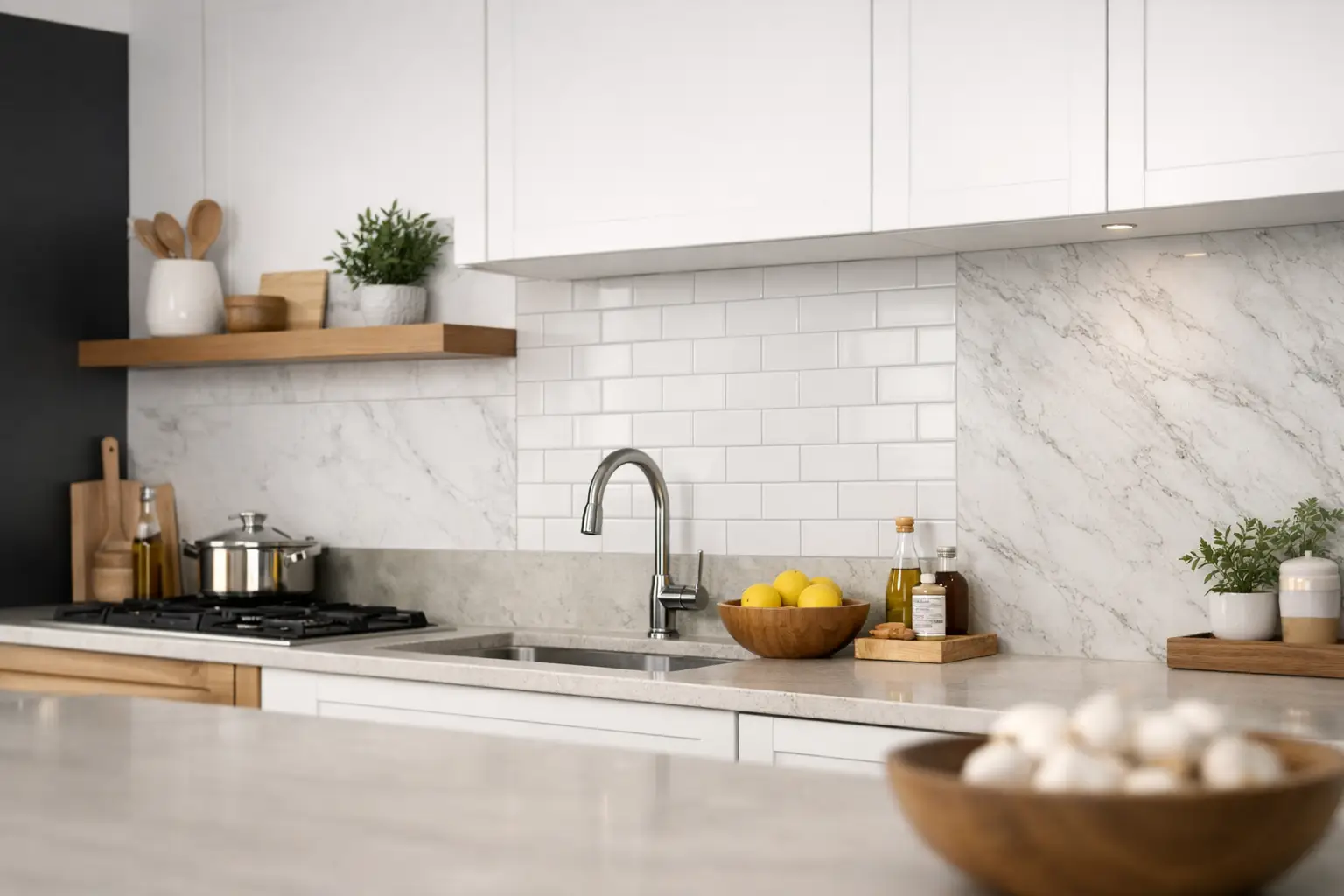
Best countertops for busy families in an Ontario kitchen

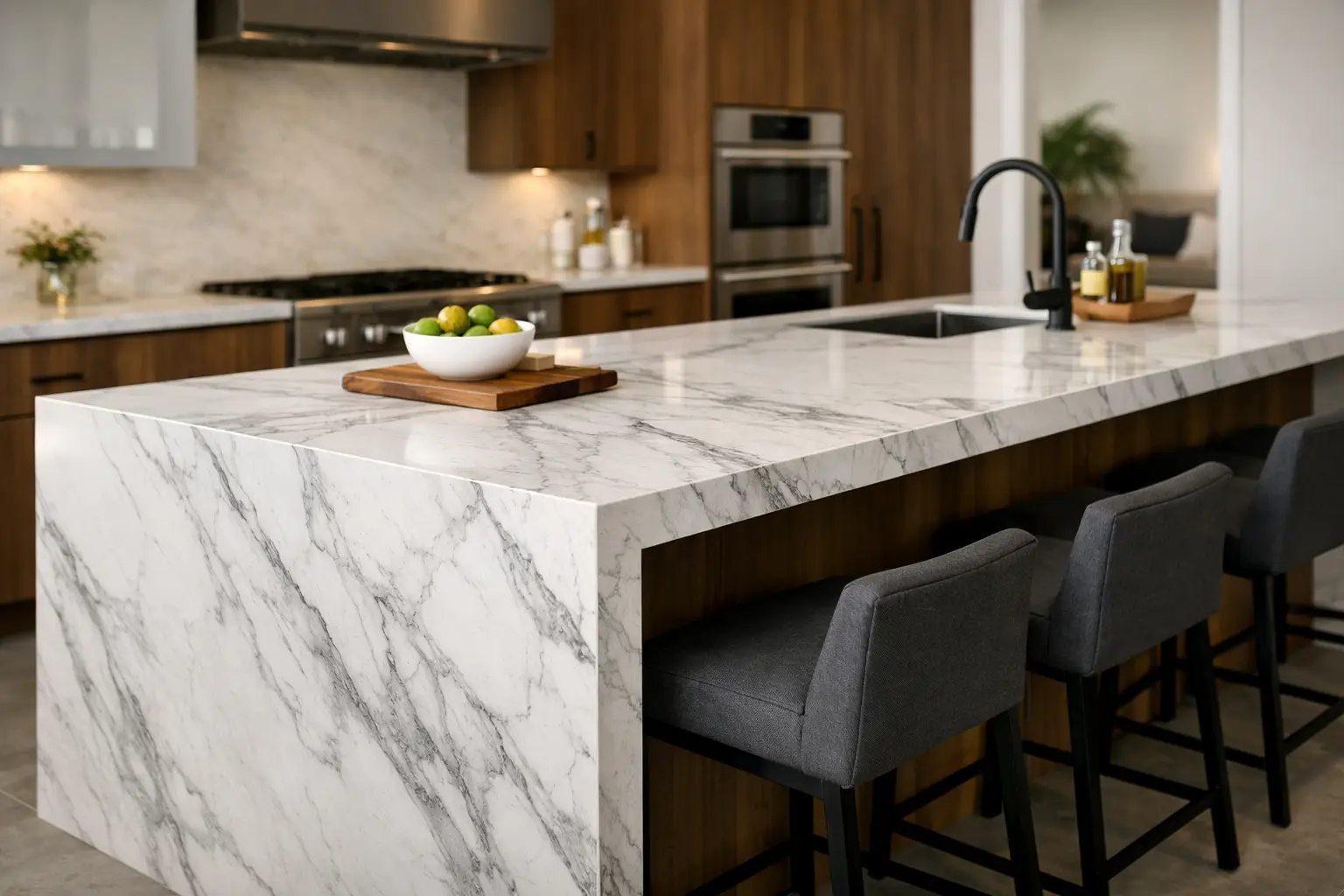
Breakfast spills, school bags on the island, pasta sauce near the cooktop, and someone always setting down a cup without a coaster. That is exactly why choosing the best countertops for busy families comes down to more than colour and pattern. A family kitchen has to handle constant use, easy cleanup, and the occasional rough moment without becoming a source of stress.

For most homeowners, the right answer is not the most expensive slab or the trendiest finish. It is the material that fits the way your household actually lives. If you cook often, host regularly, or have young kids who treat every surface like a workspace, durability and maintenance matter just as much as appearance.

Quick Answer: For most busy families, quartz is the best all-around countertop because it is non-porous, easy to clean, and requires very little maintenance. Granite, quartzite, and porcelain are also excellent choices depending on your priorities for heat resistance, natural stone appearance, and long-term durability.

What busy families really need from a countertop

In a high-use kitchen, countertops have to do several jobs at once. They need to resist stains from coffee, juice, oil, and tomato sauce. They should stand up to daily wear around sink cutouts, corners, and seating overhangs. They also need to be easy to wipe down quickly, because most families are not interested in special cleaners or careful routines every single day.

That is why the conversation usually starts with four practical questions. How easily does it stain? How much maintenance does it need? How well does it hide everyday mess? And what happens after a few years of real use?

The fabrication details matter too. A busy kitchen benefits from well-planned seams, durable edge profiles, properly supported overhangs, and precise sink cutouts. Even a strong material can feel less practical if the layout is not thought through carefully.

Best countertops for busy families by material

Material Maintenance Heat Resistance Stain Resistance Best For
Quartz Excellent Good Excellent Low-maintenance family kitchens
Granite Good Excellent Good Natural stone lovers who cook often
Quartzite Good Excellent Good Premium natural stone kitchens
Porcelain Excellent Excellent Excellent Modern kitchens, outdoor spaces, and busy homes
Marble Higher Good Fair Homeowners who prioritize natural character

Quartz

Quartz countertops are often the most practical fit for family kitchens because they are non-porous, low maintenance, and consistent in pattern. Quartz does not need sealing, and it handles everyday spills well when cleaned normally. For parents who want a surface that looks clean without demanding much attention, quartz is usually near the top of the list.

It also works well in a lot of styles. Some quartz designs have a soft, subtle look, while others mimic marble or concrete. That flexibility helps if you want a family-friendly kitchen that still feels polished.

The main trade-off is heat resistance. Quartz is durable, but it is still smart to use trivets for hot pots and pans. In very active kitchens, that is an easy habit to build, but it is worth knowing upfront. Pricing can vary quite a bit depending on the design, thickness, and edge detail, though many families find the low maintenance worth the investment.

Granite

Granite countertops are a strong option if you want natural stone with good durability. Granite handles heat well and stands up nicely to daily use. Families who cook often tend to appreciate that extra heat tolerance, especially around ranges and busy prep areas.

Because granite is natural, each slab has movement and variation. That can be a design advantage, but it also means material selection matters. Some patterns are better at hiding crumbs, fingerprints, and water spots than others. A heavily polished black surface, for example, may show more daily marks than a mid-tone granite with natural variation.

Granite does need sealing over time, so it is not quite as hands-off as quartz. That does not make it high maintenance, but it is a factor. If you love the character of natural stone and do not mind occasional upkeep, granite remains one of the best countertops for busy families.

Quartzite

Quartzite countertops appeal to homeowners who want the look of marble with more durability. Quartzite is hard, attractive, and well suited to active kitchens. Many families choose quartzite when they want something bright and elegant but do not want the maintenance concerns that come with marble.

That said, quartzite is not maintenance-free. It typically needs sealing, and like any natural material, performance can vary slightly depending on the slab. It is also usually priced higher than many quartz and granite options. For some households, the look is worth it. For others, quartz gives a similar visual direction with less upkeep.

Porcelain

Porcelain countertops are becoming more popular in family homes because they are highly resistant to stains, UV exposure, and heat. Porcelain can be an excellent choice for kitchens, laundry rooms, mudrooms, and even outdoor BBQ areas. If your household is hard on surfaces, porcelain deserves a serious look.

One reason homeowners like porcelain is its clean, modern feel. It is available in large-format looks, marble visuals, and minimal patterns that suit contemporary spaces well. It is also practical for vertical applications like backsplashes and waterfall islands.

The trade-off is that fabrication requires precision, especially around edges, sink openings, and panel alignment. When porcelain is measured, cut, and installed well, it performs beautifully. It is less forgiving of poor fabrication than some thicker stone materials.

Marble

Marble countertops are beautiful, but for most busy families, marble is not the most practical primary kitchen countertop. It can etch and stain more easily than quartz, granite, quartzite, or porcelain. In a low-traffic baking area or bathroom vanity, it can still make sense. In a family kitchen with constant spills and fast cleanup, it often asks for more care than most households want to give.

That does not mean marble is wrong. It just means the trade-off is real. If you choose it, do so because you love the natural aging and understand that marks are part of the material.

How design choices affect day-to-day use

The material matters, but so do the details around it. Families usually do best with eased or pencil edges rather than more delicate profiles. A simpler edge is easier to clean, less likely to chip visibly, and better suited to a kitchen that sees heavy use.

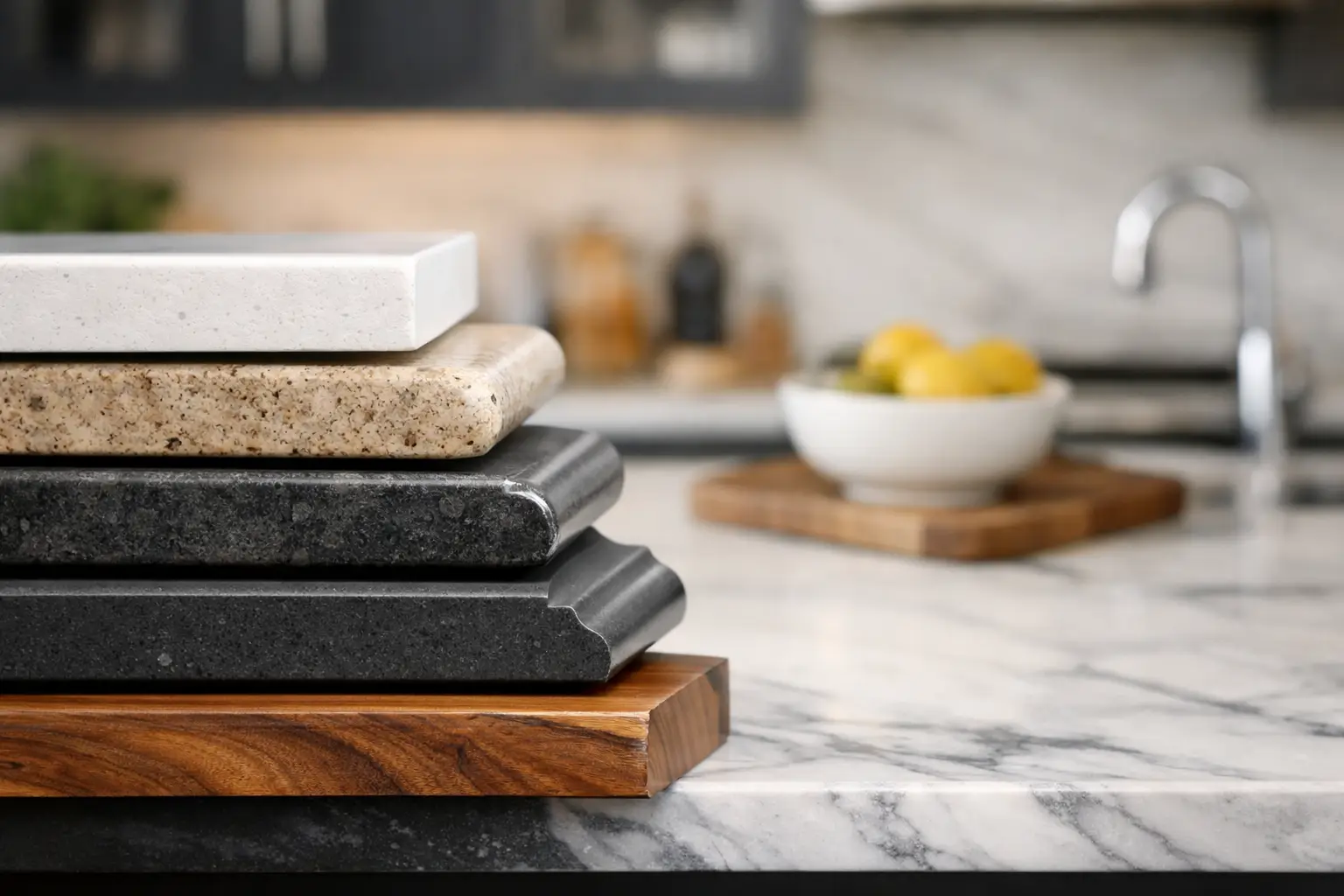
Countertop thickness also affects the final look and feel. Standard thickness works well in most homes, while a thicker build-up can create a bolder island presence. For families, the better question is not which thickness is fanciest but which one fits the kitchen design and budget without adding unnecessary cost.

If you are planning a waterfall island, think about traffic flow and corner exposure. Waterfalls can look sharp and help protect cabinet ends, but they also create prominent edges in a space where kids may be moving quickly. The same practical thinking applies to overhangs. Seating areas need proper support and enough room to use comfortably, especially in a kitchen that doubles as a homework station or breakfast spot.

Seam placement matters more than many homeowners expect. In larger kitchens, some seams are unavoidable. Good planning keeps them in less noticeable areas and aligns pattern flow as cleanly as possible. That is where careful templating and fabrication make a visible difference.

Which countertop is easiest to live with?

If the goal is the least maintenance with strong everyday performance, quartz usually leads. It is easy to clean, reliable for family use, and available in a wide range of colours and patterns.

If you want natural stone and better heat resistance, granite is a very solid option. If your style leans brighter and more organic, quartzite may be worth the added cost and maintenance. If you want a modern surface with strong stain and heat resistance, porcelain can be an excellent fit.

The best choice depends on what kind of inconvenience bothers you most. Some families want to avoid sealing. Others care more about hot pan resistance. Some want a pattern that hides crumbs and fingerprints between cleanings. There is no single right answer for every household.

Budget, timelines, and what to expect

Pricing depends on material, slab selection, layout complexity, edge style, sink cutouts, backsplashes, and whether the project includes features like waterfalls or full-height surfaces. A simple kitchen with straight runs will usually cost less than an island-focused layout with multiple cutouts and detailed fabrication.

Timelines also vary, but homeowners should expect a process that includes material selection, field measurements or templating, fabrication, and installation. Precision matters at every stage, especially in family homes where the kitchen cannot stay out of service for long. When the work is handled carefully in-house, communication tends to be clearer and details are easier to control.

For Ontario homeowners comparing options, this is usually where expert guidance helps most. Not because the materials are confusing on their own, but because the right recommendation often comes down to how all the details work together in your specific kitchen.

Frequently Asked Questions

What is the best countertop for a family kitchen?

Quartz is often the best all-around choice because it is non-porous, durable, and easy to maintain. It handles everyday spills well and does not require sealing.

Which countertop hides fingerprints and crumbs the best?

Mid-tone quartz and granite with natural movement generally hide everyday dust, fingerprints, and crumbs better than highly polished solid black or pure white surfaces.

Are quartz countertops good for families with children?

Yes. Quartz is one of the most family-friendly countertop materials because it resists stains, is easy to clean, and requires very little maintenance.

Should families choose granite or quartz?

Quartz is usually the better choice for homeowners who want minimal maintenance. Granite is ideal if you prefer natural stone and want greater heat resistance.

Is porcelain a good countertop for busy kitchens?

Yes. Porcelain is highly resistant to stains, heat, and UV exposure. It can be a strong option for busy kitchens when it is fabricated and installed properly.

How long do quality countertops last?

Professionally fabricated and installed quartz, granite, quartzite, and porcelain countertops can last for decades when cared for properly.

Choosing the right countertop for your family

If your countertops need to survive rushed mornings, weeknight cooking, and years of everyday wear, choose the surface you will still appreciate on an ordinary Tuesday, not just the one that looks best in a showroom.

Stone Valley Countertops helps homeowners across Ontario compare quartz, granite, marble, quartzite, porcelain, Dekton, and sintered stone based on real use, maintenance, layout, and budget. To compare materials for your kitchen, visit a Stone Valley showroom or contact us to get started.

Quartz Countertops Mississauga Guide

Quartz Countertops Mississauga: A Practical Guide for Homeowners

A kitchen in Mississauga can look great in a showroom photo and still be wrong for real life. The better question is how the surface will handle rushed mornings, heavy cookware, coffee spills, and the day-to-day wear that adds up fast. That is why so many homeowners looking at quartz countertops Mississauga projects start with the same priorities: durability, easy cleaning, consistent colour, and a finish that still looks right years later.

Quartz works well for those priorities because it is practical first. It gives homeowners a clean, uniform look, strong day-to-day performance, and less maintenance than natural stone. But it is not a one-size-fits-all material, and the details matter more than people expect.

Quick Answer: Quartz countertops are a popular choice for Mississauga homeowners because they are non-porous, low maintenance, durable, and available in a wide range of colours and patterns. While quartz is easy to clean and does not require sealing, choosing the right slab, seam placement, edge profile, and installer all play an important role in the finished result.

Why quartz countertops in Mississauga are in demand

Quartz fits the way many busy households use their kitchens and bathrooms. It is non-porous, so it does not need sealing, and it handles common messes well when cleaned properly. For homeowners who want a surface that feels polished without creating more upkeep, that is a big part of the appeal.

There is also a design reason. Quartz offers consistent patterning and colour in a way natural stone often does not. If you want a bright white kitchen, a soft concrete look, or a subtle marble-inspired pattern without the unpredictability of a quarry block, quartz gives you more control over the final result.

That said, consistency is not always the same as character. Some homeowners prefer the movement and variation of granite, quartzite, or marble because they want a more natural look. If that is the goal, quartz may still work, but the slab selection needs more attention.

What homeowners should know before choosing quartz

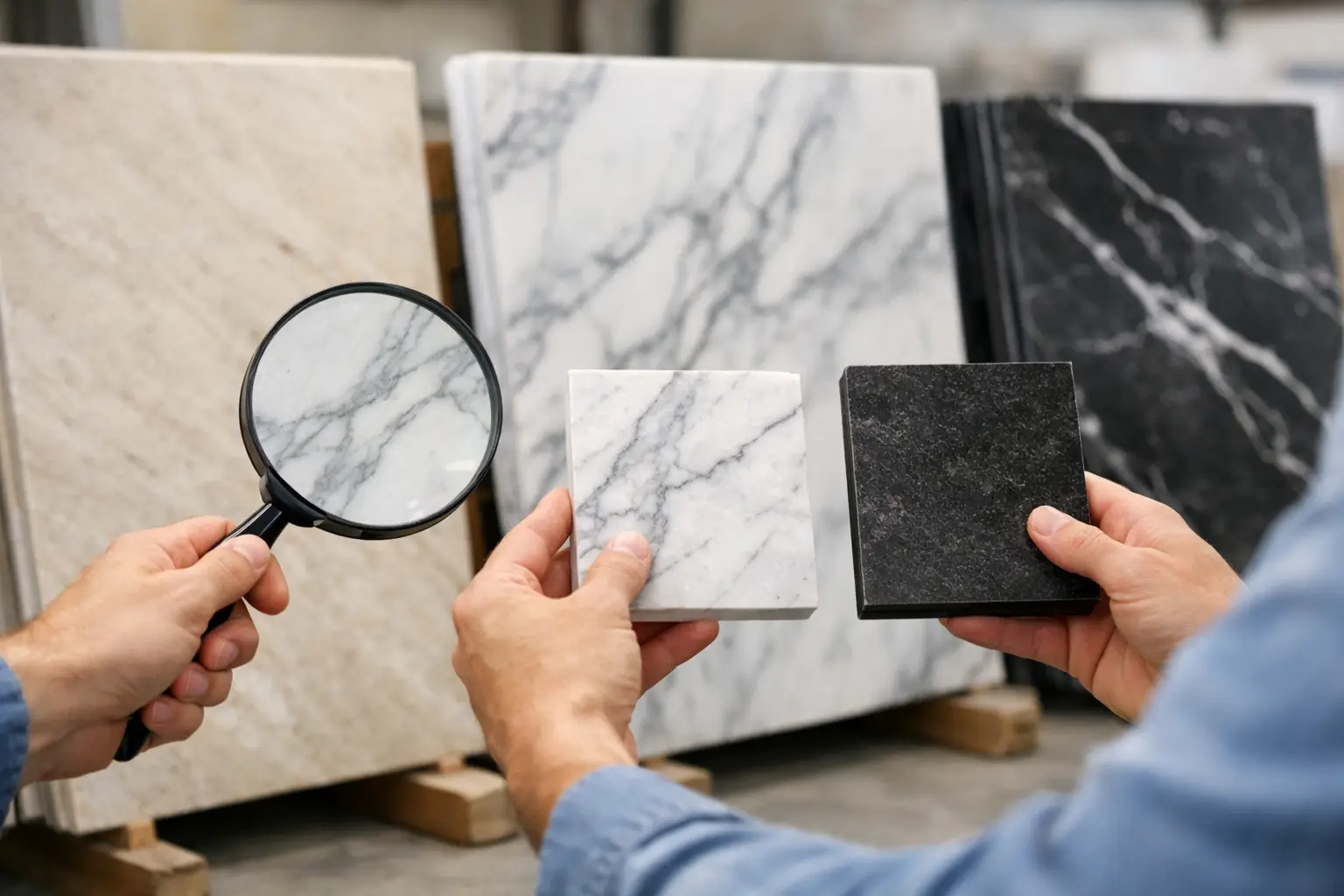
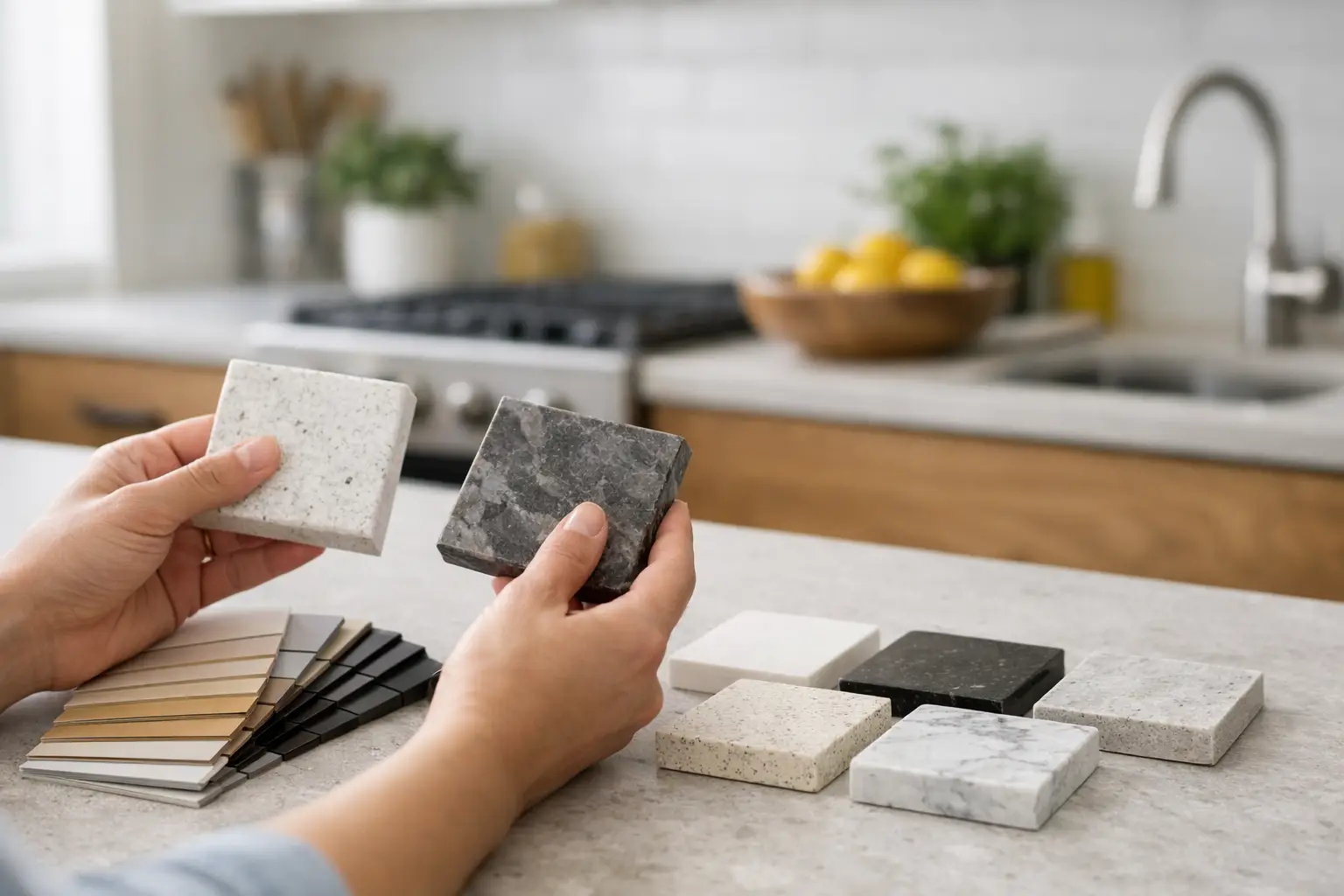
The biggest mistake people make is choosing quartz based on a small sample alone. A sample helps with colour, but it does not tell the whole story about pattern scale, veining direction, seam visibility, or how the slab will read across a full island.

Thickness is another early decision that affects both look and cost. Many quartz countertops are fabricated in 2 cm or 3 cm material. A thicker-looking edge can often be created through fabrication, so the visual result does not always require the most expensive slab thickness. The right choice depends on the style of the kitchen, the edge profile, and whether you are adding features like a waterfall end.

Overhangs also matter more than most people expect. A breakfast bar or island seating area may need additional support depending on the slab, the depth of the overhang, and the cabinet structure below. This is one of those details that should be addressed during templating rather than treated as an afterthought.

Cost of quartz countertops Mississauga homeowners can expect

Quartz pricing depends on more than the slab itself. Material selection is one part, but fabrication details often move the price more than people realize. A simple kitchen with a basic edge and straightforward sink cutout is very different from a layout with multiple corners, a waterfall island, full-height backsplash, cooktop cutout, and bookmatched features.

Brand tier, slab thickness, edge style, and installation complexity all affect total cost. So do access conditions in the home. A condo install, for example, may involve tighter elevators, booking windows, or more difficult handling than a ground-floor home with open access.

The honest answer on price is that it depends on the project. Homeowners usually get the clearest numbers after material selection and templating, when dimensions and fabrication details are confirmed. That is also when questions about seam placement, sink reveals, and backsplash heights can be answered accurately.

Quartz vs other countertop materials

Quartz is often compared to granite first, and that comparison makes sense. Granite is natural, heat-resistant, and full of movement, but it usually needs sealing and can vary significantly from slab to slab. Quartz offers more consistency and less maintenance, which many homeowners prefer.

Marble is chosen for its look more than its practicality. It has a soft, classic appearance, but it is more prone to etching and scratching. If you love that natural patina, marble can make sense. If you want easier day-to-day care, quartz is usually the safer choice.

Quartzite gives a more natural stone appearance with strong durability, but it can involve more variation and may require more maintenance than quartz. Porcelain and sintered stone are also worth considering, especially for certain modern designs or heat-focused applications, but they behave differently in fabrication and edge detailing.

For many kitchens, quartz lands in the middle ground homeowners want. It is durable, attractive, and predictable enough to plan around. If you are still comparing surfaces, this guide on how to choose kitchen countertops can help you narrow down the right option for your home.

Design details that change the final result

A good countertop project is not just about the slab colour. It is about how the finished pieces are fabricated and installed.

Seams

Every homeowner asks about seams, and for good reason. Some seams are unavoidable because of slab size, layout, or access into the home. The goal is not to pretend seams do not exist. The goal is to place them thoughtfully so they are as clean and unobtrusive as possible.

Large islands, L-shaped kitchens, and dramatic veining need careful planning. Vein direction, slab usage, and seam placement should all be considered together. A well-planned seam usually disappears into the overall design better than people expect.

Edge profiles

Most homeowners choose simple edges because they fit modern kitchens and are easier to keep clean. Eased and small-bevel styles remain popular for that reason. More decorative profiles can work too, but they need to suit the cabinetry and the scale of the room.

The edge should support the design, not compete with it. In many kitchens, simpler is better.

Sink cutouts and reveals

Undermount sinks are common with quartz, but the reveal matters. A positive reveal shows a bit of the sink rim, a negative reveal slightly covers it, and a flush reveal sits nearly even. Each has a different look and cleaning experience.

Many homeowners choose a slight negative reveal for a cleaner appearance, but it has to be fabricated precisely. This is one of those details where craftsmanship really shows.

Waterfall islands and backsplashes

Waterfall ends can look sharp when the slab pattern is selected and aligned properly. They also increase material usage and fabrication time, so they should be included early in the planning process. The same goes for full-height backsplashes. They create a strong visual finish, especially with veined quartz, but they need careful measurement around outlets, windows, and cabinets.

How quartz performs in daily use

Quartz is easy to live with, but easy does not mean indestructible. It resists staining better than many natural stones because it is non-porous. Routine cleaning is usually simple with mild soap, water, and a soft cloth.

Still, there are limits. Quartz is not the best place to set a hot pan directly from the stove or oven. Sudden heat can damage the surface. Cutting directly on it is also not a good habit, both for the slab and for your knives. In a busy kitchen, trivets and cutting boards are still part of the routine. For more detail, read our guide on whether quartz countertops are heat resistant.

For bathrooms, laundry rooms, bars, and mudrooms, quartz is often a very practical fit. It handles moisture well, keeps a clean appearance, and works nicely in spaces where homeowners want a polished look without extra maintenance.

Choosing a quartz countertop company in Mississauga

Not every countertop company follows the same process. When comparing suppliers in Mississauga, ask whether templating, fabrication, and installation are completed in-house or subcontracted. Keeping the work under one team often leads to better communication and greater consistency throughout the project.

It is also worth asking to view full slabs instead of relying only on small samples. Seeing the actual slab makes it much easier to evaluate veining, colour variation, and how the finished countertop will look in your kitchen.

Finally, ask how seams, sink cutouts, overhang support, and edge profiles will be handled before fabrication begins. Those details have a much bigger impact on the finished countertop than most homeowners realize.

What the installation timeline usually looks like

Once the cabinets are in and level, the project typically moves into templating. That is when final measurements are taken and details like overhangs, sink placement, faucet holes, and seam locations are reviewed. Fabrication follows, then installation.

The exact timeline depends on material availability, project complexity, and scheduling, but precise templating and fabrication are what keep the installation day running smoothly. Rushing measurements usually creates the kind of problems homeowners want to avoid.

An in-house process can make a real difference here because consultation, slab selection, fabrication, and installation stay connected. The handoff between stages is tighter, and that usually leads to fewer surprises.

When quartz is the right choice

Quartz makes sense when you want a countertop that looks clean, performs well, and does not ask much from you after installation. It is especially well suited for homeowners who want reliable everyday use, consistent design, and a wide range of colours and patterns.

It may not be the right fit if your main priority is natural stone movement, extreme heat resistance, or a surface that develops character over time. Those are valid priorities too. The best material is the one that fits how you actually cook, clean, and use the room.

If you are comparing surfaces for a kitchen, vanity, bar, or laundry area, focus on the details that will still matter after the renovation dust is gone: how the seams are planned, how the sink cutout is finished, how the edge feels in daily use, and whether the material suits your routine. That is usually where a countertop decision becomes a good one.

If you’re planning quartz countertops in Mississauga, visiting a showroom and viewing full slabs can make the selection process much easier. Seeing complete slabs, discussing fabrication options, and reviewing your layout before templating helps ensure the finished countertop matches both your design goals and the way you use your home every day. Contact Stone Valley Countertops to schedule a consultation or request a quote.

Frequently Asked Questions About Quartz Countertops in Mississauga

Does quartz need to be sealed?

No. Quartz is non-porous and does not require sealing like granite or some other natural stones. That is one of the main reasons homeowners choose quartz for kitchens, bathrooms, laundry rooms, and bars.

Are quartz countertops heat resistant?

Quartz can handle everyday kitchen use, but it is not heatproof. Hot cookware should always be placed on a trivet or hot pad rather than directly on the countertop.

How long do quartz countertops last?

With normal care, quality quartz countertops can last for decades while maintaining their appearance. Proper fabrication, installation, cleaning habits, and heat protection all help extend the life of the surface.

Are seams visible in quartz countertops?

Most larger countertops require at least one seam. Good planning, slab selection, and fabrication help make seams as discreet as possible, especially on islands, L-shaped kitchens, and layouts with strong veining.

Can quartz be used in bathrooms?

Yes. Quartz is an excellent choice for bathroom vanities because it resists moisture, does not require sealing, and is easy to clean. It also gives bathrooms a polished, consistent look without the maintenance needs of some natural stones.

Granite Countertops Toronto Homeowners Love

Granite Countertops Toronto Homeowners Still Love

A lot of Toronto homeowners start out saying they want something durable, easy to live with, and good-looking without feeling overdone. That is exactly why granite countertops Toronto homeowners keep considering, even with so many newer surface options on the market. Granite has been around a long time for a reason. It brings real stone character, strong day-to-day performance, and a look that does not feel manufactured.

Still, granite is not automatically the right answer for every kitchen or bathroom. The best choice depends on how you cook, how much maintenance you are comfortable with, the style of your home, and where you want to spend your budget.

Quick Answer: Granite countertops remain a popular choice for Toronto homeowners because they offer natural beauty, excellent durability, and strong heat resistance. While granite does require occasional sealing, it provides a unique appearance that engineered surfaces cannot fully replicate and can last for decades with proper care.
Granite countertops in a modern Toronto kitchen with white cabinetry and waterfall island
Granite continues to be one of the most popular natural stone countertop materials for kitchens across Toronto and the GTA.

Why granite countertops Toronto homeowners still choose

Granite remains popular because it solves a few practical problems at once. It is a natural stone, so every slab has its own movement, pattern, and variation. If you want a countertop that feels one of a kind, granite gives you that in a way man-made surfaces cannot fully copy.

It is also a strong working surface. In busy kitchens, granite holds up well to regular use, and it handles heat better than many other materials. For homeowners who cook often, set down hot pans from time to time, or simply want a surface that feels solid and substantial, that matters.

Another reason granite stays relevant in Toronto homes is design flexibility. It can work in traditional kitchens, modern spaces, and transitional layouts. Some slabs are busy and dramatic, while others are quiet and consistent. That range makes it easier to match granite to painted cabinets, wood tones, waterfall islands, and simple backsplashes without forcing the room in one direction.

What granite does well and where it depends

Granite is durable, but durable does not mean maintenance-free. That distinction matters.

On the positive side, granite resists heat well, stands up to normal kitchen traffic, and brings natural depth that many homeowners love. It can be a strong fit for kitchen countertops, bathroom vanities, laundry rooms, bars, and even outdoor BBQ areas depending on the slab selection and project details.

Where it depends is porosity and pattern. Some granite slabs are denser than others, and some need more attention to sealing. Lighter colours can sometimes show etching-like marks from residue or spills more easily, while very dark polished granite may show fingerprints or water spots under certain lighting. None of that makes granite a bad material. It just means slab selection matters as much as the material category itself.

This is where professional guidance helps. Looking at a small sample rarely tells the whole story. The full slab shows movement, mineral deposits, veining, and colour shifts that will affect how seams, sink cutouts, and island layouts look once fabricated.

Granite vs quartz for real-life kitchen use

Many homeowners comparing granite are also comparing quartz. That is a fair comparison because both are popular for kitchen countertops, but they perform differently.

Granite gives you natural variation and a more organic appearance. If you like movement, depth, and the look of real stone, granite usually has the edge. Quartz is more controlled and consistent, which some homeowners prefer in modern kitchens or when they want a cleaner, more uniform pattern.

In maintenance, quartz is generally simpler because it does not need sealing. Granite does need periodic sealing depending on the slab and usage. For some homeowners, that is no big deal. For others, especially if they want the lowest-maintenance option possible, quartz may feel easier.

Heat is another difference. Granite generally performs better around hot cookware. Quartz is durable, but sudden or excessive heat can be more of a concern. If your kitchen gets heavy daily use, granite may offer peace of mind in that area.

The right choice comes down to your priorities. If you want natural stone character and strong heat resistance, granite is often worth the maintenance trade-off. If you want lower upkeep and a more uniform look, quartz may make more sense.

Cost factors for granite countertops in Toronto

Price is one of the biggest questions, and the honest answer is that granite pricing varies more than people expect.

The slab itself is a major factor. Entry-level granite colours are usually more affordable than slabs with rare movement, unusual background tones, or high-demand patterns. Size also matters. A small straight vanity is very different from a large kitchen with an island, full-height backsplash, or waterfall ends.

Fabrication details affect price too. Sink cutouts, cooktop cutouts, edge profiles, seam placement, corner shapes, overhang support, and thickness all influence labour and production time. A simple eased edge is not priced the same way as a more decorative profile, and a clean rectangular kitchen is easier to fabricate than a layout with multiple angles.

Installation logistics can also play a role in Toronto-area projects. Condo access, tight stairways, elevator bookings, parking limitations, and older homes with uneven walls all add complexity. None of that should be a surprise late in the process. Good planning and accurate templating make a big difference.

Design details that change the final look

When homeowners picture granite, they often think only about colour. In reality, fabrication details have just as much impact on the finished result.

Thickness, edges, and overhangs

Most homeowners choose between standard thickness options based on style, budget, and the visual weight they want. A thicker-looking edge can make an island feel more substantial, but it may not be necessary in every kitchen. Cleaner spaces often suit simple profiles, while more traditional homes may benefit from a slightly more shaped edge.

Overhangs matter too. Seating areas need proper support depending on the depth and layout. That decision should be addressed early, not after fabrication starts.

Seams and slab layout

Seams are part of many countertop projects, especially in larger kitchens. The goal is not pretending seams do not exist. The goal is planning them carefully so they are structurally sound and visually minimized.

With granite, seam visibility depends on pattern, colour, slab movement, and where the seam lands. Busy granite can sometimes help disguise a seam, while linear patterns may require more attention to direction and flow. A good slab layout also helps key features land in the right places, especially on islands and waterfall panels.

Sink cutouts and backsplashes

Sink style changes the look and use of the counter. An undermount sink keeps the stone surface clean and uninterrupted, while the cutout finish around the sink opening adds another level of detail. Backsplash choices matter as well. Some kitchens look best with a short matching stone backsplash, while others benefit from running a different wall finish above the counter line.

Maintenance and cleaning without overcomplicating it

Granite care is straightforward when homeowners know what actually matters.

For daily cleaning, a soft cloth, warm water, and a stone-safe cleaner are usually enough. You do not need harsh products, and you definitely do not want anything too abrasive or acidic sitting on the surface. Wiping up spills reasonably quickly is a good habit, especially with oils, wine, coffee, or anything strongly pigmented.

Sealing is the part homeowners ask about most. Granite is not one uniform material, so sealing schedules vary. Some slabs need more regular attention than others. A simple water test can help show whether a surface is ready to be resealed. The point is not constant maintenance. It is basic care that protects the stone and helps it age well.

Installation timeline and what homeowners should expect

One of the biggest concerns in any countertop project is timing. Homeowners want to know when they can use the kitchen again and whether delays are likely.

The usual process starts with material selection, then templating once cabinets are installed and level. After that comes fabrication, followed by installation. If everything is organized properly, the process is efficient, but accurate measurements are critical. Small errors at the templating stage can create bigger problems later around walls, sinks, appliance clearances, and overhangs.

An in-house process helps keep communication tighter from selection through fabrication and installation. That matters when a project includes detailed edge work, waterfall panels, full-height pieces, or tighter timelines. Stone Valley Countertops handles those steps in-house, which gives homeowners more consistency from one stage to the next.

Is granite the right fit for your home?

Granite makes sense when you want a natural surface with real variation, strong everyday durability, and a look that does not feel flat or repetitive. It is especially appealing for homeowners who cook often, appreciate natural materials, and do not mind occasional sealing.

It may be less ideal if your priority is the lowest-maintenance surface possible or if you want a very uniform pattern with almost no variation. In that case, another material may fit better.

The best countertop choice is usually not the one with the most hype. It is the one that matches how you use your home, what details you notice, and how much maintenance feels reasonable to you. If granite checks those boxes, it remains one of the most practical and visually grounded options available.

Frequently Asked Questions About Granite Countertops in Toronto

Are granite countertops good for Toronto homes?

Yes. Granite countertops work well in many Toronto homes because they are durable, heat resistant, and naturally unique. They are a strong option for kitchens, vanities, bars, laundry rooms, and some outdoor applications when the right slab is selected.

Do granite countertops need to be sealed?

Many granite countertops benefit from periodic sealing, but not every slab needs the same schedule. Denser granite may need less maintenance, while more porous granite may need resealing more often. A simple water test can help show when sealing is needed.

Is granite better than quartz?

Granite is better if you want natural stone character, stronger heat resistance, and one-of-a-kind slab movement. Quartz is usually better if you want lower maintenance and a more consistent pattern. The right choice depends on how you use your kitchen and what look you prefer.

How long do granite countertops last?

Granite countertops can last for decades with proper care, good fabrication, and proper installation. Regular cleaning, quick spill cleanup, and occasional sealing can help protect the surface over time.

Can granite be used for kitchen islands?

Yes. Granite works very well for kitchen islands, including larger island layouts. Seam placement, slab movement, overhang support, and edge profile should be planned carefully before fabrication.

If you are planning a granite countertop project in Toronto or the GTA, contact Stone Valley Countertops to compare materials, review slab options, and get guidance before fabrication begins.

How to Choose Kitchen Countertops

How to Choose Kitchen Countertops

You usually notice the colour first. Then a few weeks later, real-life questions show up: Will it stain? Can it handle a hot pan? Will the seam be obvious? If you’re wondering how to choose kitchen countertops, those practical details matter just as much as the look.

A countertop has to do a lot. It needs to fit the way your kitchen is used, hold up over time, and still feel right with your cabinets, flooring, and overall style. The best choice is rarely about one material being better than all the others. It comes down to how you cook, how much maintenance you want, what your budget looks like, and how the slab will actually be fabricated and installed.

Quick Answer: The best way to choose kitchen countertops is to balance durability, maintenance, budget, and style. Consider how you use your kitchen, compare materials such as quartz, granite, marble, quartzite, and porcelain, and pay attention to fabrication details like seams, edge profiles, and overhang support before making your final decision.

How to choose kitchen countertops based on daily use

Start with function before aesthetics. A family kitchen that sees constant meal prep, kids doing homework, and heavy daily traffic needs something different than a low-use kitchen in a condo or a bar area used mainly for entertaining.

If you are choosing kitchen countertops for a home in Ontario, it is also worth thinking about local slab availability, fabrication timelines, and how quickly the project can move once your cabinets are ready for templating.

If you want low maintenance and consistent performance, quartz countertops are often the easiest place to start. Quartz does not need sealing, resists staining well, and offers a wide range of colours and patterns. For many homeowners, that combination makes decision-making simpler. The trade-off is that quartz is manufactured, so if you want strong natural movement or one-of-a-kind variation, you may prefer a natural stone instead.

Granite countertops are a solid option for kitchens that need durability and heat resistance. Each slab is unique, which appeals to homeowners who want a natural look with character. Granite does require sealing from time to time, and some colours or patterns are busier than others, so it helps to see the actual slab rather than relying only on a small sample.

Marble has a classic look that many people love, but it is a softer and more porous material. It can etch and stain more easily, especially in busy kitchens. That does not mean it is the wrong choice. It just means it is better for homeowners who understand the maintenance and are comfortable with natural wear becoming part of the surface over time.

Quartzite gives you the look of natural stone with more durability than marble in many applications. It is harder than many people expect and can be an excellent choice when you want a natural slab with strong visual impact. It still needs proper sealing and care, and some quartzites are easier to maintain than others.

Porcelain and sintered stone are worth considering if you want a sleek, modern surface with strong stain and heat resistance. These materials can work especially well for thin profiles, waterfall edges, and contemporary designs. Fabrication quality matters a lot with these surfaces because cutouts, edge details, and handling require precision.

Kitchen countertop material comparison

Material Maintenance Heat Resistance Stain Resistance Best For
Quartz Very low Good Excellent Busy family kitchens
Granite Moderate Excellent Very good when sealed Natural stone kitchens
Marble Higher Good Moderate Classic, softer designs
Quartzite Moderate Excellent Very good when sealed Natural dramatic slabs
Porcelain Low Excellent Excellent Modern kitchens

Material choice is only part of the answer

One of the most common mistakes homeowners make is choosing a material category and assuming the rest will take care of itself. In reality, slab selection, thickness, finish, edge profile, seam placement, sink details, and overhangs all affect the final result.

For example, a polished quartz slab in a bright white kitchen will feel very different from a honed quartzite with softer movement, even if both fit the budget. A bold granite can become the focal point of the room, while a quieter engineered stone may give the kitchen a cleaner, more minimal look.

This is why samples are helpful, but not enough on their own. A small chip cannot show you how veining runs across an island, how a seam may land near a cooktop, or how a waterfall edge will look once fabricated.

Budget: what you are really paying for

When homeowners think about cost, they usually focus on the material price first. That matters, but it is only one part of the project.

The final countertop cost is shaped by the slab itself, the size of the kitchen, the number of cutouts, edge profile, backsplash choice, corner details, overhang support requirements, and whether you want features like a waterfall island. A large island with dramatic veining may also require more careful slab planning so the pattern flows the right way.

This is where good guidance can save money and frustration. Sometimes a material that looks less expensive at first becomes comparable once fabrication details are included. In other cases, a slightly higher material cost makes sense because it reduces maintenance or better suits the way the kitchen is used.

If you are balancing budget and performance, be honest about where you want to invest. Many homeowners are willing to spend more on the main kitchen surface and keep secondary areas simpler. That approach often makes more sense than stretching a budget too thin across every detail.

Design details that affect the final look

Countertop design is not just about colour. Thickness changes the visual weight of the surface. A thicker profile can make an island feel more substantial, while a thinner profile often suits a cleaner, more modern kitchen.

Edge styles also matter more than people expect. A simple eased edge works in most kitchens because it looks clean and is easy to live with. More decorative profiles can suit traditional spaces, but they are not always the best fit for a modern renovation. The right edge should support the style of the kitchen without calling too much attention to itself.

Backsplashes are another decision point. Some homeowners want a standard short backsplash, while others prefer a full-height slab backsplash for a more continuous look. A full slab can be striking, especially with quartzite, marble-look quartz, or porcelain, but it changes both cost and fabrication planning.

Waterfall islands deserve careful thought. They can look beautiful, but only when the proportions, slab pattern, and kitchen layout support the feature. If the veining needs to wrap down the side, fabrication precision becomes especially important.

The fabrication details homeowners should ask about

Learning how to choose kitchen countertops also means asking what happens after you pick the slab. This is where workmanship starts to matter just as much as material.

Ask how seams will be planned. In many kitchens, seams are necessary, especially on large layouts or islands. The goal is not to pretend seams never exist. It is to place them thoughtfully and fabricate them cleanly so they are as discreet as possible.

Ask about sink cutouts too. An undermount sink needs precise fabrication because the reveal around the sink affects both appearance and cleaning. Cooktop cutouts, faucet holes, and corner shapes also need careful measuring.

Overhangs are another practical detail. If you want seating at an island or peninsula, the depth of the overhang and whether support is needed should be decided early. This affects both usability and structural stability.

Templating is one of the most important stages in the process. Accurate digital or physical measurements help ensure the countertops fit correctly around walls, appliances, and cabinets. Rushed measuring often shows up later as alignment issues, awkward gaps, or installation delays.

How to choose kitchen countertops without regretting the finish later

A surface can look great in a showroom and feel very different in a working kitchen. Glossy finishes tend to reflect more light and may make a space feel brighter. Honed or matte finishes can look softer and more understated, but on some materials they may show marks, oils, or fingerprints more easily.

Maintenance should be part of that decision. If you want the simplest cleaning routine, quartz is often the lowest-effort option. Natural stones can be excellent choices too, but they ask for a bit more awareness. Using cutting boards, wiping spills promptly, and understanding when resealing is needed can make a real difference.

That is not a reason to avoid natural stone. It just means the right material is the one that matches your expectations. A homeowner who loves the look of marble and accepts that it will develop character over time may be happier than someone who picks it expecting it to behave like quartz.

Timeline matters more than most people think

Countertops usually come near the end of a kitchen project, which makes delays especially frustrating. Once cabinets are in place, templating can happen. After that, fabrication and installation follow.

Turnaround time varies by material, project complexity, and slab availability. A straightforward kitchen may move quickly, while a project with multiple waterfall edges, full-height backsplashes, or detailed vein matching will naturally take more planning. The key is setting realistic expectations from the start.

For homeowners in Ontario, working with a company that handles consultation, selection, fabrication, and installation in-house can help keep communication clearer through each stage. It reduces the handoff points where errors or delays often creep in.

FAQs about choosing kitchen countertops

What is the easiest countertop to maintain?

Quartz is generally the easiest countertop to maintain because it does not require sealing and resists most everyday stains. For busy kitchens, that low-maintenance routine is one of the main reasons homeowners choose quartz.

What countertop lasts the longest?

Granite, quartz, quartzite, porcelain, and Dekton can all last for decades when they are properly fabricated, installed, and cared for. The best long-term choice depends on how the kitchen is used and how much maintenance you are comfortable with.

Should I choose quartz or granite?

Quartz is a good choice if you want low maintenance, consistent patterns, and strong stain resistance. Granite is a good choice if you prefer a natural slab, better heat resistance, and unique movement from piece to piece.

Can I see the full slab before choosing?

Yes. Seeing the full slab is strongly recommended, especially for natural stone or any material with strong veining. A small sample cannot show the full pattern, colour variation, or how the slab may be laid out across an island or long countertop run.

What should I ask before ordering kitchen countertops?

Ask about slab availability, seams, thickness, edge profile, sink cutouts, overhang support, backsplash options, templating, installation timing, and maintenance. These details affect how the finished countertop looks and performs.

The right countertop is the one that still makes sense after the excitement of picking a slab wears off, when you are cooking on it, cleaning it, leaning on the island, and living with it every day.

If you are still comparing materials, visiting a showroom and viewing full slabs can make the decision much easier. Seeing the actual stone, discussing fabrication details, and reviewing layout options helps ensure your countertop fits both your kitchen and the way you use it every day. If you are planning a project in Ontario, contact Stone Valley Countertops to compare materials and ask questions before fabrication begins.

Are Quartz Countertops Heat Resistant?

Are Quartz Countertops Heat Resistant?

Set a hot pan straight from the stove onto quartz, and you might get away with it once. Do it often enough, though, and that small shortcut can leave a permanent mark. If you’re asking are quartz countertops heat resistant, the honest answer is yes, to a point. Quartz handles everyday kitchen use well, but it is not a surface you should treat like a trivet.

That distinction matters because quartz is often chosen for busy kitchens for good reason. It is durable, low maintenance, consistent in pattern, and easy to live with. But heat performance is one area where homeowners sometimes expect more than the material is designed to give.

Quick Answer: Quartz countertops are heat resistant but not heatproof. They handle normal kitchen use well, but placing hot pots or pans directly on the surface can damage the resin that binds the material together. Using a trivet or hot pad is the safest way to protect your countertop.

Are quartz countertops heat resistant in real kitchens?

Quartz countertops are heat resistant, but not heatproof. That means they can tolerate normal kitchen temperatures from warm plates, a mug of coffee, or brief contact with mildly hot items. What they do not like is sudden, intense heat from cookware that has just come off a burner, out of the oven, or off a grill.

Quartz slabs are engineered using natural quartz combined with resins and pigments. The quartz itself is hard and stable, but the resin content is the limiting factor when heat enters the picture. High temperatures can weaken or scorch those resins, which may lead to discoloration, dull spots, surface damage, or in some cases even cracking.

For most homeowners, the practical takeaway is simple. Quartz is strong enough for daily use, but it still needs basic heat protection.

Why heat affects quartz differently than granite or quartzite

Homeowners often compare quartz with granite and assume they perform the same way under heat. They do not.

Granite and quartzite are natural stones that generally tolerate direct heat better because they do not contain the same resin binders found in engineered quartz. That does not mean natural stone is immune to damage, but it usually has a higher heat tolerance in everyday use.

Quartz, on the other hand, is more controlled in appearance and easier for many people to maintain. You get cleaner pattern consistency, a wide range of colours, and no need for routine sealing. The trade-off is that extreme heat is a weaker point.

This is one of those material decisions that depends on how you use your kitchen. If you regularly move hot cookware around and want a surface with more natural heat tolerance, granite, quartzite, porcelain, or sintered stone may be worth discussing. If your priority is low maintenance and a polished, predictable look, quartz is still an excellent option as long as you use trivets or hot pads.

What temperature is too hot for quartz?

There is no single number that tells the whole story, because damage depends on temperature, duration, and thermal shock. In general, quartz can start having problems when exposed to temperatures much higher than what the resin system is meant to handle. A pan fresh off the stove or a baking dish out of a 400-degree oven can be risky, especially if it sits in one spot.

The bigger issue is not only the heat itself, but the speed and intensity of the temperature change. Quartz does not respond well to concentrated heat hitting a cool surface. That sudden stress can create damage faster than people expect.

In real kitchens, the most common troublemakers are skillets, Dutch ovens, slow cookers that run hot against the surface, toaster ovens with poor clearance, and air fryers that vent heat downward or backward near a backsplash or seam.

Signs of heat damage on quartz countertops

Heat damage is not always dramatic at first. Sometimes it starts as a subtle change you only notice in certain light.

A resin burn can show up as a yellowed or browned patch. You may also see a cloudy area where the finish no longer reflects light the same way. In more severe cases, the surface can develop a slight warp, a rough spot, or a small crack.

Edges and areas near cutouts can be more vulnerable because fabrication details matter there. Around sinks, cooktops, and corners, the stone has less mass and more stress concentration. Precision fabrication helps reduce weak points, but no quartz surface is meant for direct contact with high-heat cookware.

Everyday heat is usually fine

This is where many homeowners can relax a bit. Normal daily use is not the same as abuse.

Warm dinner plates, bowls of soup, a coffee maker used properly, or a curling iron on a heat-safe mat in a bathroom vanity are usually not a problem. Quartz is built for lived-in spaces. It can absolutely handle the rhythm of a real home.

The concern starts when hot items come directly from a major heat source and make contact with the slab. A casserole dish from the oven, a pan from a gas burner, or a grill accessory set down without protection can all create enough heat concentration to damage the resin.

How to protect quartz without overthinking it

The good news is that protecting quartz is simple. Most households only need a few habits.

Use trivets or hot pads under pots, pans, baking trays, and slow cookers. Give countertop appliances enough clearance so heat is not trapped against the surface or backsplash. If you have a waterfall island or a clean, minimal design, keep a couple of low-profile trivets nearby so protection is easy and convenient.

This matters even more in busy family kitchens where people move quickly and set things down without thinking. A surface can look indestructible and still have a weak point when exposed to direct heat.

If you are planning a new kitchen, layout decisions help too. A well-planned install considers where hot appliances will sit, how much landing space is needed near the range, and where seams or cutouts make the most sense. Material performance is not only about the slab itself. It is also about how the countertop is fabricated and used day to day.

Are darker quartz colours more likely to show heat damage?

Sometimes, yes. Darker quartz can make certain issues easier to see, especially if the finish changes in one area or if a light haze develops from surface damage. On lighter colours, yellowing may stand out more. The visibility depends on the colour, pattern, and finish.

This is one reason material selection is about more than style. A polished white quartz with soft veining may hide one type of wear better, while a solid dark colour may reveal another. During material selection, it helps to think beyond the showroom sample and consider how your household actually cooks, cleans, and uses the space.

Is quartz still a good choice for kitchens?

Absolutely. Quartz remains one of the most practical countertop materials for many homes. It resists stains well, does not need sealing, offers strong scratch resistance in daily use, and gives a clean, consistent look that works in both modern and traditional spaces.

It is also a strong fit for bathroom vanities, laundry rooms, mudrooms, and bars, where heat exposure is usually less intense than in a kitchen. In those spaces, quartz often gives homeowners exactly what they want: durability, low maintenance, and a refined finish without extra upkeep.

The key is choosing quartz with clear expectations. If you want a countertop that can handle everyday life beautifully but still needs protection from very hot cookware, quartz makes sense. If direct heat tolerance is one of your top priorities, another surface may suit your routine better.

When to ask more questions before choosing quartz

If you cook heavily, use cast iron often, love baking with sheet pans moving in and out of the oven, or plan to place heat-generating appliances on the counters full time, ask about heat performance before finalizing your material. That conversation should include more than colour and price.

It helps to talk through thickness, edge style, sink placement, seam locations, and where appliances will live. Details like overhangs, support, and cutout placement do not change quartz’s heat limits, but they do affect long-term durability and how well the surface performs in your layout.

A good countertop decision is rarely about one feature in isolation. Homeowners across Ontario often compare quartz with granite, quartzite, and porcelain during the planning stage. Looking at how you cook every day usually leads to a better long-term choice than focusing on appearance alone.

Quartz does many things exceptionally well. Just do not ask it to be a landing pad for a 450-degree pan. Treat it like the durable, well-finished surface it is, keep a trivet within reach, and it will reward you with years of reliable everyday use.

Frequently Asked Questions

Can I put a hot pan directly on quartz?

No. Quartz can be damaged by direct contact with cookware straight from the stove or oven. Always use a trivet or hot pad.

What happens if quartz gets too hot?

Excessive heat can damage the resin within engineered quartz, leading to discolouration, dull spots, warping, or small cracks.

Is quartz more heat resistant than laminate?

Yes. Quartz handles heat much better than laminate, but it is still less heat tolerant than many natural stones such as granite or quartzite.

Do all quartz brands have the same heat resistance?

Most engineered quartz products have similar limitations because they contain natural quartz mixed with resins. Performance may vary slightly between manufacturers, but all recommend using trivets for hot cookware.

Planning a kitchen, vanity, laundry room, or bar countertop in Ontario? Visit Stone Valley Countertops to speak with our team about quartz, granite, quartzite, porcelain, and other countertop options.